Key Takeaways
- A2P 10DLC is the carrier registration system for business texts sent from standard 10-digit US local numbers.
- Any business sending application-to-person messages from a local number must register its brand and campaigns, or risk carrier filtering.
- Registration improves deliverability and reduces spam blocking, and it typically clears in a few business days.
- Toll-free and short-code numbers follow different rules, so your number type decides your registration path.
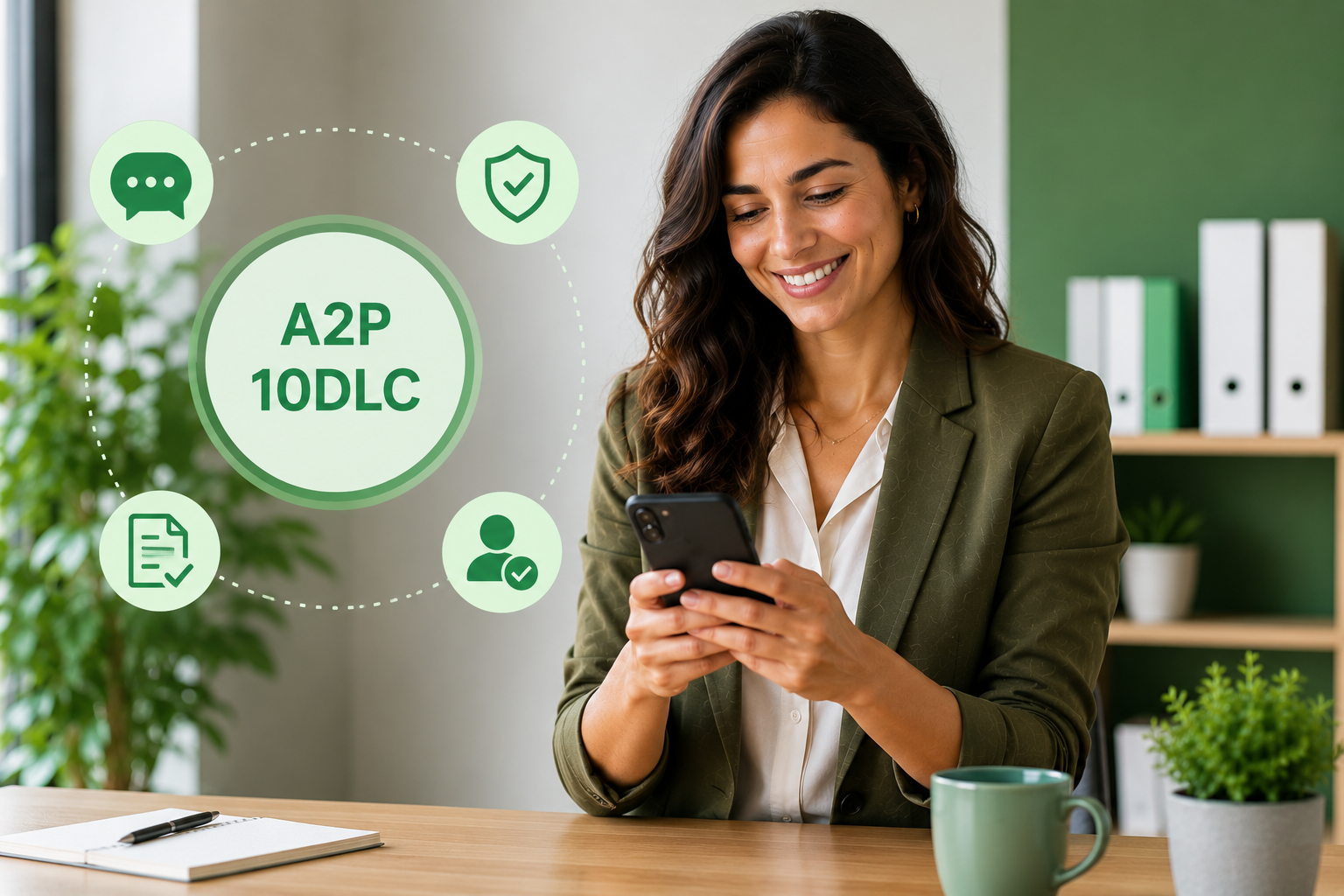
A2P 10DLC is the system US carriers use to register business text messages sent from standard 10-digit local numbers. A2P stands for application-to-person, meaning any message sent from a business, brand, or software rather than an individual. 10DLC stands for 10-digit long code, the local number type those messages are sent from. Put together, A2P 10DLC means registering your business and your messaging campaigns with carriers so your texts are recognized as legitimate rather than spam, and delivered reliably. Any business texting customers from a local US number needs to register for 10DLC.
What Is A2P 10DLC?
Carriers including AT&T, Verizon, and T-Mobile require every business that sends application-to-person messages from a 10-digit local number to register through the A2P 10DLC framework. Registration links your verified brand and each of your messaging campaigns to The Campaign Registry, the central database carriers check before deciding whether to deliver or filter your traffic.
The reason is trust. Unregistered business messages from local numbers were historically treated with suspicion by carrier spam filters, which meant legitimate texts about healthcare, education, transport, and hiring were often blocked alongside genuine spam. A2P 10DLC gives carriers a way to tell the two apart. A registered number is a known sender, so its messages clear filters faster and at higher volume. Every one of those messages travels from your business application through an SMS gateway to the recipient’s carrier.
A2P vs P2P Messaging: What’s the Difference?
Understanding whether your messages are A2P or P2P is the first step, because only A2P traffic requires 10DLC registration.
| A2P messaging | P2P messaging | |
|---|---|---|
| Who sends it | A brand, business, or software application | One individual person |
| Typical examples | Appointment reminders, promotions, alerts | A text to a friend or family member |
| Volume | High, sent to many recipients | Low, one-to-one |
| 10DLC registration | Required | Not required |
| Spam-filter risk | Higher; registration clears it | Low |
Note that intent, not effort, defines A2P. Even if a staff member types each message by hand, a text sent on behalf of a brand is still application-to-person and still needs registration.
Who Needs to Register for 10DLC?
If your business sends any text message to customers from a 10-digit local US number, you need to register. This covers appointment reminders, marketing and promotional messages, alerts, order updates, and two-way conversations. It applies whether you send hundreds of mass text messages a day or a handful of one-to-one replies. The moment the sender is a business rather than a person, carriers expect a registered 10DLC number.
How 10DLC Registration Works
Registration has two parts, both handled through The Campaign Registry:
1. Brand registration. You verify your business identity, including your legal name, EIN, and contact details. This establishes your brand as a known, legitimate sender.
2. Campaign registration. You register each messaging use case, such as appointment reminders or marketing, describing the message content and how customers opt in. Carriers review the campaign and assign it throughput based on your brand and use case.
With SendHub, you do not touch The Campaign Registry directly. Log into the administrator line of your account, open the 10DLC Registration section, and the platform submits both the brand and campaign applications on your behalf. Registration typically clears in three to five business days.

What Happens If You Don’t Register
Unregistered A2P traffic on a local number is filtered aggressively. Your recipients’ carriers, including AT&T and T-Mobile, block messages from unregistered 10-digit numbers, which means reminders, confirmations, and campaigns may silently fail to arrive. There is no way to opt out of the requirement while continuing to send business texts from a local number. The only compliant paths are to register for 10DLC or to switch to a toll-free number, which carriers clear separately.
10DLC vs Toll-Free vs Short Code
Your number type determines your registration path and your throughput. Here is how the three main options compare. For a deeper breakdown of each, see the full guide to business SMS number types.
| 10DLC long code | Toll-free | Short code | |
|---|---|---|---|
| Number format | Local 10-digit | 800, 833, 844, and similar | 5 to 6 digits |
| Registration path | A2P 10DLC brand and campaign | Toll-free verification | Carrier provisioning |
| Best for | Local presence and two-way conversations | High volume from one branded number | Enterprise, high-throughput campaigns |
| Setup speed | A few business days | One to two weeks | Several weeks |
How SendHub Handles 10DLC Registration for You
SendHub is built to take the compliance burden off your team. The platform submits your brand and campaign registrations to The Campaign Registry, guides you through the required details, and keeps your messaging on carrier-approved routes so your texts land reliably. It also manages the parts of compliance that sit alongside 10DLC, including opt-in consent and opt-out handling, and supports two-way texting so registered conversations stay open for genuine replies. If you would rather not manage local-number registration at all, SendHub can set you up on a toll-free number instead.
Frequently Asked Questions
A2P 10DLC is the carrier registration system for business (application-to-person) text messages sent from standard 10-digit local US numbers. Registering your brand and campaigns tells carriers your traffic is legitimate, which improves deliverability and reduces spam filtering.
10DLC stands for 10-digit long code, which is a standard local phone number registered to send application-to-person business messages at scale.
A2P messaging is sent from a business, brand, or application and requires 10DLC registration. P2P messaging is sent between two individuals and does not. Intent defines the category, so a text sent on behalf of a business is A2P even if a person types it.
Any business sending texts to customers from a 10-digit local US number, whether marketing, reminders, alerts, or two-way conversations, needs to register.
With SendHub, brand and campaign registration typically clears in three to five business days.
Costs include a one-time brand registration fee and ongoing campaign fees set by The Campaign Registry and carriers, plus standard per-message rates. Exact amounts vary by provider and campaign type. SendHub handles registration and can walk you through the current fees for your use case.
No. A2P 10DLC applies only to 10-digit local numbers. Toll-free numbers use a separate toll-free verification process and are cleared by carriers on their own track.
Yes. You can keep or port your existing local business number into SendHub and register it for 10DLC, so your customers keep seeing the number they already know.
Carriers including AT&T and T-Mobile filter or block messages from unregistered 10-digit numbers, so your business texts may fail to reach recipients. The compliant options are to register or to switch to a toll-free number.