Every business text message you send travels through one of four protocols: SMS, MMS, RCS, or iMessage. Each one works differently, reaches a different audience, costs a different amount, and delivers a different customer experience.
In 2026, with Apple adopting RCS in iOS 18 and business messaging becoming more competitive than ever, understanding the difference between all four is no longer optional. According to CTIA, SMS carries a 98% open rate, the highest of any digital communication channel. Add MMS and engagement lifts by up to 3x. Layer in RCS or iMessage for the right audience and the experience improves further. The question is not which one to use. It is knowing which one to use when.
Key Takeaways
- Mobile messages come in several types: SMS (text), MMS (media), RCS (rich), plus OTT app messages and push notifications.
- SMS works on any phone with no internet; MMS adds images and video; RCS adds app-like features on supported devices.
- For business, SMS and MMS give the widest reach and carrier-grade deliverability; RCS and OTT depend on device and app support.
- Choose the message type by reach, content (text vs media), and whether recipients are on supported devices.
What Is SMS
SMS (Short Message Service) is the original mobile messaging protocol and still the foundation of business text communication in 2026.
Key characteristics:
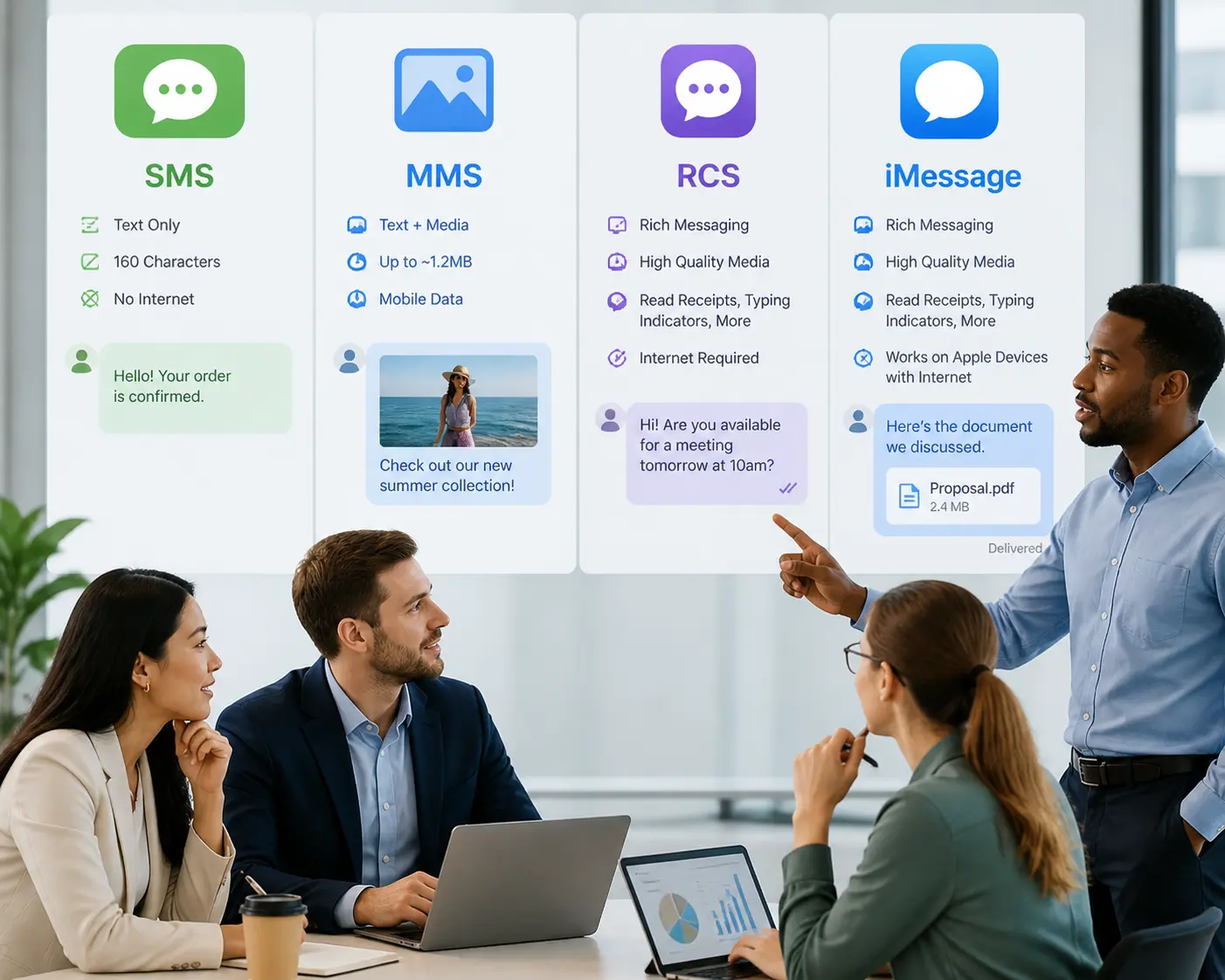
- Character limit: 160 characters per segment, with longer messages split and reassembled automatically
- Content type: Plain text only
- Device reach: Every mobile phone on every carrier globally, no internet required
- Cost: Lowest per-message cost of all four formats
- Open rate: 98% according to CTIA
- Business use: Appointment reminders, alerts, confirmations, two-way customer service, and mass texting campaigns
Real-world SMS examples:
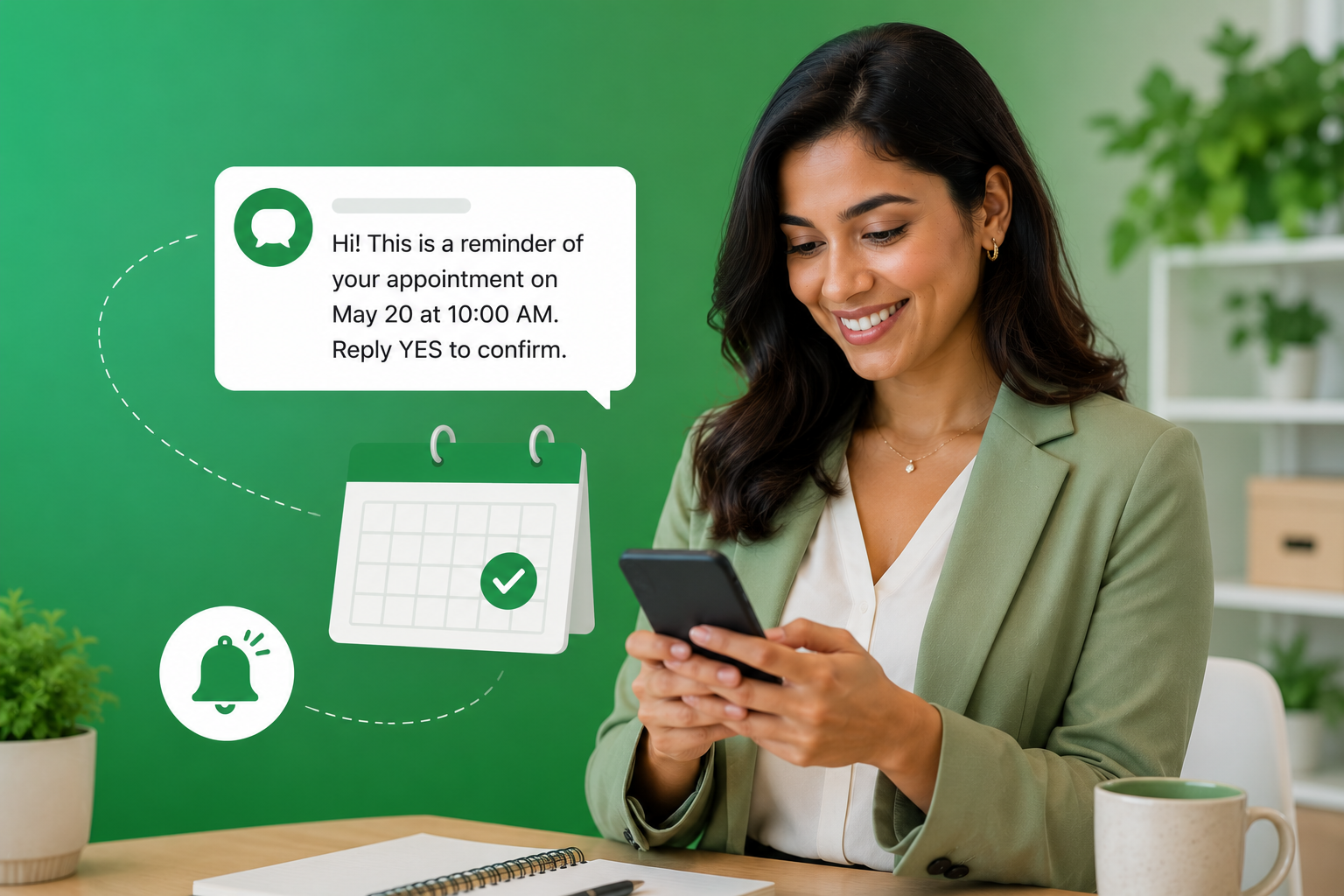
- “Your appointment is tomorrow at 10am. Reply C to confirm.”
- “Flash sale: 20% off today only. Shop now: [Link]”
What Is MMS
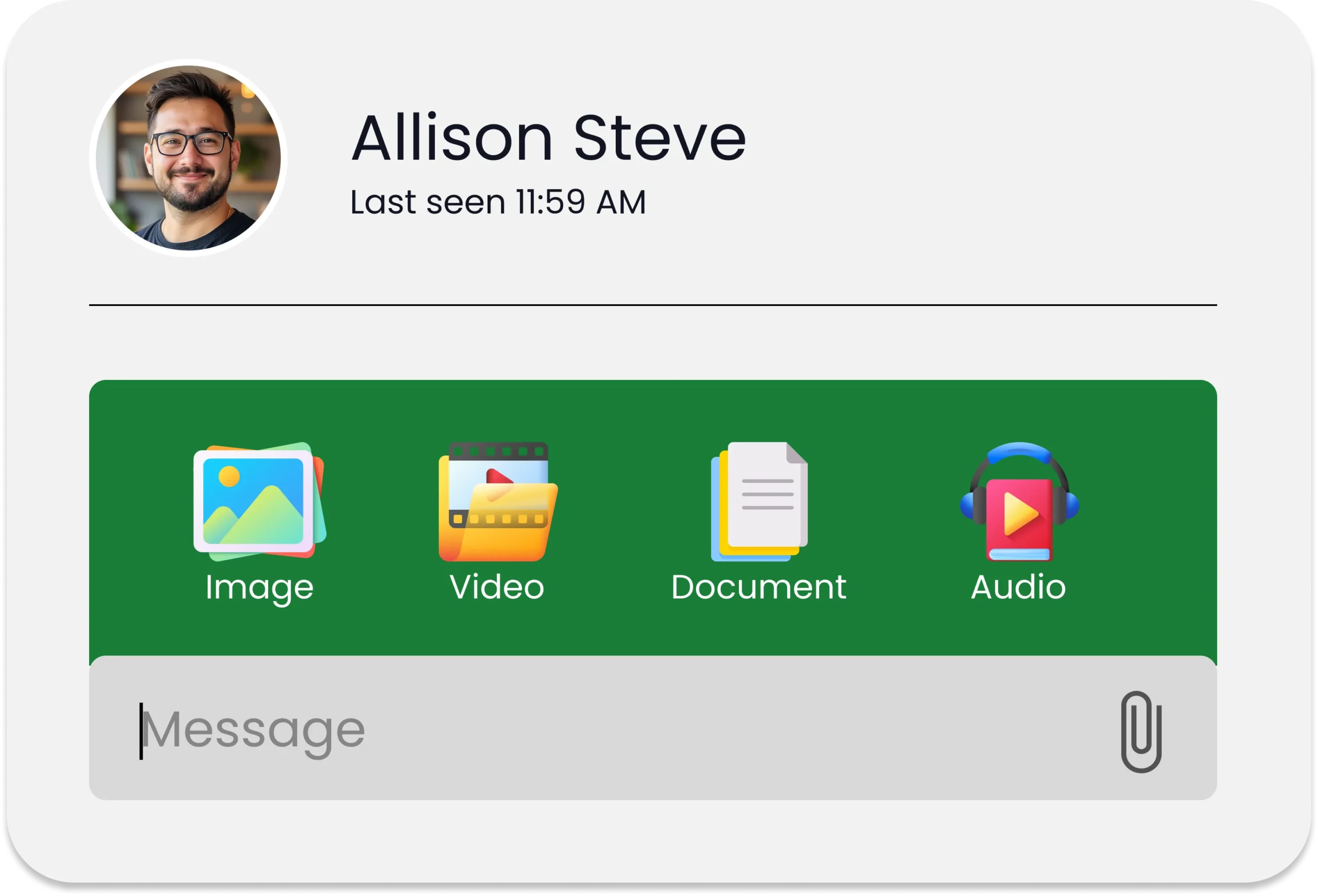
MMS (Multimedia Messaging Service) extends SMS by allowing businesses to send images, GIFs, videos, audio, PDFs, and longer text content alongside or instead of plain text.
Key characteristics:
- Character limit: Up to 1,600 characters per message
- Content type: Images (JPEG, PNG, GIF), video (MP4), audio (MP3), PDFs, and extended text
- Device reach: Works on most modern mobile phones without an internet connection
- Cost: Higher per message than SMS due to the media payload
- Engagement: Up to 3x higher response rates than text-only SMS according to CTIA
- Business use: Visual promotions, event invitations, and campaigns for industries like restaurants and real estate
Real-world MMS examples:
- A restaurant sending a dish image alongside a weeknight dinner promotion
- A real estate agent sending a property photo with a new listing alert
- A retailer sending a branded GIF with a limited-time flash sale offer
Understanding how SMS and MMS work together for business is essential for building campaigns that use each format where it delivers the strongest return.
What Is RCS
RCS (Rich Communication Services) is the next-generation messaging protocol replacing SMS as the default standard on Android, offering an app-like experience within the native messaging interface.
Key characteristics:
- Character limit: No practical limit
- Content type: High-resolution images and video, read receipts, typing indicators, suggested reply buttons, interactive carousels, and verified branded sender profiles
- Device reach: Android devices on supported carriers primarily, with iOS 18 adding RCS support. Falls back to SMS when unsupported.
- Cost: Higher than SMS and MMS due to the richer feature set
- Adoption: According to GSMA, RCS has over 1 billion monthly active users globally in 2026
- Business use: Branded interactive campaigns, verified sender communications, and healthcare appointment reminders with built-in confirm buttons and location links
Real-world RCS examples:
- A healthcare practice sending an appointment reminder with a confirm button and map link built directly into the message
- A retailer running a product carousel promotion with a buy-now action button
- A customer service interaction with suggested reply options to route the enquiry instantly
What Is iMessage
iMessage is Apple’s proprietary internet-based messaging protocol, available exclusively on Apple devices. It is not a carrier-based protocol and cannot be accessed by businesses through standard SMS platforms.
Key characteristics:
- Character limit: No practical limit
- Content type: Text, high-resolution images, video, audio, reactions, and interactive features within the Apple ecosystem
- Device reach: Apple devices only. Falls back to SMS or MMS when the recipient is not on an Apple device or does not have iMessage enabled.
- Cost: Free for end users. Business access requires Apple Messages for Business, a separate application and approval programme.
- Internet required: Yes, iMessage requires an active internet connection
- US market relevance: According to Statcounter, iOS holds approximately 57% of the US mobile market in 2026, making iMessage relevant for businesses with heavily iPhone-concentrated audiences
The critical distinction for business messaging is that iMessage is not accessible through standard SMS platforms. Businesses wanting to reach iPhone users reliably use SMS or MMS as the universal fallback, since iMessage only activates when both sender and recipient are within the Apple ecosystem with an active internet connection.
Real-world iMessage business examples:
- A branded customer service conversation initiated through Apple Maps or Safari on iPhone
- A support thread with quick reply options and Apple Pay integration for high-value customer service
SMS vs MMS vs RCS vs iMessage: Full 2026 Comparison Table
| Feature | SMS | MMS | RCS | iMessage |
| Character Limit | 160 per segment | 1,600 | No limit | No limit |
| Media Support | Text only | Images, video, audio, PDF | High-res media, carousels, buttons | Full Apple media suite |
| Internet Required | No | No | Yes | Yes |
| Device Reach | All phones globally | Most modern phones | Android primarily | Apple devices only |
| Read Receipts | No | No | Yes | Yes (Apple to Apple) |
| Interactive Features | No | No | Yes | Yes (Apple ecosystem) |
| Verified Sender | No | No | Yes | Yes (via Apple Business) |
| Fallback Protocol | None needed | Falls back to SMS | Falls back to SMS | Falls back to SMS or MMS |
| Business Platform Access | Yes | Yes | Yes (growing) | Restricted (Apple approval) |
| TCPA Applies | Yes | Yes | Yes | No (internet-based) |
| Cost Per Message | Lowest | Medium | Higher | Free for users |
| Best For | Universal reach, alerts | Visual marketing | Branded Android campaigns | Apple ecosystem service |
SMS vs MMS vs RCS vs iMessage: Which Should Your Business Use in 2026
Rather than choosing one format, most effective businesses in 2026 deploy all four strategically:
- SMS for guaranteed delivery across every device and carrier where universal reach, reliability, and bulk SMS campaigns at scale are the priority
- MMS for visual promotions, event invitations, and campaigns where product images, branded graphics, or PDFs lift response rates beyond what text-only messages achieve
- RCS for branded interactive campaigns targeting Android audiences where verified sender profiles, confirm buttons, and product carousels create a measurably better engagement experience
- iMessage for Apple-first customer service programmes where your audience is predominantly iPhone users and you have completed Apple’s Messages for Business application process
The practical starting point for most businesses is SMS as the foundation, MMS layered in for visual and promotional campaigns, and RCS planned as an enhancement for Android audiences as carrier support expands. iMessage is best considered once the core SMS and MMS infrastructure is in place and your audience data confirms a predominantly Apple user base.
Compliance Across All Four Formats
Compliance requirements vary significantly across the four protocols:
- SMS and MMS: Both fall under the Telephone Consumer Protection Act. Explicit opt-in consent is required before sending any marketing message, opt-outs must be processed immediately when a recipient replies STOP, and consent records must be stored for audit purposes. Violations carry penalties of up to $1,500 per message.
- RCS: TCPA applies to RCS business messaging. CTIA has published specific RCS business messaging guidelines in 2026 covering sender verification requirements and interactive message consent standards that differ from standard SMS rules. Businesses running RCS campaigns should monitor these guidelines as adoption expands.
- iMessage: TCPA does not apply to iMessage as it is internet-based. Apple’s own platform policies govern business communication through Apple Messages for Business, imposing separate consent and content requirements that businesses must comply with independently.
Understanding what opt-in means in text messaging is the foundation of a legally sound strategy across SMS, MMS, and RCS campaigns at any scale.
How SendHub Supports SMS and MMS Business Messaging
SendHub is built for businesses communicating effectively across SMS and MMS from a single platform:
- SMS and MMS in one dashboard letting your team choose the right format for each campaign without switching tools
- Two-way messaging across both formats managed from one shared inbox regardless of message type
- Bulk SMS and MMS campaigns reaching large contact lists with personalised text or media-rich messages in a single send
- Message templates for both formats maintaining consistency across recurring campaigns
- Built-in compliance tools managing opt-in consent, opt-out handling, and audit logs automatically
- Real-time analytics tracking delivery rates, response rates, and engagement from one centralised view
SendHub’s SMS and MMS infrastructure provides the reliable foundation that complements RCS strategies as carrier adoption expands across the US market. For iMessage, businesses should note that Apple Messages for Business operates as a separate programme outside standard SMS platform access.
Conclusion
In 2026, the businesses getting the strongest results from mobile messaging are not picking one protocol and ignoring the rest. They are deploying each format where it performs best, managing compliance across all of them, and using a platform that handles the complexity so their teams can focus on conversations that convert.
Frequently Asked Questions
SMS is text-only messaging limited to 160 characters per segment, while MMS supports images, video, audio, and up to 1,600 characters of text in a single message.
RCS offers read receipts, high-resolution media, interactive buttons, and verified sender profiles within the Android messaging app, with automatic SMS fallback when unsupported by the recipient.
Not through standard SMS platforms. Businesses must apply for and be approved through Apple Messages for Business, making it a restricted channel compared to SMS and MMS.
Apple introduced RCS in iOS 18 but full cross-platform capability is still expanding. For guaranteed delivery across all devices, SMS remains the most reliable universal fallback channel.
SMS reaches every mobile phone on every carrier globally without an internet connection, making it the format with the broadest guaranteed reach of all four protocols.
No. iMessage is internet-based and falls under Apple’s platform policies rather than TCPA. SMS, MMS, and RCS all require TCPA compliance including explicit opt-in consent and immediate opt-out processing.
For visual campaigns yes. MMS generates up to 3x higher engagement than text-only SMS, making it significantly more effective when images, GIFs, or video add genuine value to the message.