
SMS marketing vs email marketing is one of the most debated questions in business communication, and the data consistently points in one direction. According to the Salesforce SMS Marketing Guide, SMS carries a 98% open rate compared to email’s 22%, and the average SMS response time is 90 seconds compared to 90 minutes for email. The Simple Texting 2024 State of SMS Marketing report found that businesses that text are 683% more likely to report digital marketing success than those that do not. Both channels have a role in a complete communication strategy, but for small businesses and growing teams that need immediate, measurable customer engagement, SMS marketing is the channel that should lead every campaign plan.
SMS Marketing vs Email Marketing: The Key Metrics Compared
When comparing SMS marketing vs email marketing head to head on the metrics that determine business impact, SMS leads on every dimension that drives direct customer action. The numbers reflect a structural difference between the two channels: email is a content delivery mechanism built for depth, while SMS is a direct communication channel built for immediacy and response. Here is how the two channels compare across the four benchmarks that matter most:
- Open rate: SMS achieves a consistent 98% open rate across industries, per the Salesforce SMS Marketing Guide. Email averages between 20% and 22%, meaning roughly four in five emails go unread.
- Response rate: SMS generates a 45% response rate compared to email’s 6%, a gap that compounds significantly when the goal is two-way customer engagement rather than one-way broadcasting.
- Click-through rate: SMS click-through rates average between 19% and 35% depending on industry. Email averages between 2.5% and 3.25%, making SMS the stronger driver of link-based actions.
- Response time: The average time to respond to an SMS is 3 minutes versus 90 minutes for email, a difference that determines whether a time-sensitive campaign reaches customers in time to act.
Where SMS Marketing Wins Over Email
SMS outperforms email in every use case where timing, immediacy, and direct response are the primary objectives. The SimpleTexting 2024 State of SMS Marketing report confirms that businesses placing SMS at the centre of their communication strategy are 683% more likely to report digital marketing success than those leading with email. The use cases where SMS delivers results that email structurally cannot are:
- Time-sensitive promotions: Flash sales, same-day offers, and limited-time discounts require a channel that reaches the customer before the window closes. Bulk SMS campaigns land in seconds and are read within minutes, making SMS the only viable channel for urgency-driven campaigns.
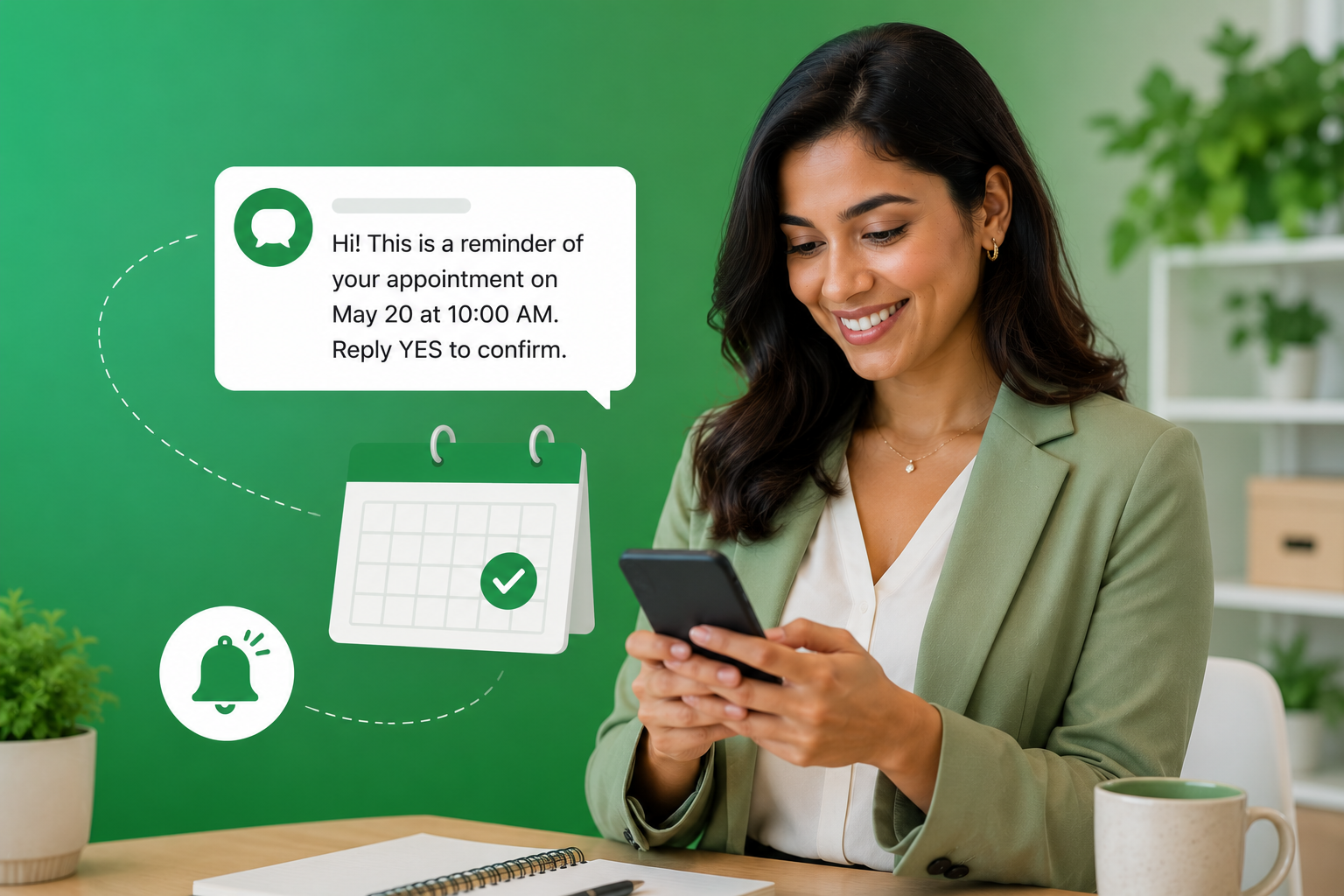
- Appointment reminders: Healthcare providers, restaurants, and service businesses that send reminders via SMS reduce no-show rates significantly because text notifications are seen immediately. Email reminders are frequently missed in crowded inboxes where promotional and transactional messages compete for attention.
- Two-way conversations: Two-way business texting enables real responses from customers in real time. Email reply rates of 6% make genuine two-way dialogue through email operationally impractical at scale.
- Lead follow-up: Real estate teams and recruiting firms that follow up new leads by SMS reach prospects while intent is highest. A 90-minute email response window loses opportunities to competitors who text first.
Where Email Still Has a Role
An SMS-first position does not mean abandoning email. Email remains the stronger channel for specific communication types where depth, formatting, and content length are the primary requirements. Understanding where email earns its place prevents businesses from over-rotating and losing genuine strengths the channel provides.
- Long-form content and newsletters: A monthly customer newsletter with product updates, educational content, and multiple links belongs in email where formatting, images, and multi-section layout support comprehension. An SMS cannot replicate what a well-designed email newsletter delivers for content-heavy communication.
- Formal documentation: Contracts, invoices, policy updates, and onboarding sequences that customers need to retain, reference, and sometimes forward require email’s permanence and attachment capability. A B2B business sending a service agreement or a SaaS company delivering a detailed onboarding guide should always use email for these touchpoints.
- Long-cycle nurture sequences: Drip sequences that educate a lead over several weeks suit email’s depth better than SMS, where brevity is a structural constraint. A 12-email onboarding sequence for a software product belongs in email. The follow-up nudges within it belong in SMS.
Text Message vs Email: A Practical Guide to Choosing the Right Channel
The text message vs email decision is not binary for most businesses, and understanding this is what separates teams with high engagement rates from those with rising opt-out counts. The right question is not which channel to use but which channel should lead for a given communication objective. A practical decision framework eliminates the guesswork:
- Use SMS when: The message is time-sensitive, the required action is simple, or the goal is a direct customer response. Promotions, reminders, alerts, confirmations, and lead follow-ups belong in SMS first.
- Use email when: The message requires detailed explanation, rich formatting, attachments, or documentation that recipients need to save. Newsletters, invoices, onboarding guides, and formal communications belong in email.
- Use both together: Sending an email with detailed information followed immediately by an SMS that says “we just sent you something important, check your inbox” increases email open rates by 20% to 30% according to multiple 2024 industry studies. A practical example: a scheduled text message sent 30 minutes after a promotional email referencing the email subject line consistently outperforms the email alone on response rate, because the SMS drives the customer to the inbox at the moment the offer is most relevant. The channels are stronger together than either is in isolation.
How to Build an SMS-First Strategy Without Abandoning Email
An SMS-first strategy means SMS leads the customer communication plan and email supports it, rather than the reverse. The practical transition follows three steps that can be completed without rebuilding existing email infrastructure:
- Step 1: Audit your current campaigns: Identify which email campaigns are time-sensitive, action-oriented, or followed by a response-required step. These are the campaigns where SMS should replace or precede email immediately.
- Step 2: Build your SMS opt-in list: Use text keywords to capture opt-ins from existing contacts and new audiences simultaneously. The SendHub guide to SMS compliance and the double opt-in method covers how to document consent correctly from the first subscriber.
- Step 3: Integrate SMS into existing sequences: Add SMS follow-ups to existing email campaigns. A well-timed text sent after an email consistently outperforms the email alone on response rate and conversion.
How SendHub Powers Your SMS-First Marketing Strategy
SMS wins on open rate, response rate, click-through rate, and response time, but only when the platform handling delivery, compliance, and opt-in management gets out of your team’s way and lets the channel do what it does best. SendHub is built precisely for that, giving businesses of every size an SMS-first platform without a technical team or complex implementation:
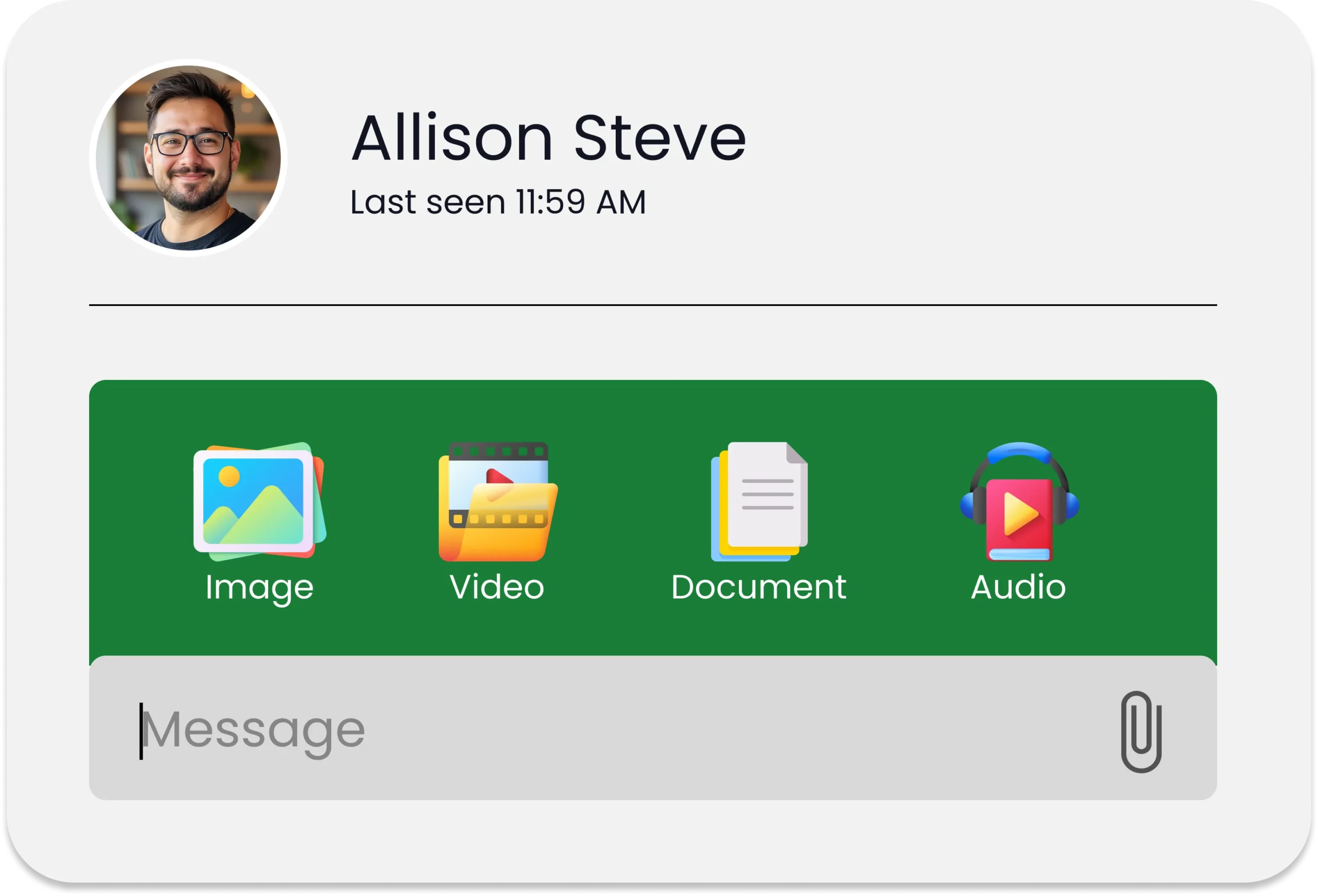
- SMS and MMS marketing tools for promotion, nurture, and re-engagement campaigns that replace or complement email outreach.
- Two-way business texting for real-time customer conversations at every stage of the sales and service journey.
- Bulk SMS service with carrier-compliant routing to protect delivery rates across every campaign.
- Text keywords for opt-in list building from any ad, website, or in-store touchpoint.
- Scheduled text messaging so follow-up sequences run automatically without manual sends.
- 10DLC texting registration support built into the platform so TCPA compliance is handled from day one.
- Analytics and reporting to track SMS delivery rates, response volume, and opt-out trends alongside your email benchmarks in one place.
Frequently Asked Questions
SMS marketing sends short text messages directly to a customer’s phone and achieves a 98% open rate. Email marketing delivers longer-form content to an inbox and averages 22%. Consequently, SMS is better for immediacy and email is better for depth.
SMS messages trigger an immediate notification on the recipient’s phone and are read within minutes. Additionally, email inboxes are significantly more crowded, with spam accounting for nearly 85% of all email sent, which suppresses open rates consistently.
On direct engagement metrics, SMS outperforms email across open rate, response rate, click-through rate, and response time. Furthermore, businesses that text are 683% more likely to report digital marketing success than those relying on email alone.
Use SMS for time-sensitive promotions, appointment reminders, lead follow-ups, and any communication requiring a fast customer response. Consequently, email is better for detailed content, documentation, and long-cycle nurture sequences.
Yes, and combining them consistently outperforms either channel alone. Additionally, sending an SMS alert after an email increases email open rates by 20% to 30% according to multiple 2024 industry studies.
SMS achieves a 45% response rate compared to email’s 6%. Furthermore, the average SMS response time is 3 minutes versus 90 minutes for email, making SMS the only viable channel for time-sensitive engagement.