When did texting start? Texting started on 3 December 1992, when Neil Papworth, a 22-year-old engineer, used a computer to send the first SMS, “Merry Christmas,” over the Vodafone network to Richard Jarvis. The channel that began with one festive greeting is now the highest-engagement medium in business communication, carrying a 98% open rate according to CTIA and moving trillions of messages a year across global networks tracked by GSMA. Knowing when texting started, who built it, and how it evolved explains why it still outperforms email, social, and voice in 2026. This guide answers the core question first, then walks the complete timeline from the 1984 concept to today’s SMS, MMS, and RCS era.
Key Takeaways
- The first SMS text message was sent in December 1992 and simply read Merry Christmas.
- Commercial texting took off through the late 1990s and 2000s as GSM phones and networks spread.
- Texting overtook phone calls in volume by the late 2000s and remains the most-used phone feature today.
- For business, SMS evolved from personal texts into a compliant marketing and notification channel using short codes and 10DLC.
Quick Answer: When Did Texting Start?
Texting started on 3 December 1992 with the first SMS sent over a live cellular network. The underlying Short Message Service was conceived earlier, in 1984, by two engineers working within the GSM standard. So the concept dates to 1984, the first message to 1992, and mainstream consumer adoption to 1999 to 2000, once people could text across different carrier networks.
When Did Texting Start? The 1992 Origin Story
The first text message is the headline, but the groundwork came nearly a decade earlier. Friedhelm Hillebrand and Bernard Ghillebaert developed the SMS concept within the Franco-German GSM cooperation in 1984. The format’s defining trait, the 160-character ceiling, was a deliberate design choice. Hillebrand typed out sample sentences and questions and found that most complete thoughts fit comfortably inside 160 characters, which became the standard for letters, numbers, and Latin-alphabet symbols.
Sending that first message took until 1992 because the handsets had not caught up. Papworth sent the message from a computer because mobile phones in 1992 had no keyboards, and Jarvis could read “Merry Christmas” on his Orbitel 901 but could not reply. The hardware followed quickly. Nokia became the first manufacturer whose 1993 GSM phone line let users send text messages, and in 1997 it released the 9000i Communicator, the first phone with a full keyboard.
The Complete Texting History Timeline: 1992 to 2026
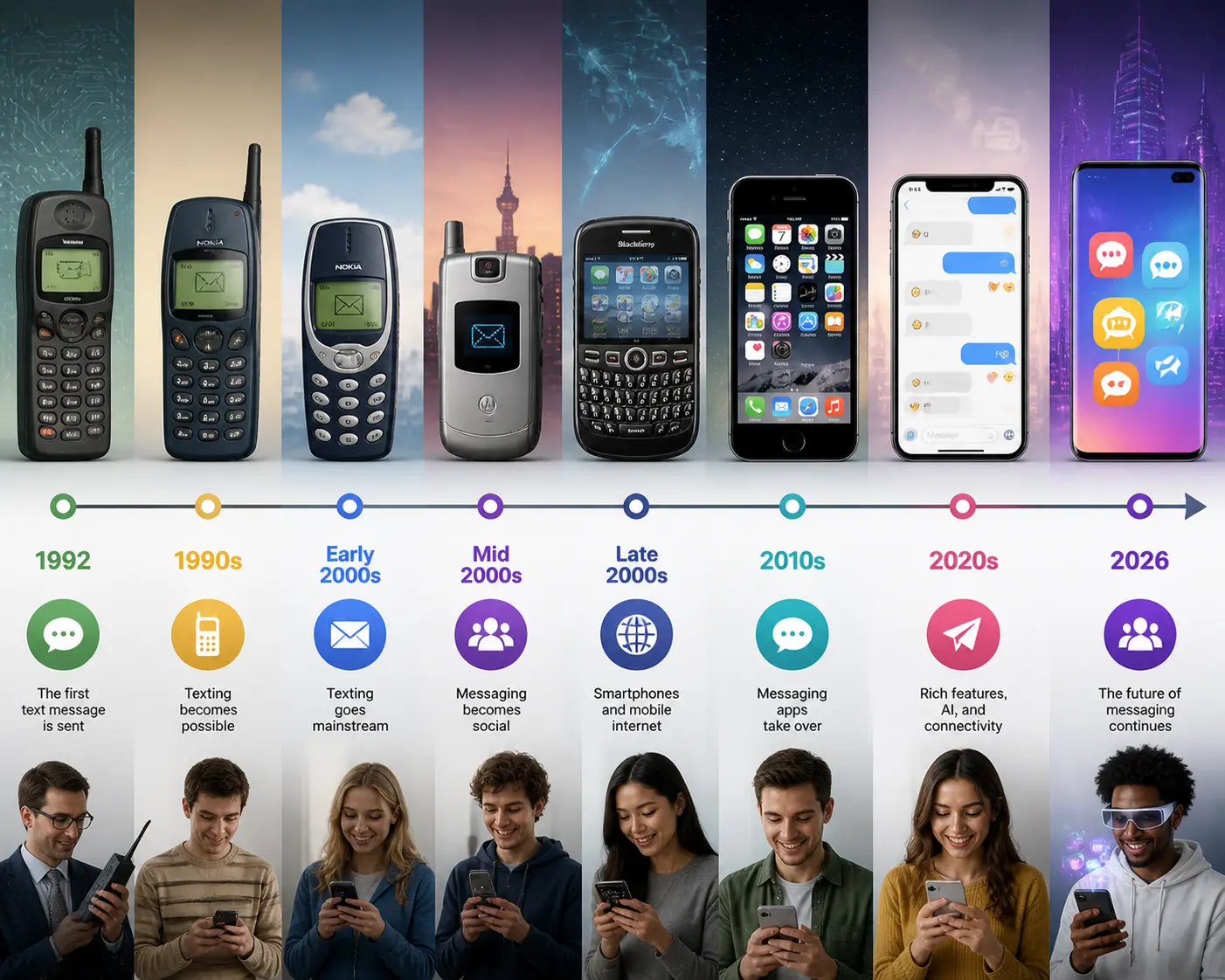
This timeline is the part most competing articles get wrong, because most stopped updating years ago. Here is the full arc, including the developments that reshaped the channel after 2020.
1984 SMS is conceived within the GSM standard, with a 160-character limit.
1992 Neil Papworth sends the first text message, “Merry Christmas,” on 3 December.
1993 Nokia ships the first handsets that let users send SMS directly.
1997 The Nokia 9000i Communicator introduces a full QWERTY keyboard.
1999 Cross-network texting launches in the US, letting people message any carrier and triggering mass adoption.
2002 MMS arrives, extending texting to images, audio, and video.
2003 US shortcodes launch, and American Idol runs the first major text-to-vote campaign, proving commercial SMS at scale.
2007 The iPhone makes typing messages effortless, and the RCS specification is first drafted.
2009 WhatsApp launches, beginning the over-the-top messaging era while business SMS keeps growing.
2012 TCPA rules are clarified for business SMS, creating the legal framework for compliant texting.
2015 Two-way business texting becomes the standard expectation, shifting SMS from broadcast to conversation.
2019 Google makes RCS the default protocol for Android Messages.
2021 10DLC registration becomes mandatory for business SMS on standard 10-digit numbers in the US.
2023 AI-driven personalization and automated replies move business SMS into real-time, behavior-triggered messaging.
2024 Apple adds RCS support in iOS 18, enabling cross-platform RCS between iPhone and Android for the first time.
2025 RCS surpasses 1 billion users globally as carriers complete business-messaging rollouts.
2026 SMS, MMS, and RCS operate as complementary layers, with SMS as the universal delivery foundation.
For a side-by-side look at where the channel is heading next, see our breakdown of RCS versus SMS and the wider field of SMS, MMS, RCS, and iMessage compared.
SMS History Timeline 1992 to 2026 SMS and Texting: History Timeline 1992 to 2026
Click any milestone to see the full detail. Use the filters to focus on a specific era.
Birth1992 to 1999Mass adoption2000 to 2009Business SMS2010 to 2019Modern era2020 to 2026Birth era (1992-1999)Mass adoption (2000-2009)Business SMS (2010-2019)Modern era (2020-2026)Key 2024-2026 milestones
When Did Texting Start to Become a Business Channel?
Texting started shifting from a personal novelty to a business tool the moment networks became interoperable. Cross-network text messaging in 1999 is what made it possible for businesses to start texting with their customers, and by 2000 texting was a mainstream habit. Shortcodes in 2003 introduced bulk campaigns, the 2012 TCPA update gave marketers a compliance framework, and the 2015 move to two-way messaging turned alerts into conversations. MessageDesk
Each milestone widened the channel rather than narrowing it. That trajectory is why SMS still beats other channels on reach and response, a pattern detailed in our comparison of why SMS outperforms email and the current SMS marketing statistics for 2026. Modern campaigns now run as text blast campaigns and structured bulk SMS sends that reach thousands of contacts at once.
Texting Compliance Today: TCPA and 10DLC
Business texting in 2026 is governed by consent and registration rules that did not exist when texting started. Under the Telephone Consumer Protection Act, businesses must secure clear opt-in before sending marketing texts, and the rules are enforced by the FCC. You can review the official framework on the FCC's TCPA page. Practical guidance on collecting consent the right way is covered in our explainer on opt-in consent for text messaging.
Registration is the second pillar. Since 2021, sending business SMS on standard numbers requires A2P 10DLC registration, which ties your brand and campaigns to a verified profile so carriers deliver your messages reliably. This is factual compliance information, not legal advice, and businesses with specific obligations should confirm requirements with qualified counsel.
SMS, MMS, and RCS in 2026
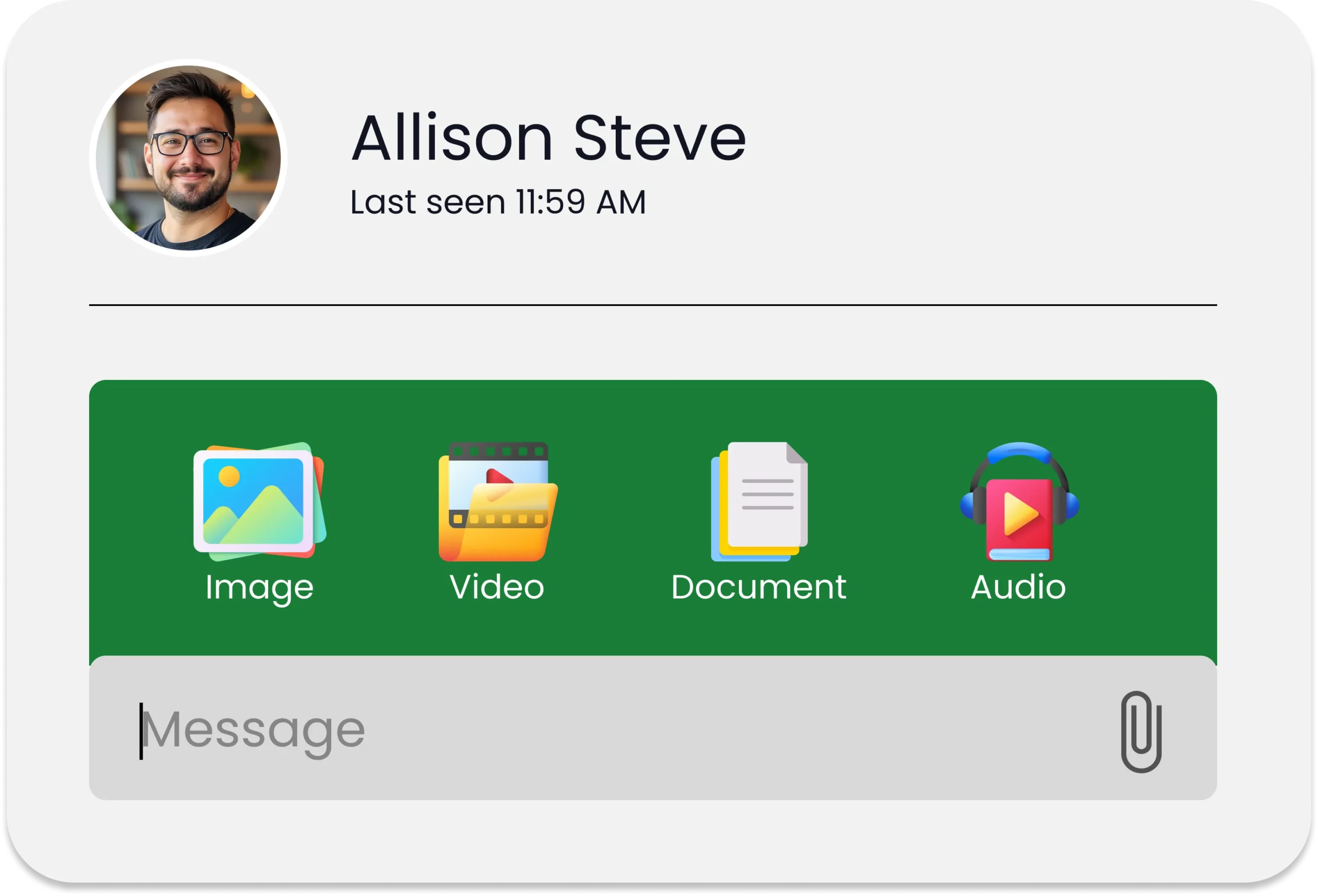
Today the three formats work together rather than compete. SMS remains the universal layer that reaches every device on every carrier. MMS adds images, PDFs, and richer media, with the distinction explained in our guide to the difference between SMS and MMS. RCS delivers branded, interactive experiences on supported Android and now iPhone devices, with SMS as the guaranteed fallback when RCS is unavailable.
This coexistence is what makes the channel durable. From healthcare appointment reminders to retail promotions, the same infrastructure Papworth used in 1992 now carries automated, personalized, two-way conversations at scale. For a forward look, see where the future of SMS marketing is headed.
How SendHub Builds on 34 Years of SMS
SendHub runs on the same SMS foundation that started in 1992, extended with the modern tools business communication now requires:
- Two-way business texting turns one-way alerts into real customer conversations.
- Bulk SMS reaches thousands of contacts in a single, compliant send.
- MMS and attachments let you add images, PDFs, and media to any message.
- 10DLC texting keeps your campaigns registered and reliably delivered.
- Scheduled text messaging sends the right message at the right moment automatically.
- Templates save your best-performing messages for instant reuse.
- Analytics and reporting track delivery and engagement across every campaign.
- The SendHub API lets you build custom SMS workflows into your own systems.

Conclusion
From a single "Merry Christmas" in 1992 to a multi-trillion-message global infrastructure in 2026, texting has only grown more valuable with every milestone. The businesses building on it today inherit 34 years of reach and trust no newer channel has matched. See what that foundation can do for your customer communication and book a demo with SendHub.
Frequently Asked Questions
Texting started on 3 December 1992, when Neil Papworth sent the first SMS. However, the underlying technology was designed in 1984.
Friedhelm Hillebrand and Bernard Ghillebaert created the SMS concept in 1984. Meanwhile, Neil Papworth sent the first actual message in 1992.
Hillebrand found that most complete thoughts fit within 160 characters. As a result, that became the permanent SMS standard.
Texting became popular after 1999, once cross-network messaging launched. Consequently, adoption surged through the early 2000s.
Businesses started texting customers after cross-network SMS in 1999. Later, shortcodes in 2003 made bulk campaigns possible.
SMS is the universal, plain-text carrier standard. By contrast, RCS adds rich media, branding, and interactivity, with SMS as fallback.
Apple added RCS in iOS 18 in 2024. Therefore, cross-platform RCS between iPhone and Android became possible for the first time.
The first text message read "Merry Christmas." Additionally, it was sent from a computer because phones then had no keyboards.
Nokia shipped SMS-capable phones in 1993. Then in 1997, the Nokia 9000i added the first full keyboard.
Yes, texting remains the highest-engagement business channel in 2026. Moreover, SMS, MMS, and RCS now work together as complementary layers.