SMS personalization is the difference between a message that gets read and one that gets acted on. A text that starts with your customer’s name, references their last purchase, and arrives at the exact moment it is relevant to them does not feel like marketing. It feels like a conversation.
In 2026, business text messaging personalization is the most reliable conversion lever for businesses running SMS campaigns. According to Salesforce Research, 73% of customers expect businesses to understand their individual needs before reaching out, and personalized marketing messages, on average, generate 20% higher conversion rates than non-personalized messages. According to CTIA, SMS already carries a 98% open rate, meaning the message gets seen. Personalization is the difference between a campaign that converts and one that generates opt-outs.
What Is SMS Personalization
SMS personalization is the practice of tailoring individual text messages to each recipient using person-specific data, including their name, purchase history, location, appointment details, behaviour patterns, or relationship stage with your business.
It operates at two levels. Surface personalization uses basic data fields to address the recipient directly: first name, order number, and appointment time. Deep personalization uses behavioural and contextual data to make the entire message relevant to where that specific customer is in their journey, generating the highest conversion rates of any SMS message type.
The 5 Levels of SMS Personalization
Level 1: Name personalization. The baseline. Using the recipient’s first name in the opening line. Every message in your programme should reach at least this level.
Level 2: Transaction personalization. Referencing a specific order, booking, appointment, or purchase. “Your order #4521 has shipped” outperforms “Your order has shipped” because it confirms the message is specifically about this customer’s transaction. Essential for sms marketing post-purchase sequences.
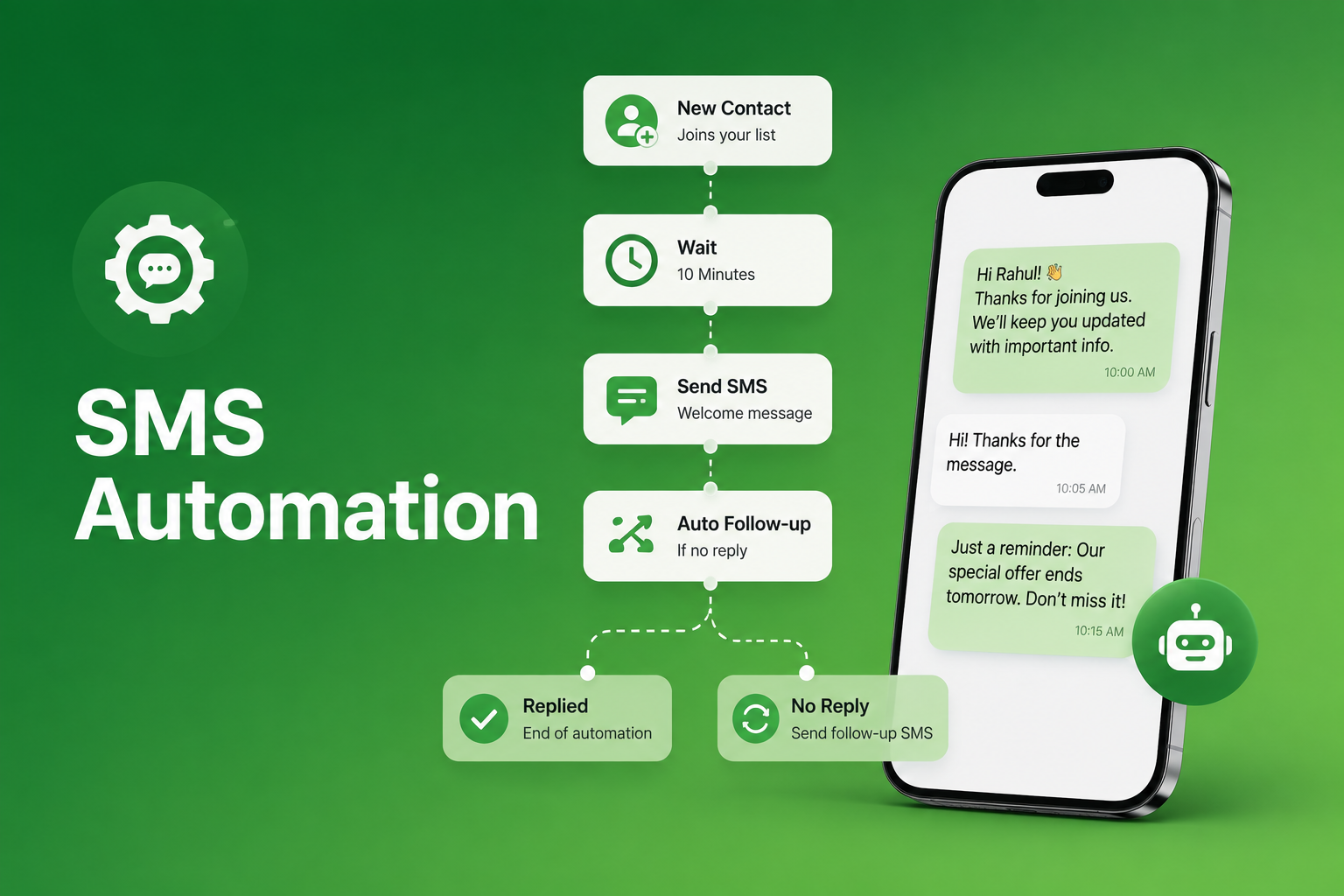
Level 3: Behavioural personalization. Referencing what the customer has done, not just who they are. A message triggered by a customer viewing a product three times, abandoning a cart, or visiting a location within the last 7 days uses their behaviour to make the message immediately relevant. Scheduled text messaging combined with behavioural triggers automates this level without manual effort.
Level 4: Segment-based personalization. Sending different messages to different audience groups based on shared characteristics. VIP customers receive a different offer from new customers. Lapsed customers receive a different message from active ones. Group messaging creates these segments automatically.
Level 5: Predictive personalization. Using historical behaviour to anticipate what a customer needs next. A patient due for an annual check-up receives a booking reminder without having requested one. A vehicle owner reaching the service mileage threshold receives a prompt before they even think to book. In 2026, AI-powered SMS automation delivers this level at scale, turning historical data into proactive, relevant outreach.
What Data Powers SMS Personalization
- First and last name is the baseline for every personalized message
- Purchase history: what they bought, when, and how often
- Appointment details: date, time, provider, and location
- Location data nearest store, local offers, or region-specific content
- Engagement history, last interaction date, and response patterns
- Customer lifecycle stage: new, active, lapsed, or VIP
- Product or service interest in what they browsed, enquired about, or added to a cart
SMS merge fields pull all of this data automatically from your contact database into every message, whether you are sending one or one hundred thousand. The template stays the same. The message changes for every recipient.
SMS Personalization in Practice: Industry Examples
Retail and e-commerce “Hi [First Name], the [Product Name] you viewed is back in stock and selling fast. Get it here: [Link]. Reply STOP to unsubscribe.” Behavioural trigger personalization converts browse-abandonment into purchase at significantly higher rates than generic promotions to the same customer.
Healthcare “Hi [First Name], your annual check-up with [Provider Name] is due. Book your preferred time here: [Link].” Healthcare text messaging using predictive personalization based on care schedule history increases appointment adherence without requiring patients to self-initiate.
Real estate “Hi [First Name], a new [Property Type] in [Neighbourhood] has just been listed within your budget. View it here: [Link].” Sms marketing for real estate using search preference personalization generates viewing requests at significantly higher rates than generic listing alerts.
Restaurants “Hi [First Name], it has been 30 days since your last visit. Here is 15% off your next meal at [Restaurant Name]: [Code].” Restaurant text message marketing using visit frequency personalization reactivates lapsed customers at a fraction of the cost of new customer acquisition.
Recruiting “Hi [First Name], a new [Job Title] role in [Location] matches your profile. Interested? Reply YES for full details.” Text recruiting using role-match personalization generates significantly higher candidate response rates than generic job alerts.
Nonprofits “Hi [First Name], your last gift of [Amount] to [Organization] provided [Specific Impact]. Can you give again this month? [Link].” Non-profit text messaging using giving history personalization consistently outperforms generic donation appeals on both response rate and average gift size.
SMS Personalization Mistakes That Damage Conversion and Trust
- Using data the customer did not knowingly provide, referencing behaviour they did not expect you to track, creates discomfort rather than relevance
- Getting the data wrong, a message with the wrong name or a wrong order number destroys confidence in both the message and the brand
- Personalizing without consent, personalized marketing messages require the same express written consent under TCPA as any other promotional SMS
- Over-personalizing to the point of feeling surveillance-like, referencing that a customer visited your website three times in two days, crosses from relevant to intrusive for most audiences
How SendHub Powers SMS Personalization
- Merge fields automatically insert the first name, appointment details, order numbers, and any custom data into every message at send time
- Group messaging creates audience segments so each group receives messages relevant to their specific stage, behaviour, or characteristics
- Scheduled text messaging pairing personalized templates with trigger-based timing for behavioural personalization at scale
- SMS marketing software managing personalized campaigns, templates, and performance analytics from one dashboard
- Two-way SMS keeps the channel open, so personalized outbound messages become personalized two-way conversations
- Bulk SMS sending personalized messages to large opt-in lists simultaneously, without any loss of individual message relevance
- Auto dealer text messaging using vehicle-specific merge fields for service reminders, mileage alerts, and inventory notifications personalized to each owner
Conclusion
In 2026, the businesses achieving the highest SMS conversion rates are not the ones sending the most messages. They are the ones sending the most relevant ones. A well-personalized SMS does not feel like a campaign to the person receiving it. It feels like a timely message from a business that understands exactly what they need and when they need it. That is the standard that converts.
Frequently Asked Questions
SMS personalization is the practice of tailoring text messages to individual recipients using their specific data, including name, purchase history, location, and behaviour patterns, to make every message feel relevant and individually written.
Personalized messages are more relevant to the specific recipient at the specific moment they receive them. According to Salesforce Research, personalized messages generate 20% higher conversion rates than non-personalized messages, with lower opt-out rates and higher click-through rates consistently.
At a minimum, the first name and a relevant transaction or behavioural data point. Higher-level personalization uses purchase history, location, appointment details, lifecycle stage, and product interest data pulled automatically through merge fields.
Merge fields are dynamic placeholders in a message template that automatically populate with each recipient’s specific data at send time. A template reading “Hi {{first name}}, your order {{order number}} has shipped” becomes a unique message for every recipient without manual editing.
Surface personalization uses basic fields like first name to address the recipient. Deep personalization uses behavioural and contextual data to make the entire message relevant to where that specific customer is in their journey, generating significantly higher conversion rates.
Yes. Merge fields and segmentation allow businesses to send personalized messages to thousands of contacts simultaneously, with each message automatically customized to the individual recipient from a single template.