
Think about how many times your team sends the same message to different people in a single week. A shift reminder to five staff members. A promotion to a hundred customers. A deadline alert to a project group. An appointment reminder to thirty patients. Each one composed manually, sent individually, followed up when someone does not respond.
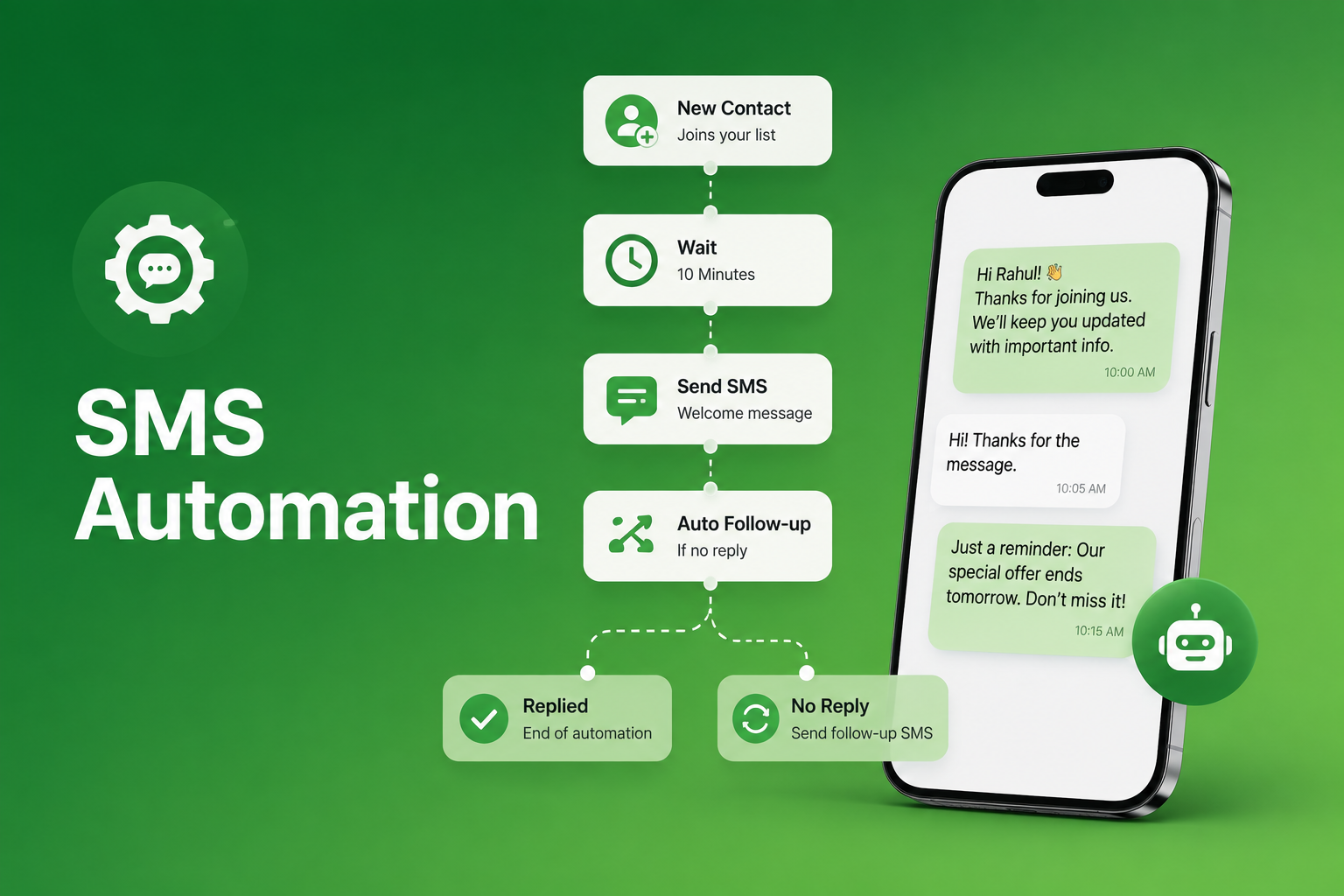
In 2026, that communication model is costing businesses hours every week that group texting eliminates entirely. According to CTIA, SMS carries a 98% open rate with messages read within 3 minutes of delivery. According to Salesforce Research, businesses that streamline team and customer communication into a single channel report significantly higher operational efficiency than those managing multiple disconnected tools. Group texting is not just a faster way to send messages. It is a fundamentally different communication model that removes the repetition, the follow-up, and the delay that manual messaging creates.
What Is Business Group Texting
Business group texting is not a group chat. It is a one-to-many messaging system where a single message is sent simultaneously to a defined list of contacts, with each recipient receiving it as a private individual message from your business number. Replies route to your team inbox as separate individual conversations, not a shared thread visible to all.
The result is the reach of a broadcast with the feel of a personal message, and none of the reply-all chaos that makes group chats ineffective for business communication. Key capabilities of group messaging in 2026:
- Send one message to hundreds or thousands of contacts simultaneously
- Each recipient receives the message privately as an individual text
- Replies route to a shared team inbox rather than a shared thread
- Groups can be segmented by location, behaviour, or customer type
- Messages personalised with merge fields even when sent to large groups
- Unlimited keywords allow contacts to self-select into relevant groups automatically

Where Group Texting for Business Saves the Most Time
Group Texting for Staff Scheduling and Internal Communication
Every small business texting service operation managing shift workers knows the cost of manual scheduling communication. Group texting sends shift confirmations, last-minute changes, and policy updates to the right staff group in one action, with responses routing individually to a manager’s inbox rather than creating a chain of visibility no one needs.
Group Texting for Customer Promotions and Campaign Sends
Mass sms marketing campaigns sent manually contact-by-contact are operationally impossible at any meaningful scale. A restaurant text messaging operation can send a Tuesday lunchtime promotion to every customer who has visited in the last 30 days in a single two-minute send, reaching hundreds of opted-in contacts with a personalised message simultaneously.
Group Texting for Appointment Reminders Across Large Lists
Healthcare text messaging practices sending reminders to fifty or a hundred patients a day face a significant manual workload without group texting. A single template with merge fields pulls each patient’s name, provider, and appointment time automatically, delivering personalised messages across auto dealer text messaging service departments and real estate texting teams at the same scale.
Group Texting for School and Community Announcements
Text messaging for schools serving hundreds of parents and staff faces a communication challenge that email has consistently failed to solve. Group texting reaches every parent simultaneously with a weather closure, schedule change, or event reminder in a single send that arrives and gets read within minutes. Non profit text messaging organisations use the same capability for volunteer coordination and donor updates.
Group Texting for Logistics and Dispatch Coordination
Text messaging for transport operations managing multiple drivers need to communicate route changes and operational alerts to specific groups simultaneously. Group texting reduces a five-driver schedule change from fifteen minutes of individual messages to thirty seconds, making it one of the highest time-saving applications in any industry.
Group Texting for Recruiting Pipeline Updates
Text recruiting teams managing multiple candidate cohorts send a high volume of status updates and interview invitations. A cohort of ten candidates all moving to the next stage receives one personalised group send rather than ten individual messages, with all replies routing privately to the recruiter’s inbox.
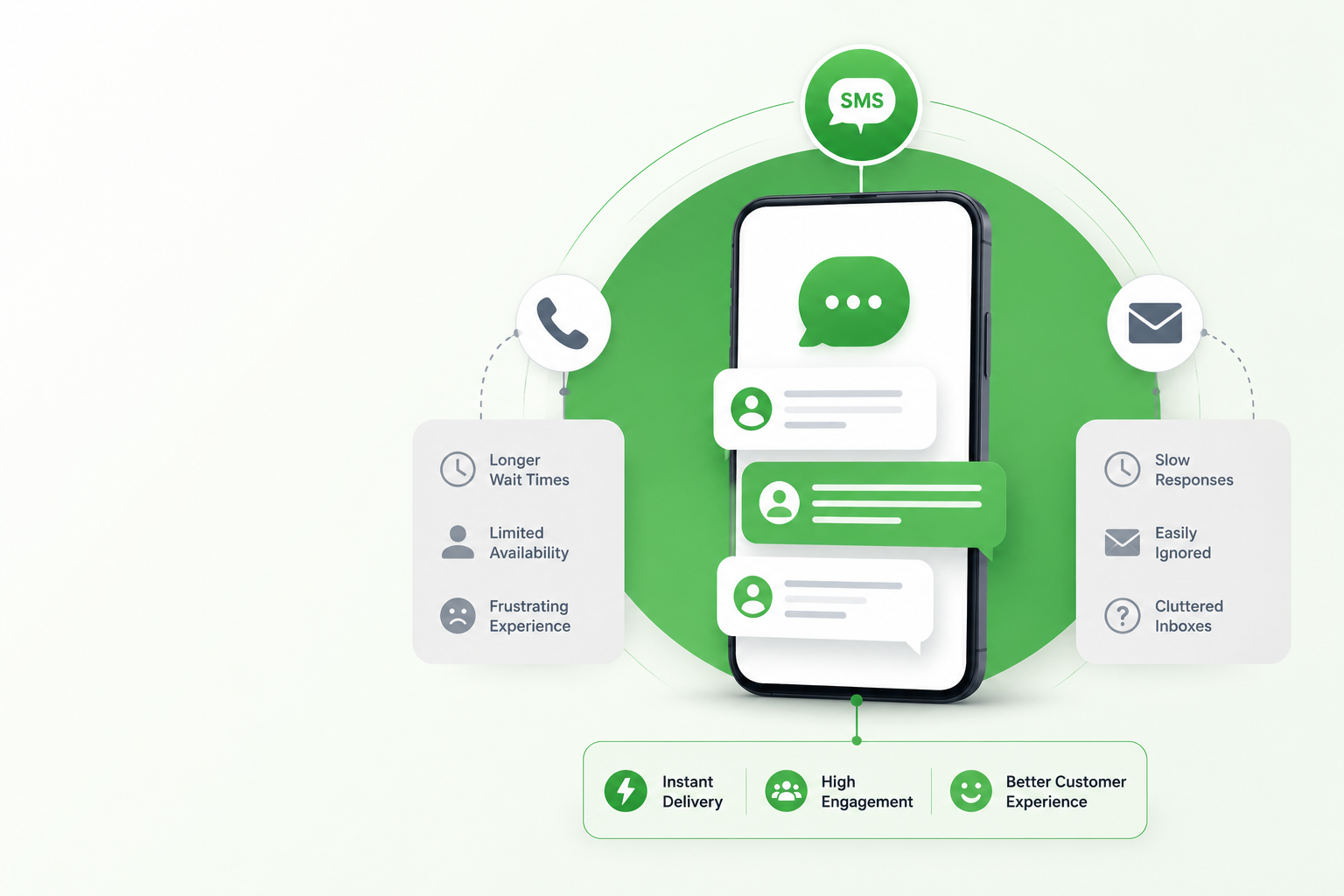
Group Texting vs Email vs Phone Calls
| Channel | Open Rate | Read Time | Scale |
| Group SMS | 98% | Under 3 minutes | Thousands simultaneously |
| 20% | Hours to days | Thousands but low engagement | |
| Phone calls | N/A | Real time but one-to-one | One contact at a time |
A five-minute phone call to each of twenty customers costs 100 minutes. A group text to the same twenty contacts costs two minutes to compose and deliver. For heavy equipment sms marketing operations and any business managing high outbound communication volume, that time difference compounds into hours saved every single week.
Group Texting Compliance in 2026
Under the Telephone Consumer Protection Act, every contact in a marketing group must have explicitly opted in before being messaged. Key requirements:
- Explicit opt-in consent collected before adding any contact to a marketing group
- Clear sender identification in every group message
- Immediate opt-out processing when any group member replies STOP
- Separate consent basis for internal staff groups versus customer marketing groups
- Stored consent records for every opted-in contact

How SendHub Powers Group Texting for Business
- Group messaging platform creating, managing, and messaging unlimited contact groups from one dashboard
- Bulk SMS reaching large opted-in groups with personalised messages delivered simultaneously
- Merge fields inserting recipient names and relevant data into every group message automatically
- Scheduled text messaging queueing group messages for delivery at peak engagement windows
- Two-way SMS with shared inbox routing individual replies from group sends to one team inbox for personal follow-up
- Text keywords allowing contacts to self-select into relevant groups automatically
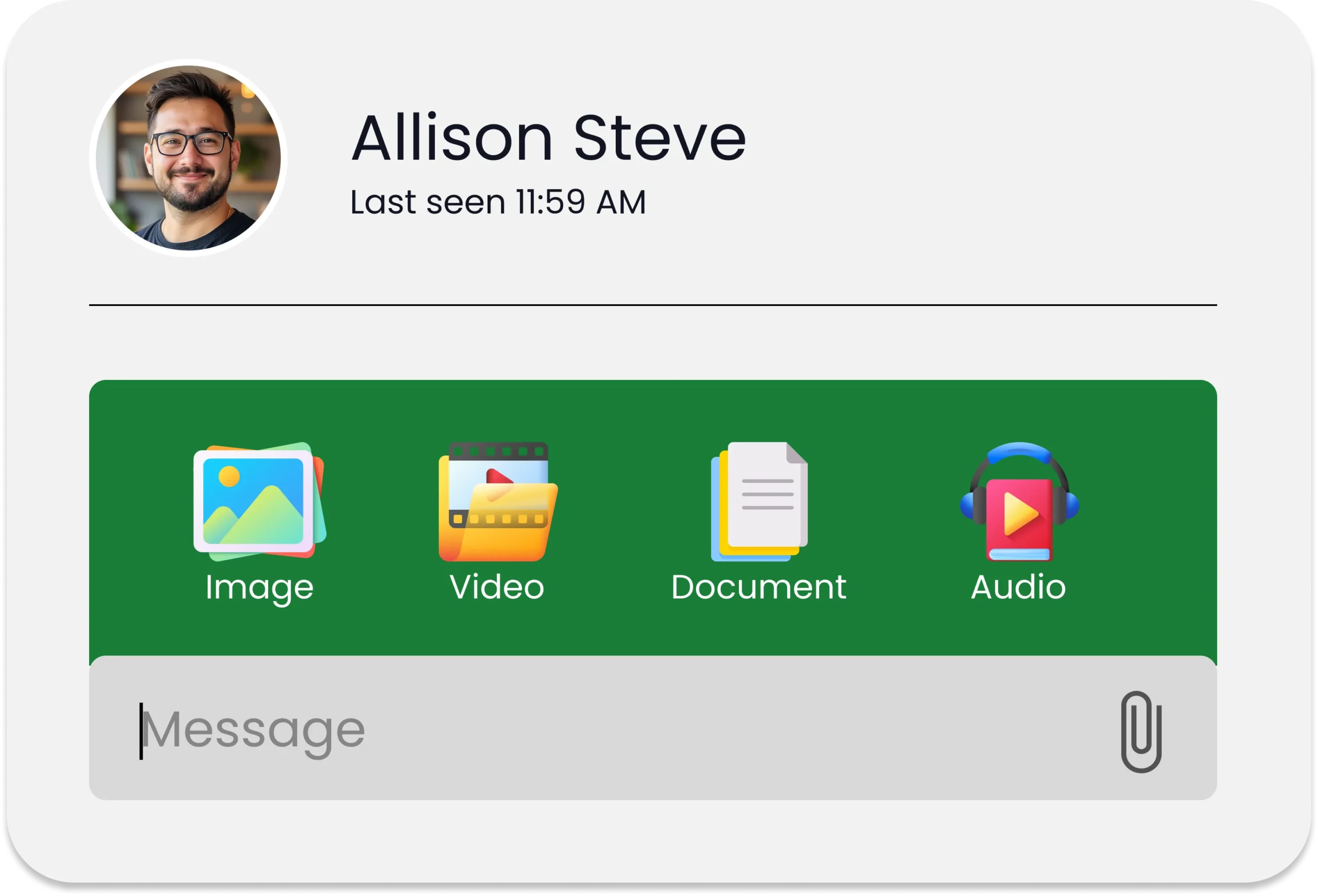
- SMS and MMS marketing supporting visual group messages with images and branded content
- SendHub API enabling programmatic group management for businesses with developer-integrated workflows
- Built-in compliance tools managing opt-in consent, opt-out processing, and TCPA audit logs automatically
Conclusion
In 2026, the businesses saving the most time on communication are the ones that have replaced repetitive individual sends with structured group texting systems that reach everyone who needs to be reached in the time it takes to compose one message. The hours recovered every week are not a marginal efficiency gain. For most businesses managing regular outbound communication, they represent a meaningful shift in how staff time is spent.
Frequently Asked Questions
Business group texting sends a single message simultaneously to a defined list of contacts with each recipient receiving it privately. Replies route to a shared team inbox rather than a shared thread visible to all group members.
No. A group chat creates a shared thread where all participants see each other’s replies. Business group texting sends one message to many recipients privately with replies coming back individually to your team inbox.
A group message to twenty contacts takes approximately two minutes to compose and send. The equivalent phone calls would take approximately 100 minutes. For businesses sending high volumes of recurring communications, group texting consistently saves multiple hours per week.
Yes. Merge fields automatically insert each recipient’s name, appointment time, or order details into every group message, making every send feel individually written despite going to hundreds of contacts simultaneously.
Healthcare, restaurants, schools, real estate, auto dealers, transportation, recruiting, nonprofits, and retail all see significant time savings from group texting where recurring communication to defined audience segments follows a predictable pattern.
Yes. For marketing groups, every contact must have explicitly opted in under TCPA before being messaged. Internal staff communication groups operate under different consent requirements but best practice is to maintain opt-in records for all groups.