A customer sends a question about their order at 2pm. By the time your support team returns their email three hours later, they have already contacted a competitor. The issue was not the problem itself. It was the wait.
This is the gap that two-way SMS for customer service closes. According to CTIA, SMS carries a 98% open rate with the vast majority of messages read within 3 minutes of delivery. No other customer service channel comes close to that response window. In 2026, as customer expectations around instant digital communication continue to rise, businesses that treat SMS as a two-way conversation channel are seeing measurably better satisfaction scores, faster resolution times, and lower support costs than those still routing everything through phone queues and email threads.
What Is Two-Way SMS and Why It Matters for Customer Service
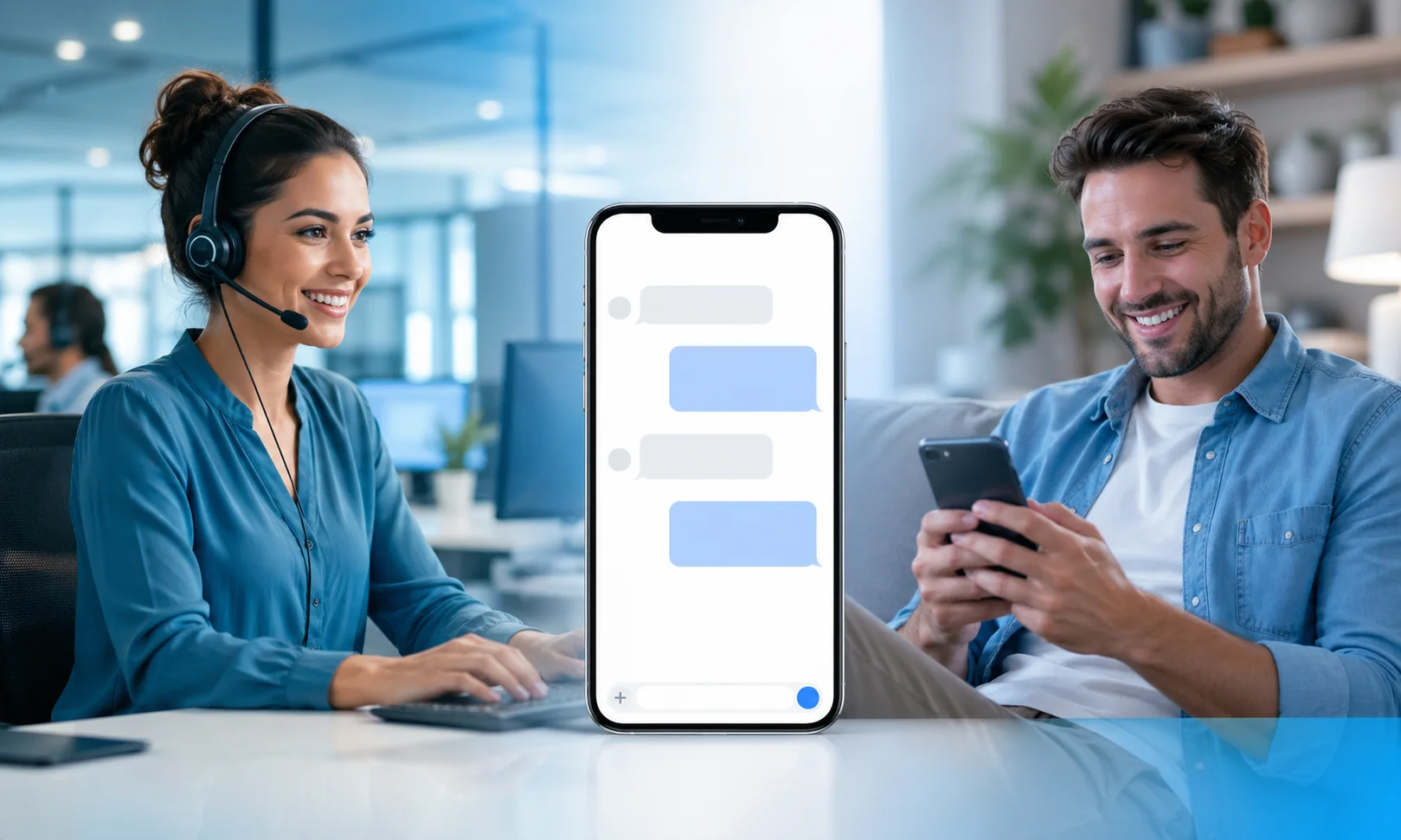
Two-way SMS allows businesses to both send and receive text messages, turning SMS from a broadcast tool into a live conversational channel. Unlike one-way bulk messaging where customers receive alerts with no ability to reply, two-way texting opens the channel in both directions. A customer receives a message, replies directly, and that reply lands in a shared team inbox where staff can respond, follow up, and manage the conversation to resolution.
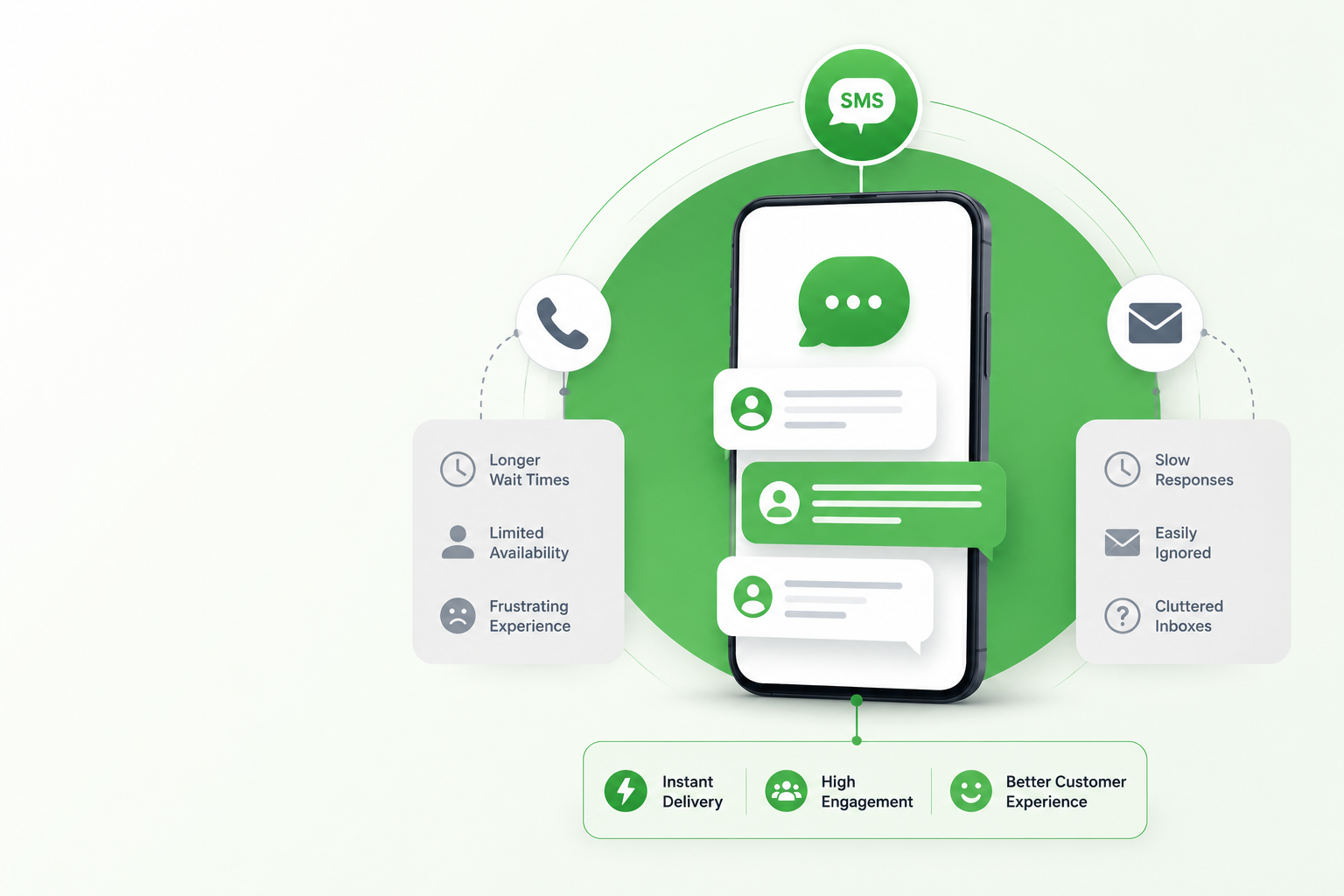
Understanding why SMS outperforms email for business communication makes it clear why two-way texting is becoming the default customer service channel across industries. The combination of instant delivery, near-universal device reach, and the familiarity of texting creates a support experience that customers genuinely prefer over phone calls and email threads.
Two-Way SMS Customer Service Use Cases That Drive Results
Resolving Support Queries in Real Time Phone queues frustrate customers. Email threads drag on for hours. A text conversation resolves the same issue in a fraction of the time, with full context visible in the thread. According to Salesforce Research, 83% of customers expect immediate engagement when they contact a business. Two-way SMS is the only asynchronous channel that consistently delivers on that expectation without requiring customers to wait on hold or check their inbox repeatedly.
Staff can handle multiple conversations simultaneously from a shared inbox, something impossible on a phone call, which means faster resolution for customers and significantly higher productivity for your support team.
Appointment and Order Confirmations Automated confirmations are useful. Two-way confirmations are better. When a customer receives a reminder and can reply to confirm, reschedule, or ask a question all within the same thread, the experience feels personal rather than automated. Pairing two-way SMS with solid appointment confirmation text best practices ensures your confirmation workflow generates maximum engagement with minimum staff effort.
Sales Enquiries and Lead Qualification Inbound leads who reply to a campaign message can be engaged in a real conversation immediately, qualifying their needs, answering questions, and moving toward a decision before they cool off. This is particularly effective across industries like real estate, healthcare, restaurants, andrecruiting where response speed directly impacts conversion rates. Post-Sale Follow-Up and Feedback Collection A follow-up text after a purchase or service interaction inviting a response shows customers their experience matters. Replies come back into the shared inbox, giving your team the opportunity to resolve any dissatisfaction before it becomes a negative review. This closed-loop approach to customer communication builds long-term loyalty at scale without adding headcount.
Ready-to-Use Two-Way SMS Customer Service Templates
● Support acknowledgement: “Hi [First Name], we received your message and are looking into it now. Reply anytime if you have additional details to share.”
● Issue resolution: “Hi [First Name], your issue has been resolved. Please let us know if there is anything else we can help you with.”
● Appointment confirmation: “Hi [First Name], your appointment is confirmed for [Day] at [Time]. Reply C to confirm or call [Phone] to reschedule.”
● Post-sale follow-up: “Hi [First Name], thanks for your recent purchase. How was your experience? Reply and let us know, we read every message.”
● Lead qualification: “Hi [First Name], thanks for reaching out. Can you tell us a little more about what you are looking for? We will match you with the right solution.”
● Feedback request: “Hi [First Name], on a scale of 1 to 10, how would you rate your experience today? Your reply helps us improve.”
How SendHub Powers Two-Way SMS Customer Service
SendHub is built for businesses that need to manage two-way conversations at scale without losing the personal feel that makes text messaging effective:
● Shared team inbox: Every inbound reply is visible to your entire team from one centralized dashboard. Conversations are assigned, tracked, and resolved without anything falling through the cracks between team members or shifts.
● Full conversation history: Every thread retains its complete message history so any team member can pick up a conversation with full context. No customer needs to repeat themselves.
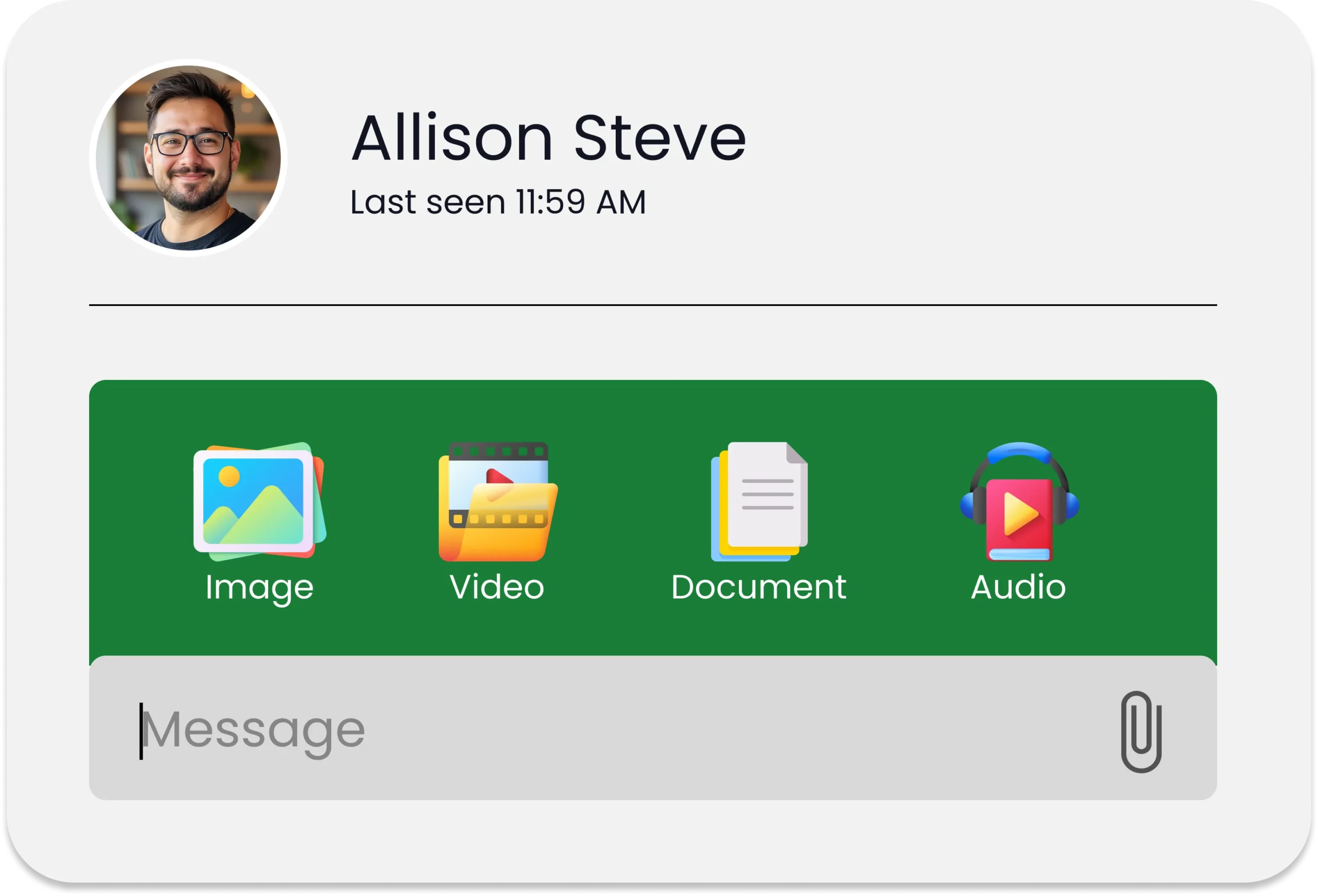
● SMS and MMS support: Two-way conversations are not limited to text. Customers can send and receive images, PDFs, and links within the same thread, making complex support queries easier to resolve and boosting engagement for time-sensitive interactions.
● Real-time notifications: Replies arrive instantly and notify your team, so customer messages never sit unanswered for longer than necessary.
● Mobile and desktop access: Whether your team is at their desk or in the field, SendHub is fully accessible from any device, keeping customer conversations manageable wherever staff are working.
● Built-in compliance tools: Opt-in management, opt-out handling, and audit logs keep your two-way SMS operation compliant with TCPA, CAN-SPAM, and GDPR regulations automatically.For businesses managing high volumes of customer interactions across multiple team members, a dedicated shared inbox for business texting is the operational difference between a customer service channel that scales and one that creates more problems than it solves.
Why Two-Way SMS Outperforms Every Other Support Channel
The data reinforces what customer service teams are finding on the ground:
● SMS carries a 98% open rate compared to roughly 20% for email. (CTIA)
● 83% of customers expect immediate engagement when contacting a business. (Salesforce)
● Businesses using two-way SMS report up to 40% faster customer query resolution compared to email-based support. (Mobile Marketing Watch)
● Nearly all US adults own a mobile phone, making SMS the highest-reach customer service channel available. (Pew Research Center)
Reviewing top SMS marketing statistics puts these numbers in full context and reinforces why two-way texting belongs at the centre of your customer service strategy rather than at the edges of it.
Frequently Asked Questions
Two-way SMS allows businesses to both send and receive text messages, turning SMS into a live channel where customers can ask questions and get issues resolved in real time.
Bulk SMS sends messages in one direction only with no reply capability, while two-way SMS opens the channel for full conversations suited for support, sales, and relationship management.
Yes, SendHub’s shared team inbox allows multiple staff members to view, assign, and respond to conversations from one centralised dashboard, ensuring no message goes unanswered.
Two-way SMS is asynchronous, meaning customers do not need to stay on a page to continue the conversation, making it more convenient than live chat for most enquiry types.
Two-way SMS delivers strong results across healthcare, real estate, restaurants, recruiting, retail, and logistics where timely personal communication directly impacts satisfaction and conversion.
SendHub includes built-in opt-in management, automatic opt-out handling, and audit logs that keep your operation compliant with TCPA, CAN-SPAM, and GDPR automatically.