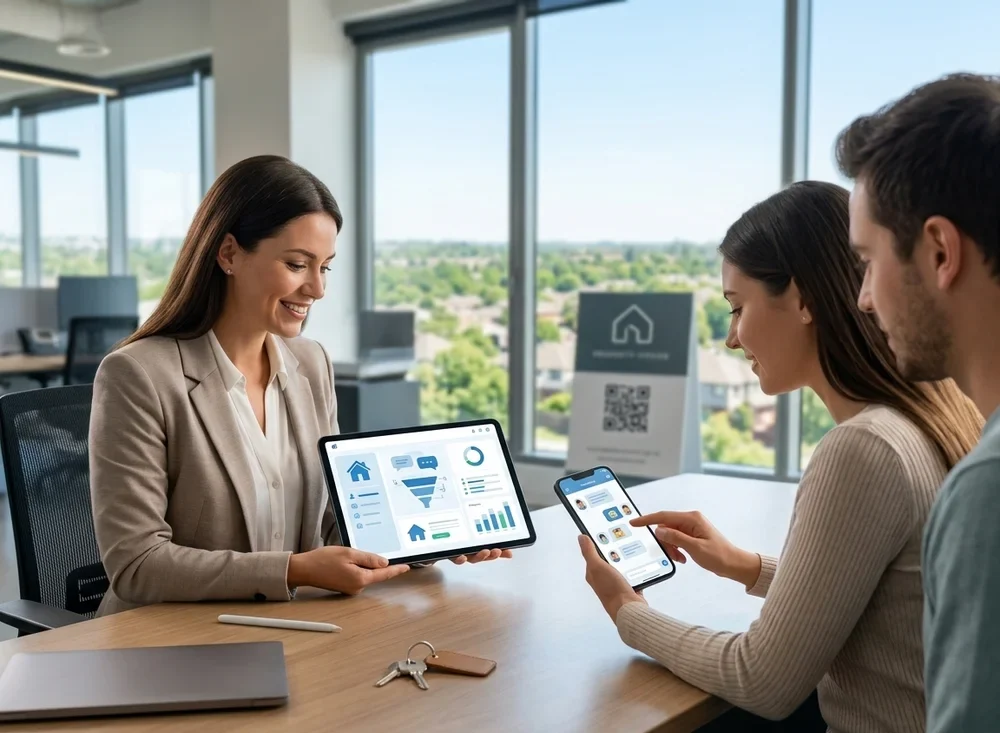
In real estate, the agent who responds first almost always wins the client. A buyer enquires about a listing at 7pm if they don’t hear back within minutes, they’ve already moved on to the next agent in their search results. Speed isn’t a competitive advantage anymore. It’s the baseline expectation.
According to the National Association of Realtors, the majority of homebuyers prefer texting over phone calls or emails when communicating with their agent. That preference isn’t a trend, it’s now the standard. Real estate text messaging in 2026 isn’t a nice-to-have for forward-thinking agents. For those serious about conversion, it’s a core part of how business
Why Real Estate Agents Are Switching to SMS in 2026
The average email open rate sits at around 20%. In real estate, timing around a listing, a price drop, or an open house can be the difference between a deal and a miss that means 8 out of 10 messages may never be seen. Phone calls aren’t doing much better. Buyers and renters increasingly screen unknown numbers, and voicemails rarely get returned promptly.
According to CTIA, text messages carry a 98% open rate and are read within 3 minutes of delivery by the vast majority of recipients. Once you understand why SMS outperforms email for business communication, it’s clear why the most productive agents in 2026 have made real estate text messaging a core part of their workflow:
- 98% open rate nearly every text gets seen, often within minutes of delivery
- Read within 3 minutes ideal for time-sensitive listing alerts and showing confirmations
- No app required clients receive messages on their existing phone without any setup
- Two-way by default buyers can reply instantly, keeping the conversation moving
Universal reach according to Pew Research Center, nearly all US adults own a mobile phone, meaning your entire client base is reachable via text
Where Real Estate Text Messaging Fits Across the Deal Cycle
The power of SMS in real estate isn’t limited to one moment in the transaction. It works from the first enquiry all the way through to closing and beyond.
Lead Capture and First Response
When a prospective buyer fills out a form on a listing page or texts a keyword from a yard sign, an automated SMS response acknowledges them immediately even if you’re mid-showing. That instant reply keeps the lead warm and signals professionalism before you’ve had a single conversation. Agents who invest in effective lead generation for realtors know the first touchpoint sets the tone for the entire relationship. Research consistently shows that leads contacted within the first five minutes of enquiring are significantly more likely to convert than those contacted even 30 minutes later.
Showing Reminders and Confirmations
No-shows disrupt schedules and delay the sales process. A missed showing doesn’t just cost time, it costs trust with sellers who expect their agent to manage viewings professionally. Automated reminders using scheduled messaging sent 24 hours and again on the morning of the visit dramatically reduce that friction. Pairing those with solid appointment confirmation text best practices will improve attendance rates meaningfully within the first few weeks of implementation.
Listing Alerts and Price Drop Notifications
When a property that matches a buyer’s criteria hits the market, or when a seller agrees to a price reduction, timing is everything. A bulk SMS reaches your entire relevant contact list investors, active buyers, renters in a specific area within seconds. Each reply opens a private thread, so mass outreach doesn’t sacrifice the personal touch that real estate relationships depend on.
Follow-Up Through the Sales Cycle
Most deals don’t close on the first showing. The follow-up sequence checking in after a visit, sharing comparable properties, nudging a buyer who’s gone quiet is where deals are won or lost. Sales follow-up text message templates give agents a structured, non-intrusive way to stay present throughout a buyer’s decision process without coming across as pushy.
Closing Coordination
The final stretch of a transaction involves multiple parties, buyers, sellers, attorneys, lenders, and inspectors. Quick updates on document status, signing reminders, and schedule confirmations all move faster over SMS than through email chains that get buried or delayed. Text messaging keeps every party aligned without requiring anyone to check a shared inbox or remember a password.
Ready-to-Use Real Estate SMS Templates
- New lead response: “Hi [First Name], thanks for your interest in [Property Address]. I’d love to arrange a viewing. When works best for you? [Agent Name], [Agency]”
- Showing reminder: “Hi [First Name], your viewing at [Address] is tomorrow at [Time]. Reply C to confirm or let me know if you need to reschedule.”
- Listing alert: “New listing: [Brief Description] in [Neighborhood] just hit the market at [Price]. Interested? Reply here for full details.”
- Price drop: “Price update: [Property Address] has dropped to [New Price]. This one won’t last. Reply to book a viewing.”
- Post-showing follow-up: “Hi [First Name], great meeting you today at [Address]. Any questions? Happy to share more details or arrange a second look.”
How to Stay TCPA-Compliant With Real Estate Text Messaging
Before sending your first bulk listing alert, compliance is non-negotiable. Under the Telephone Consumer Protection Act (TCPA), sending unsolicited marketing messages to contacts who haven’t explicitly opted in can result in penalties of up to $1,500 per message. For a bulk send to hundreds of contacts, that exposure is significant.
Understanding what opt-in means in text messaging is the foundation of a compliant and effective SMS strategy. Here’s what real estate agents need to have in place:
- Explicit opt-in consent collected at the point of first contact through a website form, a keyword-based yard sign sign-up, or a checkbox during client registration
- Clear identification every message must identify who it’s from and provide a way for recipients to opt out
- Opt-out management any contact who replies STOP must be removed from future sends immediately and automatically
- Stored consent records documentation of when and how each client opted in, retained in case of dispute
SendHub’s built-in opt-in and consent tracking system handles all of this automatically, records are stored, opt-outs are managed, and your team can message with full confidence.
How SendHub Powers Real Estate Text Messaging
SendHub is built for real estate teams that need to communicate at scale without losing the personalised feel clients expect. Here’s what it brings to real estate practices specifically:
- Automated showing reminders Reminders go out at set intervals before viewings. Confirmations come back into the shared inbox, flagged and ready for follow-up without manual tracking.
- Two-way SMS from a shared team inbox Every agent on your team can see and manage client conversations from one dashboard, accessible from desktop or mobile. No more leads falling through the cracks when an agent is unavailable.
- Bulk SMS for listings and campaigns Reach your full contact list or a targeted segment buyers in a price range, investors in a specific market in a single send. Each reply opens a private thread for personalised follow-up.
- SMS templates with merge fields Customize client names, property addresses, and appointment times automatically, so every text feels individually written even when sending to hundreds.
- Built-in opt-in and consent tracking Client consent is confirmed and stored automatically, keeping your outreach TCPA compliant without added administration.
- Works across devices Whether you’re at your desk or on-site at a property, SendHub is fully accessible from desktop and mobile, keeping communication consistent wherever you’re working.
Real Estate SMS Statistics That Prove the Channel Works
The data backs up what agents on the ground are already finding:
- The majority of homebuyers prefer texting over phone calls or emails (National Association of Realtors)
- Text messages are read within 5 minutes by the vast majority of recipients (CTIA)
- SMS response rates are up to 209% higher than phone call response rates (SMS Comparison)
- Nearly all US adults own a mobile phone, meaning your entire client base is reachable via text (Pew Research Center)
Reviewing top SMS marketing statistics puts these numbers in full context and reinforces why SMS should be a primary communication channel in 2026, not a supplementary one.
Frequently Asked Questions
Yes. SMS is one of the fastest ways to respond to new leads, and speed is the single biggest factor in conversion. An automated text the moment a lead enquires keeps them engaged before they move on to a competing agent.
Agents can use SMS across the entire deal cycle – lead responses, showing reminders, listing alerts, price drop notifications, follow-ups after viewings, and closing coordination. Any time-sensitive communication that would go unanswered over email is a strong candidate for text.
Consent is typically collected at the point of first contact through a website form, a keyword-based yard sign sign-up, or a checkbox during client registration. Once a client opts in, that record is stored automatically, keeping your outreach TCPA-compliant without any manual tracking.
Yes. A shared team inbox lets multiple agents, assistants, and property managers manage client conversations from one centralised dashboard. No lead gets missed when one agent is unavailable, and the full conversation history is visible to whoever picks it up.
Automated reminders using scheduled messaging sent 24 hours before and on the morning of the viewing give clients a clear, low-friction way to confirm or reschedule. A text gets read where a phone call often doesn’t get answered and a simple reply is all it takes to confirm, significantly reducing last-minute no-shows.