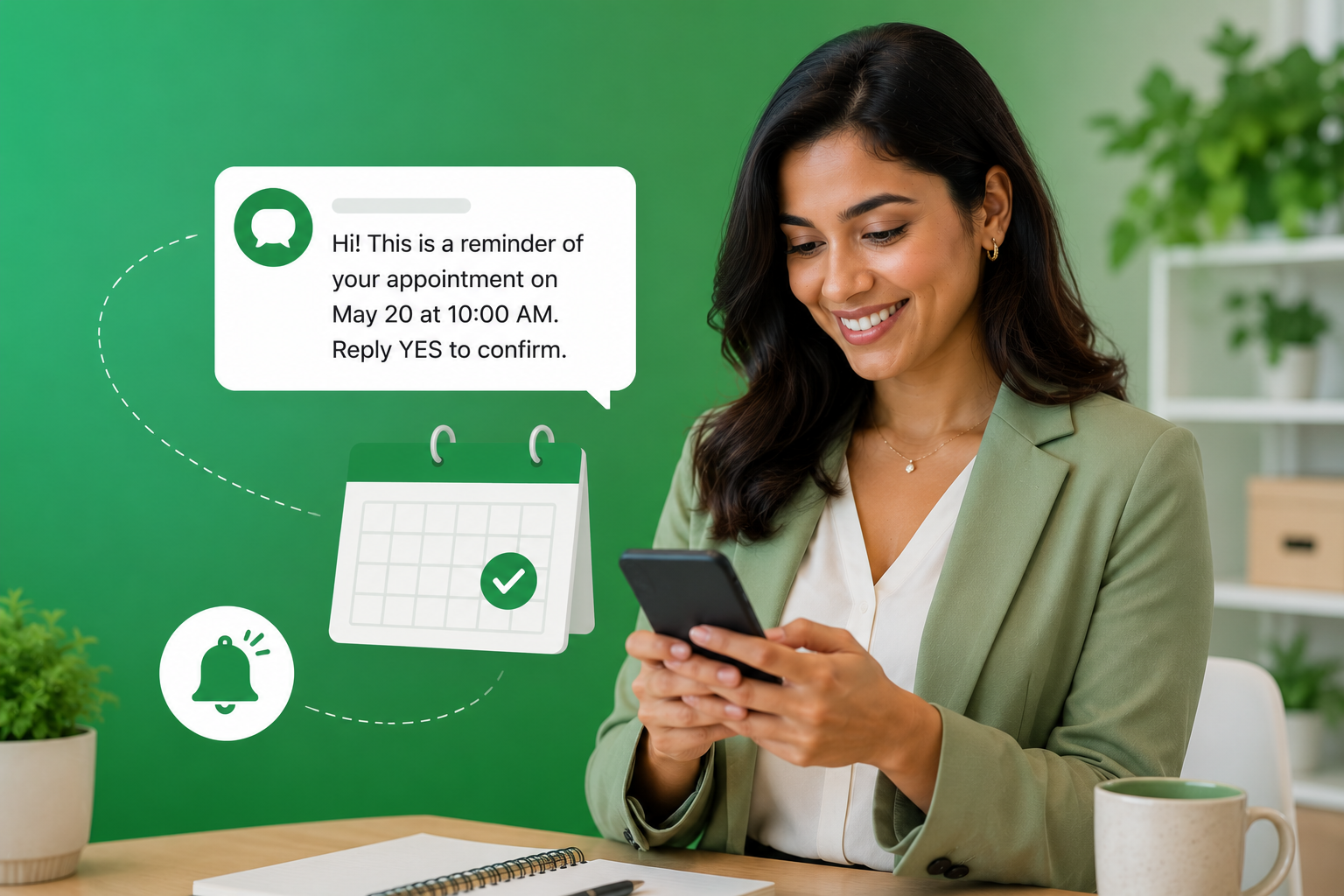

A text message signature is a short block of identifying information appended to the end of every business SMS, telling the recipient exactly who is texting them and how to reach you without requiring them to already have your contact saved. According to Exclaimer 2024 research, 57% of consumers identify branded signatures as the top method for building trust in business communication. The Textmagic State of Business Texting 2025 report reinforces why this matters on the other side: nearly 70% of respondents have blocked a business number, with unknown senders and bad grammar listed as the primary triggers. A well-crafted text message signature solves both problems simultaneously. For small businesses and mid-size teams sending customer SMS through SendHub, this guide covers what a text signature includes, what to avoid, and ready-to-use text message signature ideas across every major business context.
What Is a Text Message Signature and Why Does It Matter?
A text message signature is a standardised block of text that appends automatically to the end of outgoing business SMS messages, functioning like a digital business card that identifies the sender without requiring manual input on every send. Unlike email signatures, which support formatting, images, and hyperlinks, an SMS signature works entirely in plain text within the character constraints of the channel.
The business case for using one is direct. A recipient who does not recognise the number sending a message is far more likely to ignore or block it than engage with it. Two outcomes a consistent text signature prevents immediately:
- Anonymity: A message that arrives without a sender name forces the recipient to guess who is texting. For two-way business texting scenarios where a response is needed, anonymity is the single fastest way to kill engagement.
- Distrust: Unidentified business texts register as potential spam. The Textmagic 2025 data showing that unknown numbers are among the top reasons consumers block business numbers confirms that identification is not optional for businesses that rely on SMS as a customer communication channel.
What to Include in a Business Text Message Signature
The most effective business text signatures share a consistent structure: they identify the sender clearly, provide one actionable contact point, and stay short enough not to dominate the message itself. Character discipline is essential because every character in an SMS signature reduces the space available for the actual message content. Most SMS platforms deliver up to 160 characters in a single message segment, which means a signature that runs 60 characters leaves only 100 for the message body.
The essential elements every business SMS signature should include are:
- Your first name or full name: Identifies the specific person sending the message, which is especially important in healthcare, real estate, and recruiting contexts where the relationship is person-to-person rather than brand-to-customer.
- Business name: Identifies the organisation behind the message, satisfying TCPA identification requirements and reducing the likelihood of the message being flagged as spam by the recipient.
- One contact point: A phone number, website, or department name gives the recipient a clear next step if they want to respond through a different channel. Including more than one contact point adds character count without adding proportional value.
Text Message Signature Ideas by Industry and Use Case
The following text message signature ideas are ready to use or adapt. Each is formatted for under 60 characters to leave adequate space for message body content, includes the business name for TCPA compliance, and is structured for the specific communication context noted.
General Business James | Acme Supply | Reply STOP to opt out (45 characters)
Healthcare Provider Dr. Chen | Lakeside Clinic | 555-0192 (38 characters)
Real Estate Agent Sarah K. | Metro Realty | sarah@metrorealty.com (47 characters)
Recruiting Firm Tom | TalentFirst Recruiting | 555-0147 (39 characters)
Restaurant Marco | Bella Vista | Book: bellavista.com (41 characters)
Auto Dealer: Auto dealers benefit from a direct contact name rather than a department label, which keeps the interaction personal in a high-consideration purchase context. Dan | Eastside Motors | dan@eastsidemo.com (42 characters)
Nonprofit Nonprofits should include the organisation name prominently because donor and volunteer relationships are built on organisational trust rather than individual staff credibility. Lisa | Greenlight Foundation | Reply STOP (41 characters)
Transportation and Logistics Transportation teams sending driver updates or dispatch notifications benefit from a team or department label rather than an individual name. Dispatch | FleetCore | fleetcore.com/track (41 characters)
Schools School communications to parents benefit from including the school name and staff role for immediate context. Mr. Rivera | Oakdale Middle | 555-0134 (39 characters)
What to Avoid in a Text Message Signature
Most competitor guides focus entirely on what to include in an SMS signature. What to avoid is equally important, particularly because poor signature choices actively damage deliverability and customer trust rather than simply failing to add value. The four most common text signature mistakes that reduce response rates and increase block rates are:
- URLs in every message: Including a website link in your signature on every outgoing SMS triggers spam filters on some carrier networks. Reserve links for messages where they are contextually relevant rather than treating them as permanent signature fixtures.
- Signatures longer than 60 characters: A signature that consumes more than 60 characters leaves less than 100 characters for the message itself in a standard 160-character SMS, which forces awkward character rationing and increases multi-part message costs.
- Job titles without names: A signature that reads “Customer Support | Acme Co” without an individual name removes the human element that makes SMS feel personal. Customers respond more readily to a named individual than to a department label.
- Informal language or emojis: The Textmagic 2025 report found that nearly half of consumers consider slang and emojis in business texts unprofessional. An SMS signature is a permanent fixture on every outgoing message and should represent the business at its most professional baseline.

How SendHub Takes the Manual Work Out of Every Text Signature
Typing the same name, business, and contact details at the end of every message gets skipped under pressure and forgotten during busy periods, which is exactly when consistent identification matters most. SendHub removes that dependency by building signature consistency directly into the platform:
Signature storage and reuse: SendHub’s message templates feature saves a standardised signature block once and appends it to any outgoing message without retyping, keeping every team member aligned on the same approved format.
Individual name personalisation at scale : Merge fields insert each sender’s name automatically into a shared signature structure so every message reads as personally sent while the business name and contact point stay consistent across the team.
Compliance at the number level: SendHub’s10DLC registration support ensures the number carrying your signature is carrier-registered and TCPA-compliant before the first send. A professional signature on an unregistered number provides no protection against filtering or blocking.
Consistency across high-volume sends: The bulk SMS service and scheduled messaging features both pull from saved templates, meaning every recipient in a campaign receives the same identified, professional send regardless of volume.
Frequently Asked Questions
A text message signature is a short block of identifying information appended automatically to the end of business SMS messages. Consequently, it tells recipients who is texting them and provides one contact point without requiring manual input on every send.
Every business text signature should include your name, your business name, and one contact point such as a phone number or website. Additionally, keeping the signature under 60 characters preserves adequate space for the message body.
Under 60 characters is the recommended target for most business contexts. Furthermore, this length ensures the signature leaves at least 100 characters for the message itself within a standard 160-character SMS segment.
Including a STOP instruction in the signature of marketing messages is both a TCPA best practice and a carrier-level recommendation. Therefore, for promotional or marketing SMS specifically, adding “Reply STOP to opt out” to the signature protects both the recipient and the business.
It is not recommended. The Textmagic State of Business Texting 2025 report found that nearly half of consumers consider emojis and slang in business texts unprofessional. Consequently, an SMS signature should represent the business at its most professional baseline.