
SMS marketing statistics consistently tell the same story: no other direct marketing channel delivers the open rates, response speed, and return on investment that text messaging produces. The CTIA reports that Americans exchange over 2.1 trillion text messages annually, and according to the Salesforce SMS Marketing Guide, SMS carries a 98% open rate compared to email’s 22%. Every figure below names its source and year, so you can check it before you quote it. For small businesses evaluating where to focus marketing spend and teams looking to benchmark their SMS and MMS marketing performance, this guide presents the most important 2026 statistics across open rates, CTR, ROI, and industry benchmarks with a practical interpretation of what each number means for your business.
SMS Marketing Statistics 2026: The Headline Numbers
Every statistic in this section comes from a named, verifiable research report. These four numbers establish the baseline for evaluating SMS as a primary revenue and communication channel:
- 98% open rate: SMS messages achieve a 98% open rate across industries, confirmed by the CTIA and cited in the Salesforce SMS Marketing Guide. Approximately four in five emails go unread by comparison.
- 45% response rate: SMS campaigns achieve a 45% response rate versus email’s 6%, making SMS the only channel that generates near-instant two-way engagement at scale.
- 683% success advantage: The SimpleTexting 2024 State of SMS Marketing report found that businesses using SMS are 683% more likely to report digital marketing success than those that do not.
- $71 ROI per dollar spent: Attentive 2024 data shows SMS marketing delivers an average $71 return for every $1 invested, outperforming most digital marketing channels on direct revenue attribution.
SMS Open Rate Statistics: Why 98% Changes Everything
SMS open rate statistics are the most cited figures in text message marketing research because they reflect a structural advantage no other channel can replicate. The 98% rate is not a campaign-specific result. It reflects how people use their phones: texts trigger immediate notifications and are read within minutes regardless of sender familiarity. Understanding what drives that rate helps businesses protect and sustain it.
- 97% read within 15 minutes: According to RedEye 2024, 97% of SMS messages are read within 15 minutes of delivery, compared to email where most messages are read hours after sending or not at all.
- 82% read within 5 minutes: eMarketer research shows 82% of consumers read their texts within five minutes of receiving them, making SMS the fastest-read marketing channel available.
- 3% spam rate vs 85% for email: According to Textedly 2024, only 3% of SMS messages are considered spam compared to nearly 85% of all emails. This trust advantage sustains the open rate at scale and explains why SMS opt-in lists consistently outperform email on engagement metrics.
What this means for your business: A message sent by SMS reaches your customer with near certainty. The same message sent by email reaches roughly one in five. For time-sensitive communication and promotional campaigns, mass texting is the only reliable channel.

SMS CTR and Response Rate Statistics
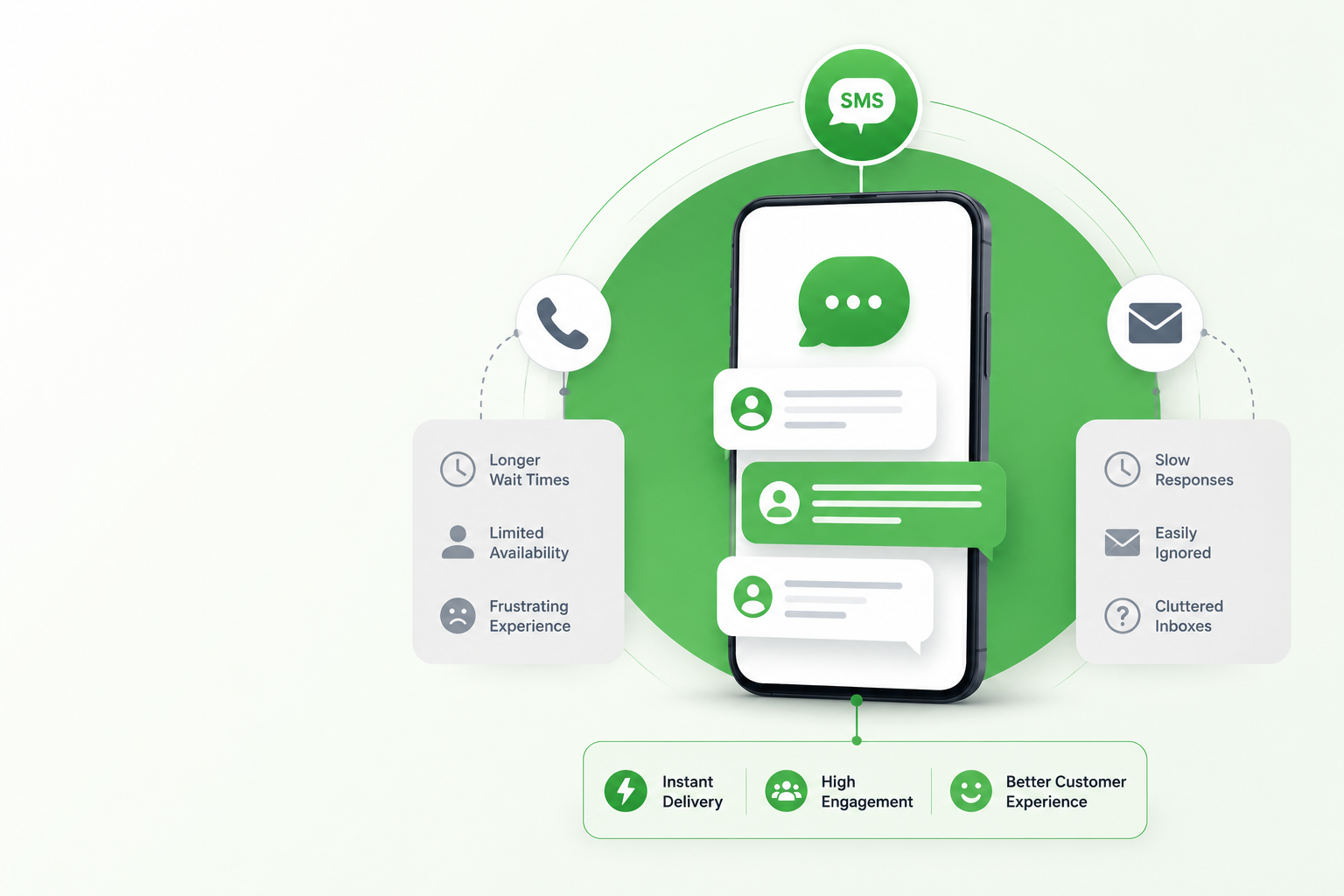
Click-through and response rate statistics confirm that SMS does not just get seen, it gets acted on. The gap between SMS and email on these metrics is wider than most businesses realise before making the switch to an SMS-first strategy.
- 19% to 35% CTR: SMS click-through rates average between 19% and 35% across industries per multiple 2024 benchmarks. Email averages between 2.5% and 3.25%, making SMS approximately ten times more effective at driving link-based actions.
- 45% response rate vs 6% for email: SMS campaigns generate a 45% response rate compared to email’s 6%. This gap makes two-way business texting the practical choice for any campaign requiring a customer reply.
- 90-second average response time: The Salesforce SMS Marketing Guide cites a 90-second average SMS response time compared to 90 minutes for email, a difference that determines whether urgent campaigns generate same-day revenue or miss their window entirely.
What this means for your business: Every promotional link you include in an SMS is ten times more likely to be clicked than the same link in an email. For businesses relying on link-based conversions, moving those campaigns to SMS is the single highest-leverage channel switch available.
SMS Marketing ROI Statistics: What the Channel Returns
ROI statistics are where SMS marketing moves from engagement metric to business case. The revenue figures from named 2024 and 2026 research show SMS delivering returns that justify its position as the lead channel in any direct marketing strategy.
- $71 return per $1 spent: Attentive 2024 data shows SMS marketing delivers an average $71 ROI per dollar spent. Email marketing averages $36 to $42 per dollar depending on the research source, making SMS nearly twice as efficient on direct revenue return.
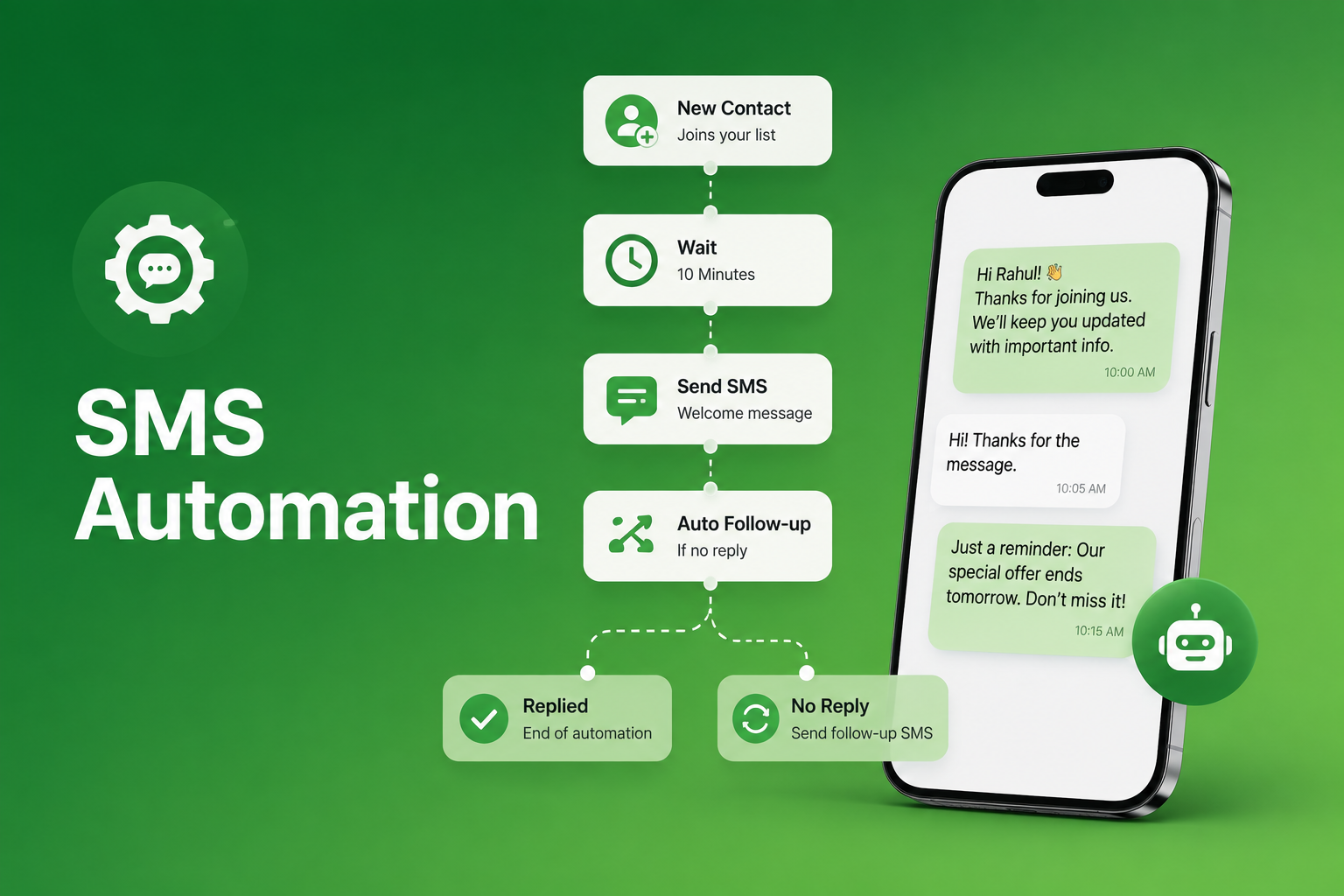
- 45.2% of SMS revenue from 7.6% of sends: The Klaviyo 2026 SMS Benchmarks report found that automated SMS flows account for just 7.6% of total sends but drive 45.2% of total SMS revenue, confirming that scheduled text messaging and behavioural triggers dramatically outperform one-off broadcasts.
- 72% made a purchase after an SMS: Klaviyo and Recharge 2024 found that 72% of consumers made a purchase after receiving a brand text, and 65% of those buyers purchased earlier than planned because of the promotional message.
What this means for your business: The largest ROI gains in SMS come from automation, not volume. Setting up behavioural triggers through scheduled sends consistently outperforms adding more broadcast campaigns to an already active list.
Text Message Marketing Statistics by Industry
Text message marketing statistics vary meaningfully by industry, and understanding where SMS performs strongest helps businesses prioritise where to deploy it first. According to SimpleTexting 2024, consumers are most likely to opt in from e-commerce and retail brands at 48%, healthcare at 36%, finance at 24%, and consumer services at 23%.
- Healthcare: According to Voicesage 2024, SMS reduces missed appointments by 80%. Healthcare providers using appointment reminder texts see measurably lower no-show rates than those relying on email or phone calls alone.
- Real estate and recruiting: Real estate and recruiting teams following up new leads via SMS within 90 seconds reach prospects before intent drops, a window email cannot match.
- Restaurants and nonprofits: Restaurants and nonprofits consistently report stronger same-day campaign performance from SMS because their audiences are mobile-first and their messages are inherently time-bound.
- Compliance: SimpleTexting 2024 reports that 61% of SMS unsubscribes result from receiving messages too frequently. Maintaining a send frequency of two to four messages per month protects list health and preserves the engagement rates these benchmarks reflect.
What this means for your business: Industry-specific opt-in rates and use cases determine which SMS campaigns to prioritise first. Healthcare and retail benefit most from appointment and promotional sends respectively, while every industry benefits from frequency discipline.
SMS Marketing Trends Shaping Strategy in 2026
The most important SMS marketing trends heading into 2026 reflect shifts in how businesses are building and optimising their text messaging strategies beyond basic broadcast campaigns. These three data points represent genuinely new developments not captured in the core benchmark statistics above.
- AI integration is accelerating: SimpleTexting 2024 found that 83% of businesses using SMS have incorporated AI into their SMS marketing strategy, using it for personalisation, send-time optimisation, and automated response handling. This adoption rate signals that AI-powered SMS is moving from competitive advantage to baseline expectation.
- Market growth is outpacing other digital channels: The US SMS marketing market is projected to grow from its current scale to $12.6 billion by 2025 at a 20.3% CAGR according to Statista, outpacing email marketing growth rates and reflecting accelerating business investment in the channel.
- Evening sends drive peak purchases: Attentive 2024 data shows 45% of SMS purchases occur in the evening, making evening send windows the highest-revenue time slot for promotional campaigns and a key optimisation variable that most businesses are not yet systematically testing.
How SendHub Helps You Capture These Results
The Klaviyo 2026 benchmark data showing automated flows generate 30x more revenue per recipient than one-off sends is the most actionable statistic in this blog, because it means the businesses generating the highest SMS ROI are not the ones sending the most messages. They are the ones sending the right messages at the right moment. SendHub is built to make that operationally practical for every business:
- Mass texting with carrier-compliant routing that protects the delivery rates these benchmarks depend on.
- SMS and MMS marketing tools for promotional campaigns that drive the 72% purchase rate cited in Klaviyo and Recharge research.
- Scheduled text messaging and automated flows that capture the 30x revenue per recipient advantage from behaviour-triggered sends.
- Two-way business texting to convert the 45% response rate into actual customer conversations.
- 10DLC texting registration support built in so TCPA compliance is handled from day one.
Analytics and reporting to track your open rates, CTR, and opt-out trends against the 2026 benchmarks in this guide.
Frequently Asked Questions
SMS open rates benchmark consistently at 98% across industries per CTIA and the Salesforce SMS Marketing Guide. Furthermore, 97% of those messages are read within 15 minutes of delivery, making SMS the fastest-read marketing channel available.
SMS click-through rates average between 19% and 35% depending on industry. Email averages between 2.5% and 3.25%. Consequently, SMS is approximately ten times more effective at driving recipients to take link-based actions from a single send.
Attentive 2024 data shows SMS delivers an average $71 return per $1 spent. Furthermore, Klaviyo’s 2026 benchmark report confirms automated SMS flows generate up to 30 times more revenue per recipient than standard one-off campaign sends.
SMS achieves a 45% response rate compared to email’s 6% per multiple 2024 industry sources. Additionally, the average SMS response time is 90 seconds compared to 90 minutes for email, making SMS the only viable channel for time-sensitive engagement.
According to SimpleTexting 2024, 80% of businesses use SMS marketing software and nearly 70% increased their budgets in 2024. Additionally, businesses that text are 683% more likely to report digital marketing success than those that do not.
The average SMS opt-out rate sits between 1% and 2% for businesses following frequency best practices per SimpleTexting 2024. Furthermore, 61% of unsubscribes result from over-sending, making frequency control the most important list health variable.