
Holiday text messages reach customers at the exact moment purchase decisions are being made. According to Klaviyo and Recharge’s 2024 consumer research, 76% of Cyber Week e-commerce traffic came from mobile devices, and 65% of people who received a promotional text bought sooner than they originally planned. The CTIA reports that SMS remains the most universally accessible messaging channel in the US, connecting businesses to every subscriber regardless of carrier or device. That combination of immediacy and reach separates holiday SMS marketing from every other Q4 channel. The five tactics below every text drives action rather than just delivering a greeting.
Tactic 1: Send Holiday Text Messages That Drive Flash Sales
The most effective holiday text messages pair a clear offer with a hard deadline, according to Validity’s research, as shown in the table. Email’s 2025 SMS marketing analysis, 90% of SMS messages are read within three minutes of delivery, making the channel uniquely suited to same-day promotions during a season when inboxes overflow, and social feeds move too fast to capture attention.
- Limit each bulk SMS campaign to one offer per message and state the exact expiry time so recipients understand the stakes without needing to read a second line.
- Schedule flash sale texts between 10 AM and 2 PM local time, when purchase intent peaks and customers are most likely to act on a time-sensitive link.
Tactic 2: Personalize Holiday Marketing Messages at Scale
Generic blasts get ignored during the holidays because customers receive dozens of promotional texts from competing brands every day. According to Klaviyo and Recharge’s 2024 research, 86% of consumers made two or more purchases in the prior year directly from receiving SMS messages, and personalization is the key differentiator between texts they acted on and those they deleted. Using merge fields to personalize holiday texts inserts first names, location details, or purchase history references across thousands of contacts without any manual editing.
- Segment contacts by purchase category or engagement level before the campaign launches so each holiday SMS feels targeted rather than mass-produced.
- Test one personalized variable per send, either first name or purchase history reference, to learn which detail drives the most responses from your specific audience.
Tactic 3: Schedule Holiday Text Messages Around Peak Shopping Moments
Timing is the most underutilized element of holiday SMS strategy. According to Notifyre’s 2025 SMS marketing analysis, SMS subscriber databases grow by an average of 41% during Q4, meaning more opted-in contacts are actively expecting brand messages at exactly the time businesses need to reach them. Black Friday morning, the final free-shipping day before Christmas, and New Year’s Eve afternoon are three windows where a well-timed scheduled text message hits at peak purchase intent.
- Build your holiday campaign calendar at least two weeks before the season begins, mapping each send to a specific shopping moment rather than texting reactively through December.
- Avoid Saturday evening and Sunday morning sends during the holiday window, when customers are least likely to engage with commercial messages.
Tactic 4: Use MMS for Holiday Marketing Messages That Stand Out Visually
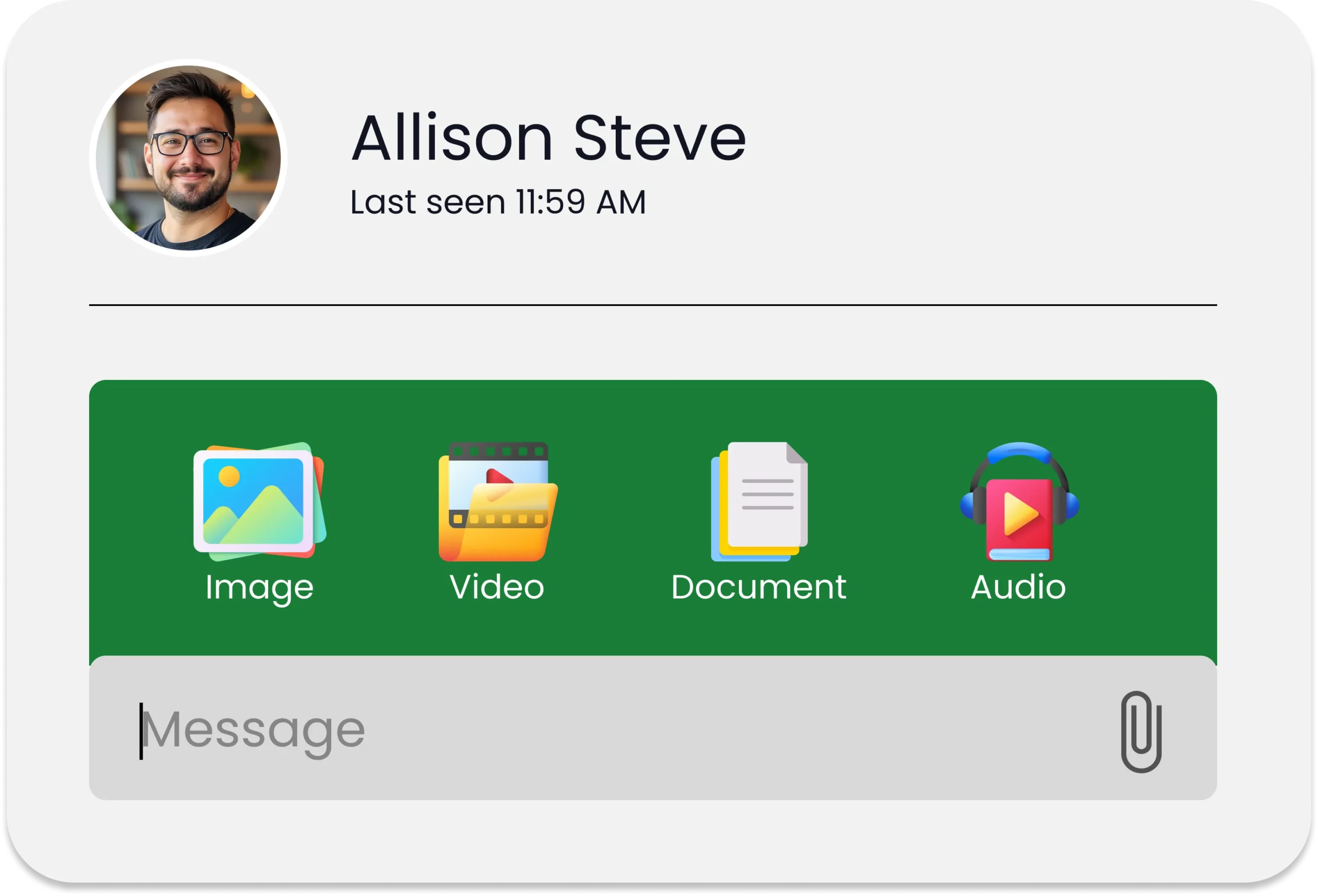
Text-only messages work for offers, but MMS messages that include a product image, gift guide graphic, or seasonal banner give customers a visual reason to engage. Since 76% of Cyber Week e-commerce traffic arrives on mobile devices, holiday shoppers are already on the exact screen where a compelling MMS image can drive an immediate click without any additional navigation step. Competitors sending text-only holiday messages cannot replicate that visual advantage during the busiest shopping season of the year.
- Keep MMS file sizes under 500KB and pair each image with a single CTA so the visual supports the action rather than creating a distraction from it.
- Reserve MMS for gift guide campaigns and product launches where seeing the item creates stronger purchase intent than a text description alone.
Tactic 5: Re-engage Dormant Customers with Holiday Text Messages
The Q4 window is the highest-value moment to reconnect with contacts who have gone quiet since earlier in the year. According to Notifyre’s 2025 analysis, 79% of SMS subscribers are more likely to purchase during the period they remain subscribed, up 21% from 2024. A targeted mass text reaching opted-in contacts who have not purchased in 60 or more days can reactivate a segment that email campaigns have already failed to convert.
- Frame re-engagement texts around a specific return offer rather than a generic greeting, as direct value consistently outperforms seasonal pleasantries with dormant contacts.
- Limit re-engagement sends to one per seven-day window and include a clear opt-out line in every message to protect your sender reputation entering Q4.
TCPA and 10DLC Compliance for Holiday Campaigns
Every holiday text message campaign is required to comply with TCPA regulations and 10DLC registration standards. Businesses are permitted to send marketing texts only to contacts who have explicitly opted in, and every message must carry an opt-out instruction such as “Reply STOP to unsubscribe.” The FCC’s TCPA guidance outlines the carrier and consent requirements that apply to all A2P messaging throughout the holiday season.
- Register your number for 10DLC texting well before the season begins, as processing delays can hold up campaign launches if registration is left until November.
- Keep your suppression list current and remove opt-outs immediately after receipt to stay compliant through every Q4 send.
How SendHub Powers Your Holiday SMS Marketing
Businesses running high-volume Q4 campaigns against tight timelines, compliance requirements, and the need to personalize messages across thousands of opted-in contacts need a platform built for that specific pressure. SendHub addresses the operational challenges that flash sales, scheduling, re-engagement, and visual messaging each create during the holiday season.
- MMS and attachments for visual holiday campaigns, including product images and gift guides, delivered reliably across all major US carriers
- Two-way texting so customers can reply to holiday messages and receive real responses from your team in real time, rather than hitting a dead end
- Analytics and reporting to track delivery, click-through, and opt-out rates across every send throughout your Q4 campaign window
- Pre-built SMS templates with holiday-ready copy that can be personalized and deployed across your full contact list in minutes
- Bulk SMS delivery with carrier-compliant throughput so high-volume holiday sends are not flagged or throttled at peak periods
- Scheduled text messaging to align every campaign with Black Friday, Cyber Monday, and the final pre-Christmas shipping window
- Merge field personalization for first name, location, and purchase history customization at scale without manual editing per contact
- Group messaging to segment contacts by engagement level or purchase category before each holiday campaign send
Frequently Asked Questions
Launch your first holiday SMS campaign no later than the first week of November to capture early shoppers before competitors do.
Two to four marketing texts per month is the widely accepted threshold, with one additional send acceptable during peak windows like Cyber Week.
Yes, and prior express written consent is required under TCPA before any marketing text is sent, including seasonal greetings to non-opted-in contacts.
Research consistently points to 10 AM to 2 PM local time as the highest-performing window for holiday SMS sends.
The most effective holiday texts lead with the offer, state a hard expiry deadline, and contain a single clickable link.
Yes, and MMS messages with product visuals consistently outperform text-only sends, so keep file sizes under 500KB before launch.
Lead with a specific return offer and include the recipient’s name, as personalized value consistently outperforms a generic seasonal greeting.
Restaurants and nonprofits consistently lead in holiday SMS ROI, alongside retail, real estate, and healthcare businesses running opted-in campaigns.