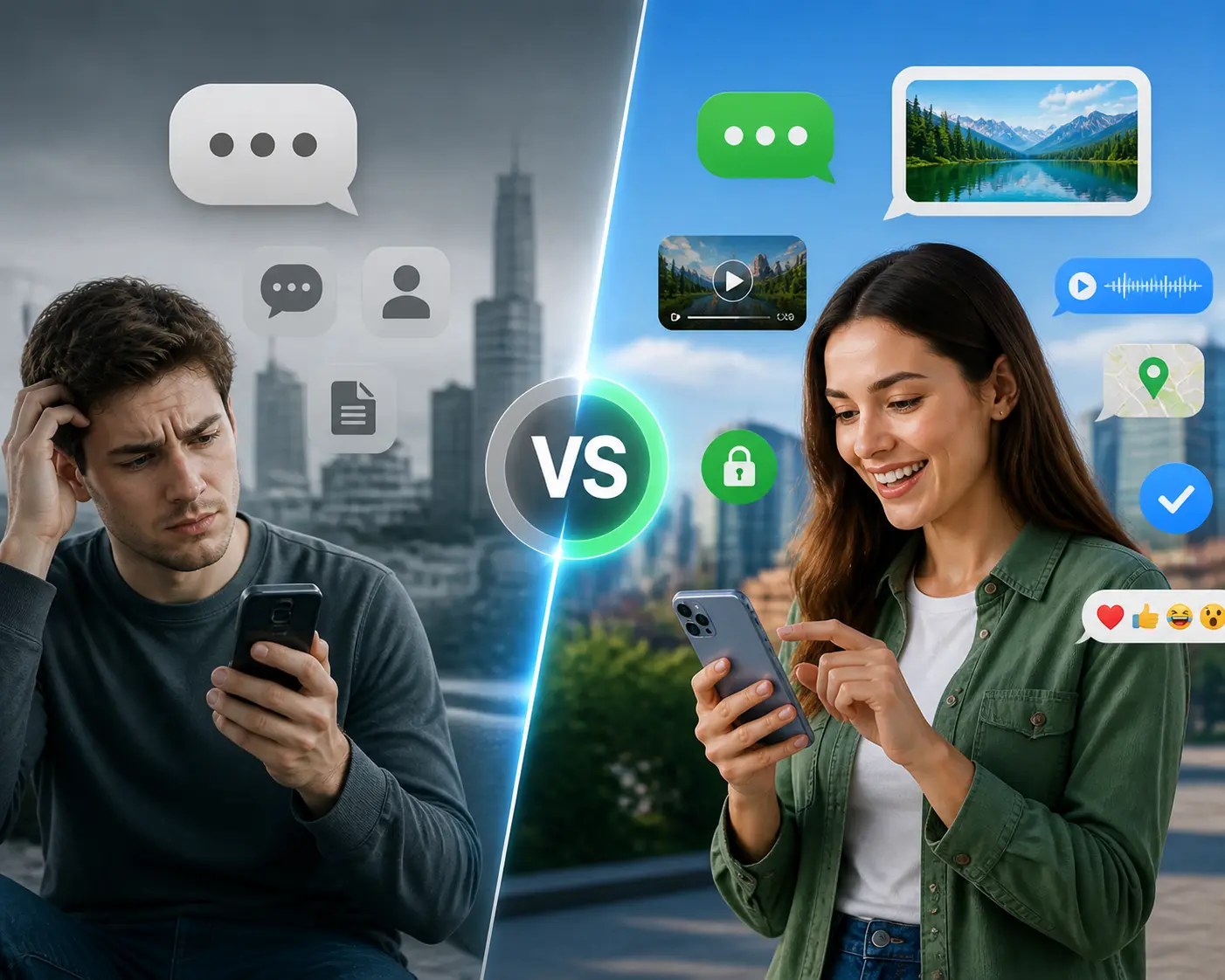
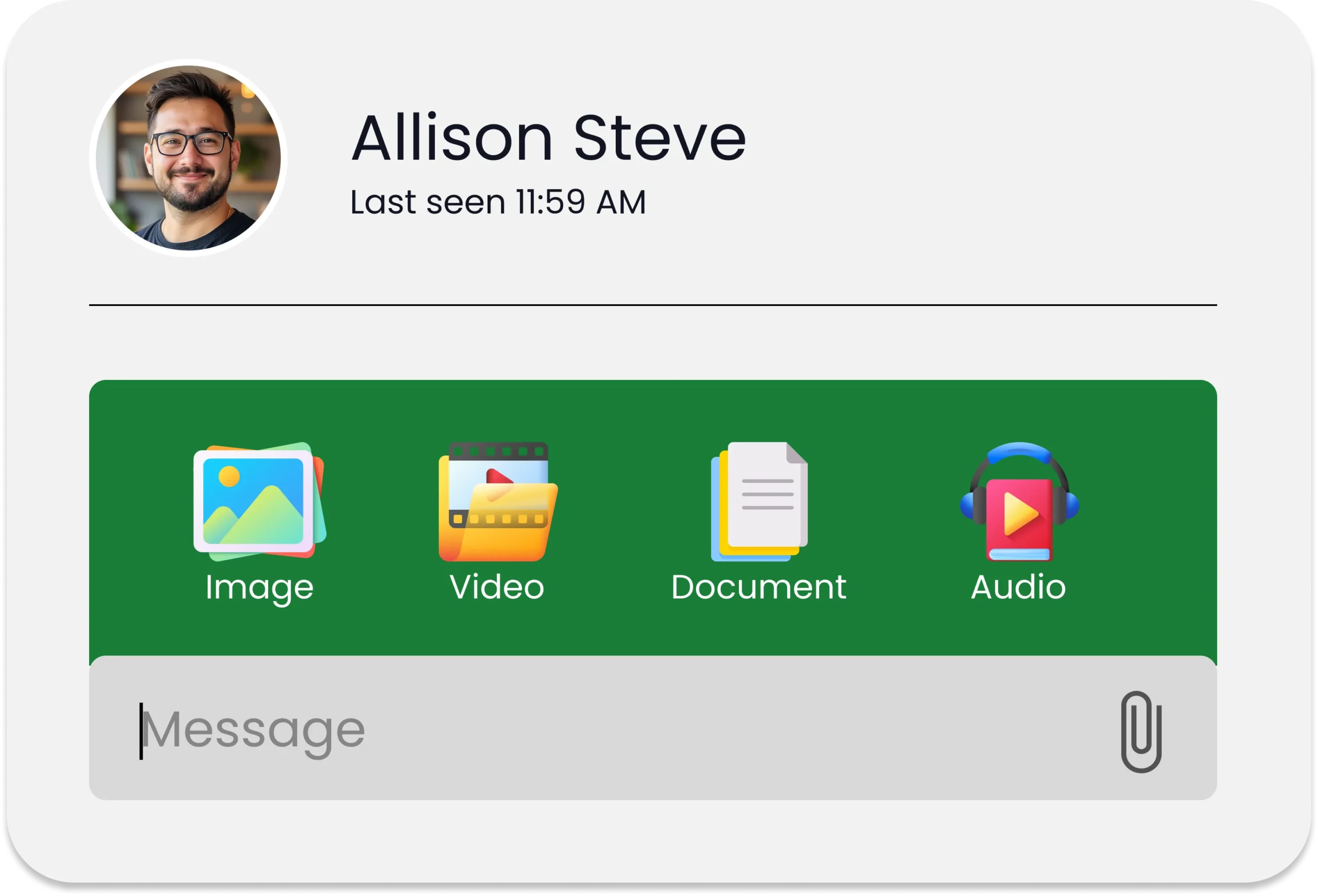
Every year since RCS was introduced, someone declares SMS dead. Every year, SMS proves them wrong. In 2026, with Apple adopting RCS in iOS 18 and Google completing its push for universal Android support, the question is more serious than it has ever been.
The honest answer is that SMS is not dead. But RCS has changed the business text messaging landscape in ways that every marketer and customer service team needs to understand. This is the complete RCS vs SMS comparison for 2026, covering features, reach, cost, compliance, and the one factor that settles the debate for most businesses.
Key Takeaways
- RCS is the modern upgrade to SMS, adding rich media, branding, read receipts, and interactivity over the internet.
- SMS works on every phone via the carrier network; RCS needs a supported device, app, and data connection.
- SMS remains the most reliable for universal reach; RCS offers a richer experience where it is supported.
- For business, SMS is the dependable baseline and RCS is a growing complement, not yet a full replacement.
What Is RCS and How Did We Get Here
RCS (Rich Communication Services) is a messaging protocol developed by the GSMA as the successor to SMS, designed to bring the feature richness of apps like WhatsApp to the native messaging experience without requiring users to download anything.
The journey to 2026 has been long:
- RCS was introduced in 2007 but took over a decade to gain meaningful carrier support
- Google adopted RCS as the default Android Messages protocol in 2019
- Major US carriers including AT&T, Verizon, and T-Mobile completed RCS rollout by 2021
- Apple resisted RCS until iOS 18 in 2024, making it a genuinely cross-platform protocol for the first time
- According to GSMA, RCS now has over 1 billion monthly active users globally in 2026, with US carrier coverage exceeding 90% of Android devices
That adoption trajectory is precisely why the RCS vs SMS conversation matters more in 2026 than at any previous point.
RCS vs SMS: Head-to-Head Comparison Table
| Feature | SMS | RCS |
| Character Limit | 160 per segment | No practical limit |
| Rich Media | No | Yes (images, video, carousels) |
| Internet Required | No | Yes |
| Device Reach | All phones globally | Android primarily, iOS 18 added support |
| Read Receipts | No | Yes |
| Typing Indicators | No | Yes |
| Interactive Buttons | No | Yes |
| Verified Sender | No | Yes |
| Fallback Protocol | None needed | Falls back to SMS |
| TCPA Compliance Required | Yes | Yes |
| Cost Per Message | Lower | Higher |
| Spam Filtering Risk | Moderate | Lower (verified senders) |
| Business Platform Access | Widely available | Growing in 2026 |
| Best For | Universal reach, alerts, reminders | Branded interactive campaigns |
Where SMS Beats RCS in 2026
Despite everything RCS offers, SMS retains four advantages no business can afford to ignore:
- Universal reach without exception. According to CTIA, SMS carries a 98% open rate precisely because it works on every mobile phone on every carrier globally without an internet connection. RCS adoption, while growing, is still not universal in 2026.
- Cost efficiency at scale. SMS is significantly cheaper per message than RCS. For businesses running mass texting campaigns to large contact lists, paying a premium for RCS features that add no value to a short, time-sensitive message does not make business sense.
- Reliability as the guaranteed fallback. RCS falls back to SMS when unavailable. This means SMS is not competing with RCS. It is the safety net beneath it. Businesses that abandon SMS entirely have no guaranteed delivery layer when RCS encounters connectivity or compatibility issues.
- Simplicity for time-sensitive communication. For appointment reminders, urgent notifications, and two-way customer service conversations, SMS is fast, simple, and proven across every industry from healthcare to real estate.
Where RCS Outperforms SMS in 2026
RCS delivers measurably better outcomes in specific scenarios:
- Branded marketing campaigns. Verified sender profiles and rich visual content make RCS messages significantly more trustworthy and engaging than standard SMS for marketing. According to GSMA, RCS business messaging campaigns report engagement rates up to 35% higher than equivalent SMS campaigns in supported markets.
- Interactive customer journeys. Confirm or reschedule buttons, suggested replies, product carousels, and embedded action buttons reduce friction between receiving a message and completing the desired action. A restaurant can embed a reservation confirmation button directly in the message. A retailer can send a product carousel with a buy-now action. None of this is possible in SMS.
- Verified sender identity. SMS has no sender verification. Any business can claim to be any brand. RCS includes carrier-level sender authentication with brand logos and verified business names, reducing phishing risk significantly for industries like financial services and healthcare.
- Android-first audiences. For businesses whose customer base is predominantly Android users on supported carriers, RCS delivers a meaningfully better experience than SMS without any additional cost barrier for the recipient.
Real-world RCS examples:
- A healthcare practice sending an appointment reminder with a built-in confirm button and map link
- A retailer running a product carousel promotion with a tap-to-buy action button
- A customer service thread with suggested reply options routing the enquiry instantly
Is SMS Finally Dead in 2026: The Honest Answer
No. And here is why the question misses the point entirely.
RCS does not replace SMS. It enhances it. RCS message that cannot be delivered falls back to SMS. Every market where RCS adoption is incomplete is still served by SMS. Every business that has abandoned SMS has no guaranteed delivery layer when RCS fails.
What has changed in 2026 is the ceiling of what business messaging can achieve. SMS sets the floor universal reach, guaranteed delivery, high open rates, and proven reliability. RCS raises the ceiling richer experiences, verified identity, interactive features, and branded communication that builds trust at scale.
The businesses getting the strongest results are not choosing between RCS and SMS. They are using SMS as the guaranteed delivery foundation and layering RCS on top for the audiences and use cases where its features deliver measurably better outcomes.
RCS vs SMS Compliance in 2026
Both RCS and SMS fall under the Telephone Consumer Protection Act for business messaging in the United States. Key requirements that apply to both:
- Explicit opt-in consent required before sending any marketing message
- Clear sender identification in every message
- Immediate opt-out processing when a recipient replies STOP
- Stored consent records retained for audit purposes
- Violations carry penalties of up to $1,500 per message
Two important 2026 compliance distinctions worth noting:
- 10DLC vs RCS registration: Businesses already registered for 10DLC texting are compliant for SMS campaigns on long code numbers. RCS has a separate sender registration process through carriers and the GSMA that differs from 10DLC requirements. Running RCS campaigns requires completing that separate registration independently.
- RCS interactive message standards: CTIA has published specific RCS business messaging guidelines in 2026 covering interactive message consent standards that differ from standard SMS rules. Businesses running RCS campaigns should monitor these evolving guidelines as carrier adoption expands.
Understanding what opt-in means in text messaging is the foundation of a compliant strategy across both protocols at any scale.
How SendHub Supports Your SMS Foundation in 2026
SendHub provides the SMS and 10DLC infrastructure businesses need as the reliable foundation beneath any broader messaging strategy including RCS:
- 10DLC registered messaging ensuring carrier-trusted delivery for business SMS at scale with full brand and campaign verification
- Two-way SMS with shared team inbox managing conversational messaging across every industry from a single centralised dashboard
- Bulk SMS campaigns reaching large contact lists reliably and cost-effectively with personalised messages in a single send
- SMS and MMS in one platform giving businesses the flexibility to add visual content where it adds value without switching tools
- Built-in compliance tools managing opt-in consent, opt-out handling, and audit logs automatically across all campaigns
- Real-time analytics tracking delivery rates, response rates, and engagement from one dashboard
As RCS adoption expands, SendHub’s SMS infrastructure ensures every message reaches its destination as the guaranteed fallback layer regardless of whether the recipient’s device and carrier support the richer protocol.
Conclusion
SMS is not dead in 2026. It is the floor every business messaging strategy is built on. RCS is the ceiling the best strategies are reaching toward. The question is not which one to choose. It is how quickly your business can build the foundation well enough to benefit from both.
The businesses that wait for RCS to become universal before acting are the ones losing ground to competitors who are already converting with SMS today. Start with the channel that works for everyone, and layer in the one that works better for the right audience when the infrastructure is ready.
Frequently Asked Questions
No. SMS remains the universal delivery foundation with a 98% open rate and guaranteed reach across every device and carrier globally, serving as the fallback layer beneath every RCS strategy.
RCS offers verified sender identity, read receipts, interactive buttons, and rich media within the native messaging app, delivering a significantly more engaging and trustworthy experience than plain text SMS.
No. RCS falls back to SMS when unavailable, meaning SMS remains the guaranteed delivery layer. The two protocols are complementary rather than competitive.
Businesses running branded marketing campaigns, interactive customer journeys, and communications where verified sender identity reduces phishing risk see the strongest RCS results with Android-first audiences.
Apple added RCS support in iOS 18 but full cross-platform capability is still expanding. For guaranteed delivery across all devices, SMS remains the most reliable universal channel.
Yes. RCS carries a higher cost per message than SMS. For high-volume text-based campaigns where visual features add no value, SMS remains the more cost-efficient choice.