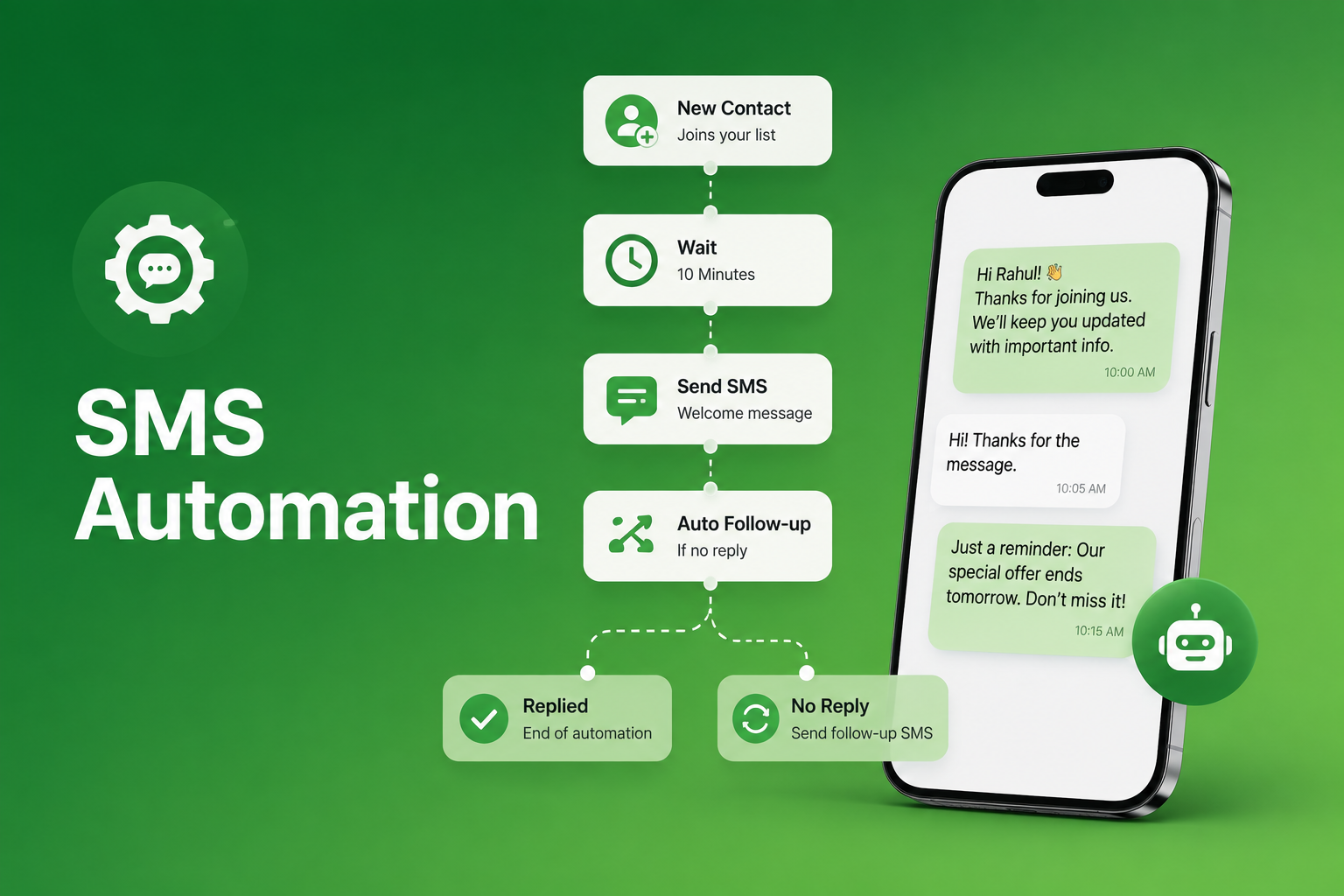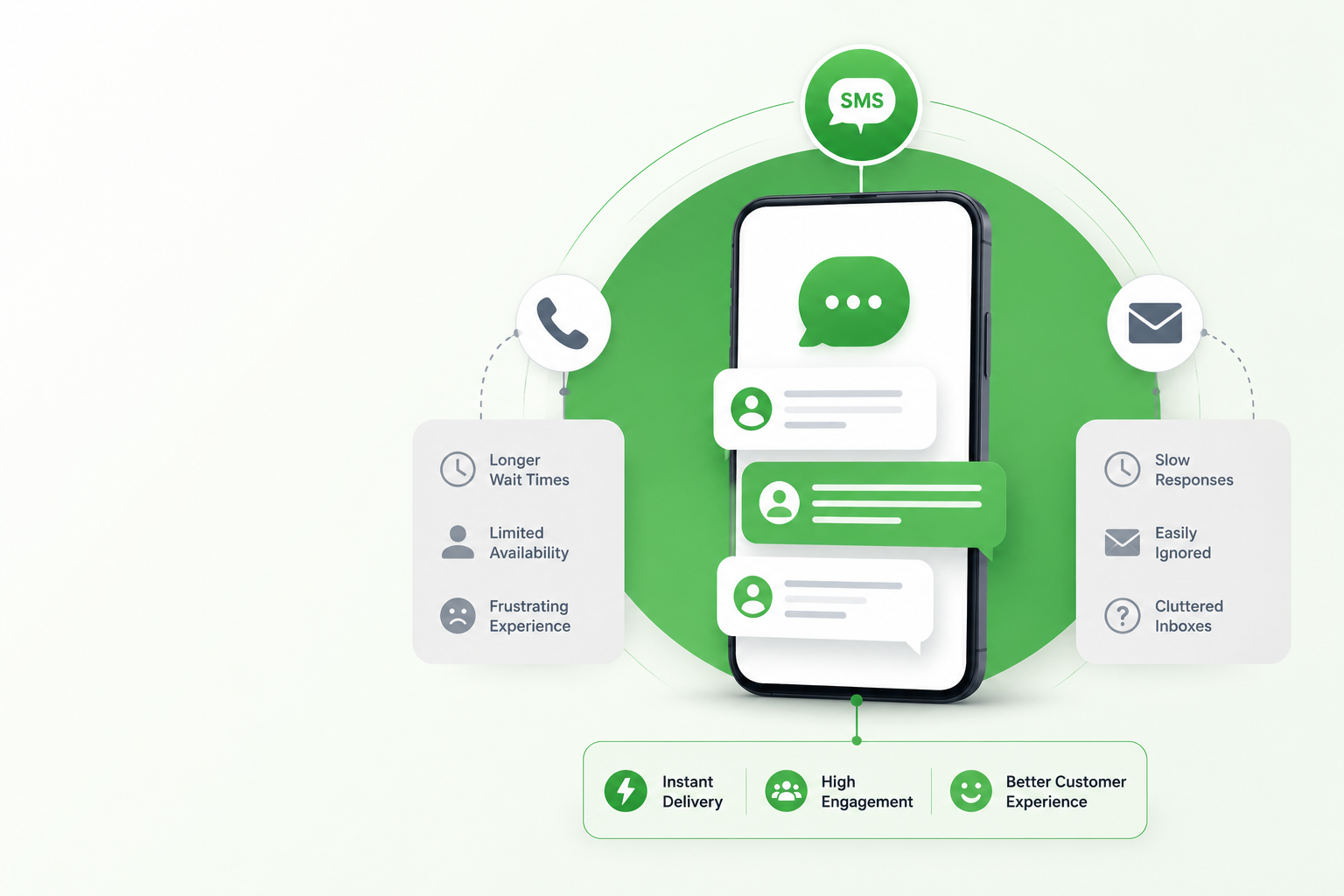

An SMS gateway is the infrastructure layer that translates messages from a business application into a format compatible with mobile carrier networks, then routes those messages to the recipient’s mobile device. According to the GSMA mobile subscribers report, there were 5.6 billion mobile subscribers globally by end of 2023, projected to reach 6.3 billion by 2030. The DataIntelo SMS Gateway Platform market report valued the global SMS gateway market at $10.8 billion in 2024 and forecasts growth to $31.7 billion by 2033 at a 15.2% CAGR. Every SMS and MMS marketing campaign and bulk SMS send a business initiates passes through an SMS gateway to reach those subscribers, making it the foundational layer of every business texting platform in operation today.
What Is an SMS Gateway?
An SMS gateway is a platform or service that translates messages from a software application or web interface into a format compatible with mobile carrier networks, then routes those messages to the recipient’s device. It acts as the bridge between a business sending a text and the telecommunications infrastructure that delivers it. Two things define what an SMS gateway does at its core:
- It handles message formatting and carrier routing automatically, removing any technical burden from the sender.
- It processes delivery confirmations from the carrier network and reports status back to the sending platform in real time.
How Does an SMS Gateway Work?
When a business sends a message through an SMS gateway, that message travels through a defined technical path before reaching the recipient’s phone. Think of it like sending an email: you write the message, hit send, and the infrastructure handles everything in between. The four stages of that path are:
- Message submission: A business submits a message through a web dashboard, software platform, or SMS gateway API, including the recipient’s number, content, and sender ID.
- Protocol translation: The gateway converts the message into the SMPP format, the standard Short Message Peer-to-Peer protocol that carrier networks use to process SMS traffic.
- Carrier routing: The gateway connects to the relevant mobile carrier and routes the message to the network responsible for the recipient’s number, whether domestic or international.
- Delivery and confirmation: The carrier delivers the message and sends a receipt back to the gateway, which reports delivery status to the sending platform in real time.

Types of SMS Gateway Services: Cloud, On-Premise, and API
Not every SMS gateway service operates the same way, and choosing the right model from the start determines how much technical overhead your team carries long term. Three types are most commonly used in US business communication:
- Cloud-based SMS gateways are hosted by a third-party SMS gateway provider, require no hardware, and scale instantly with message volume. Platforms like SendHub operate on cloud-based infrastructure, giving small businesses the same delivery reliability as enterprise teams without managing any technical complexity.
- On-premise SMS gateways are hosted within a business’s own servers. They persist in regulated industries with strict data sovereignty requirements but carry higher setup and maintenance costs than cloud alternatives.
- SMS gateway APIs allow developers to connect custom applications, CRMs, or business software directly to the gateway layer. SendHub’s SMS API gives technical teams direct programmatic access to the same infrastructure that powers the platform’s front-end dashboard.
| Gateway type | Where it runs | Best for | Setup and upkeep | Scalability |
|---|---|---|---|---|
| Cloud-based | Hosted by a third-party provider, no hardware | Most businesses wanting reliable delivery without infrastructure | Minimal, the provider handles it | Scales instantly with volume |
| On-premise | On the business’s own servers | Regulated industries with data-sovereignty rules | High setup and maintenance cost | Limited by your own hardware |
| API | Connects your app, CRM, or software to the gateway | Developers integrating texting into custom systems | Requires developer time to integrate | Scales instantly, same infrastructure as cloud |
What Is an SMS Gateway Used For? Key Business Applications
Most explanations of SMS gateways focus almost entirely on authentication codes. In practice, businesses use SMS gateway services across a far broader range of applications that drive revenue, retention, and operational efficiency every day. The three most common business use cases are:
- Marketing and promotional campaigns use mass texting to reach large contact lists simultaneously. Healthcare providers send appointment reminders, real estate teams send listing alerts, and recruiting firms send candidate updates, each relying on the gateway to route messages through the correct carrier path at scale.
- Transactional notifications deliver order confirmations, shipping updates, and payment alerts automatically through the gateway based on software triggers. SendHub’s SMS notifications platform automates these time-sensitive sends through the same gateway layer.
- Two-way conversations use the gateway’s inbound routing to receive customer replies and direct them back to a shared inbox. SendHub’s two-way business texting platform handles both outbound delivery and inbound routing through the same connection.
According to Fortune Business Insights, the global enterprise A2P SMS market is projected to grow from $53.31 billion in 2024 to $76.18 billion by 2032, driven by businesses expanding SMS gateway use beyond authentication into customer engagement.
How to Choose the Right SMS Gateway Provider for Your Business
Choosing the right SMS gateway provider requires evaluating four criteria together, not in isolation. Understanding what good looks like for each one prevents costly platform switches after launch. The four criteria every business should assess are:
- Deliverability and carrier connections: A gateway with direct carrier connections consistently outperforms one relying on third-party aggregators, particularly at high send volumes.
- Compliance support: US businesses sending on 10-digit long codes must complete A2P registration through the 10DLC texting framework. TCPA consent requirements apply to every contact on every list. Full guidance is available from the FCC’s official TCPA resource page.
- Throughput capacity: For high-volume campaigns, shortcode messaging provides the highest throughput in the US carrier ecosystem and should be factored into any enterprise-level evaluation.
- Analytics and reporting: Delivery rates, failed sends, and opt-out counts confirm whether the gateway is performing. SendHub’s analytics and reporting dashboard surfaces this data in real time after every campaign.

How SendHub Addresses All Four Criteria in One Platform
Choosing an SMS gateway provider means evaluating deliverability, compliance, throughput, and analytics together. SendHub is built to address all four natively, giving businesses of every size a carrier-compliant SMS gateway platform without a technical implementation or dedicated infrastructure team. What that looks like in practice:
- Bulk SMS service with carrier-compliant throttling to protect delivery rates at scale across every campaign.
- Mass texting to thousands of contacts through high-deliverability gateway connections from a single dashboard send.
- SMS API for developers who need direct gateway access for custom application integrations.
- 10DLC texting registration support built into the platform so compliance is handled from day one, not retrofitted later.
- SMS notifications for automated transactional message delivery triggered by business events in real time.
- Analytics and reporting to track delivery rates, reply volume, and opt-out trends across every campaign sent.
Frequently Asked Questions
An SMS gateway translates messages from a business application into a carrier-compatible format and routes them to the recipient’s device. Consequently, it handles all technical routing between a business sending a text and a customer receiving it.
An SMS gateway is the underlying infrastructure routing messages through carrier networks. An SMS platform like SendHub sits on top of that gateway and adds a dashboard, compliance tools, and analytics. Therefore, most businesses need a platform rather than raw gateway access.
An SMS gateway is the broader infrastructure routing messages through carrier networks. An SMS gateway API is the programmatic interface letting developers connect applications directly to that gateway. Therefore, the API is one method of accessing the gateway rather than a separate system.
A2P stands for application-to-person messaging, meaning any message sent from a business system to an individual’s phone. Furthermore, every A2P message travels through an SMS messaging gateway that formats and routes it to the correct carrier network.
10DLC is the US carrier registration framework requiring businesses to register their brand before sending A2P messages on 10-digit long codes. Consequently, completing registration through your gateway provider protects deliverability and ensures carrier compliance from the first send.
SMS gateway pricing is usually based on message volume and number type rather than a flat fee. With a platform like SendHub, gateway access is included in the plan, so there is no separate gateway cost to manage or negotiate with carriers.
Businesses use an SMS gateway to send marketing campaigns, transactional notifications such as order and appointment updates, and two-way conversations. Every one of these message types is formatted and routed to the correct carrier by the gateway.