Key Takeaways
- SMS automation sends texts automatically from triggers, schedules, or customer behavior, so routine messages run without staff sending each one.
- The six highest-value use cases: appointment reminders, welcome and onboarding, post-purchase follow-up, lead nurturing, urgent alerts, and re-engagement.
- Four components make it work: triggers, templates with merge fields, scheduling and sequencing, and human handoff to a shared inbox.
- Automated marketing messages carry the same TCPA rules as manual ones: explicit opt-in, sender ID, instant STOP handling, and consent records per sequence type.
Every business has messages it sends repeatedly. The appointment reminder before a booking. An order confirmation after a purchase. A follow-up text three days after a sales call. Each one either takes a staff member’s time to send manually, or runs on its own through SMS automation.
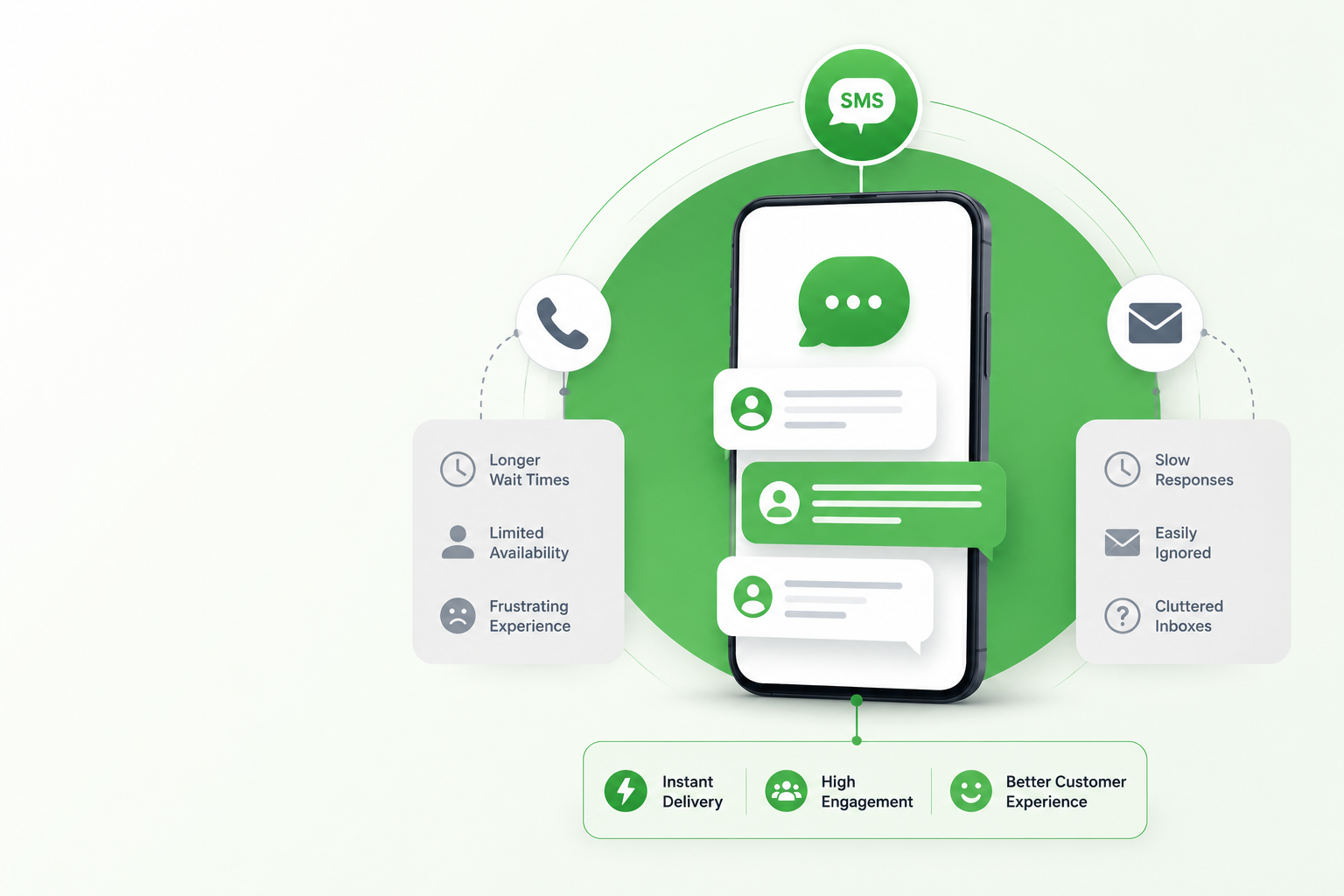
In 2026, business text messaging automation is not a competitive advantage. It is the baseline that separates businesses running efficiently from those burning staff time on tasks a system should handle. According to CTIA, SMS carries a 98% open rate with messages read within 3 minutes of delivery. GSMA, A2P (Application-to-Person) SMS, which encompasses all automated business messaging, represents the majority of global SMS traffic in 2026. According to Salesforce Research, businesses that automate customer communication workflows report significantly higher customer satisfaction scores than those relying on manual processes.
What Is SMS Automation
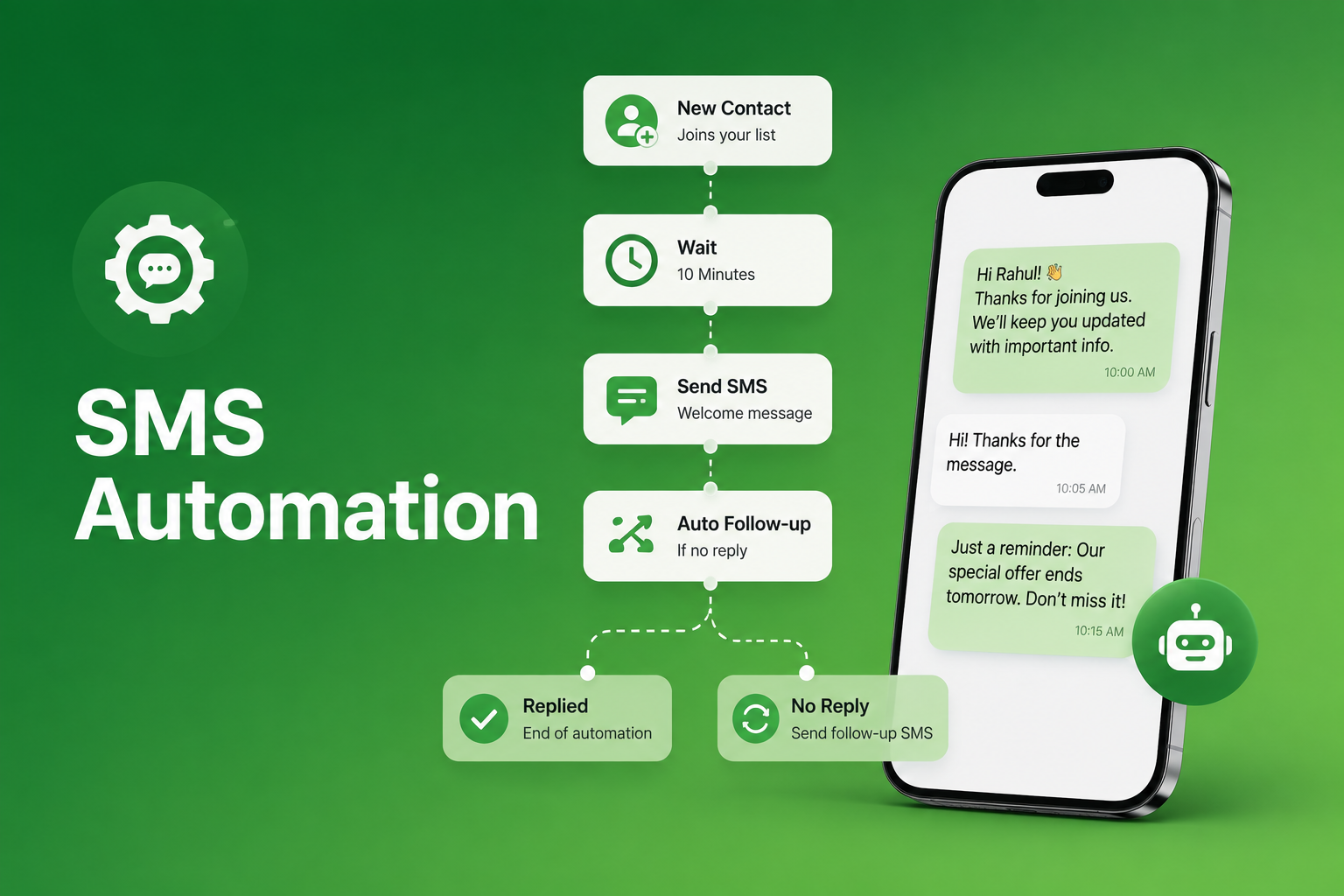
SMS automation is the process of sending text messages automatically based on predefined triggers, schedules, or customer behaviours rather than requiring a staff member to compose and send each message manually.
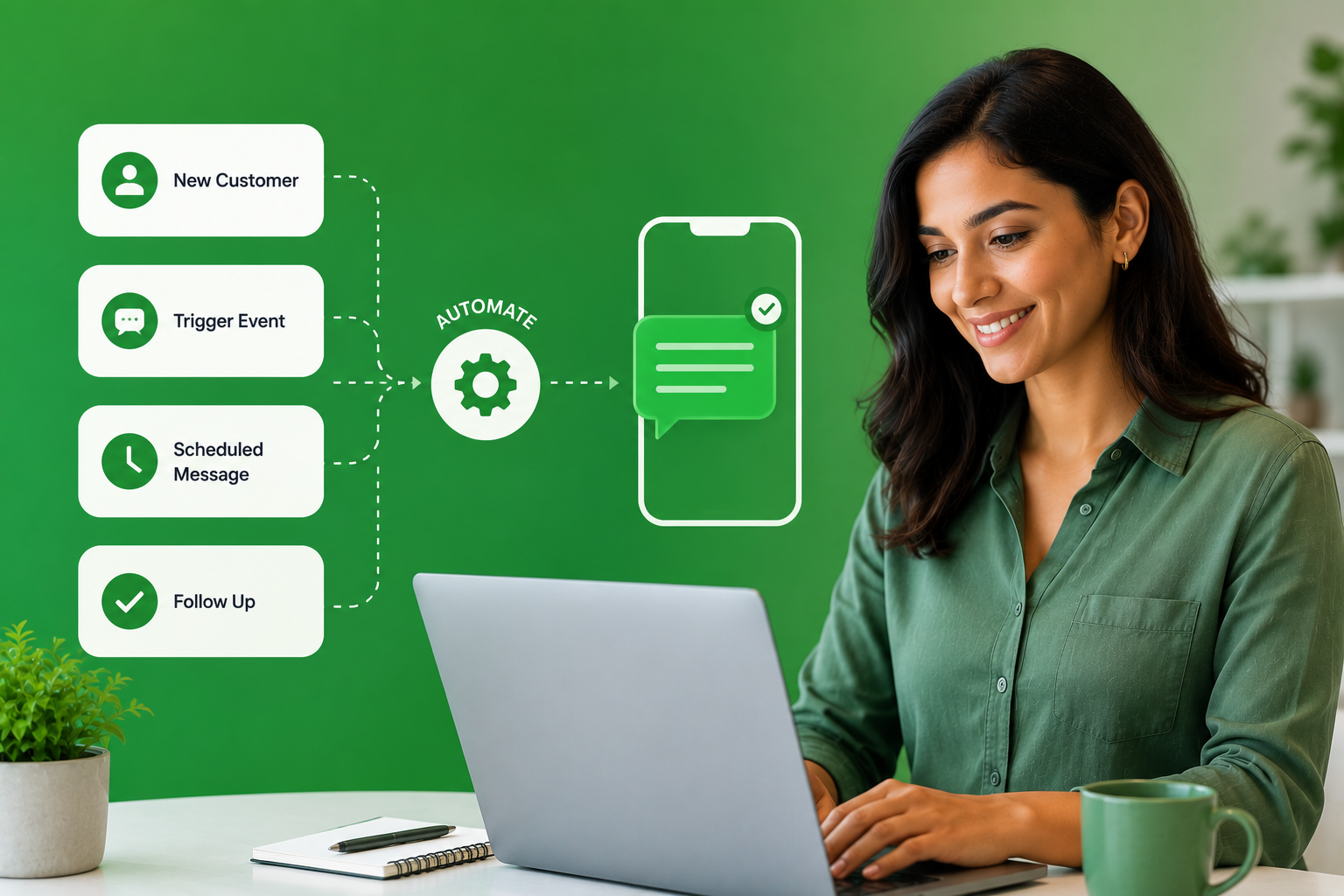
A trigger is any event that initiates a message: a customer books an appointment, an order is placed, a lead fills out a form, a payment is overdue, or a specific date arrives. When that event occurs, the automated system sends the right message to the right person at the right time without any human intervention.
SMS automation differs from manual bulk SMS in one critical way. Manual bulk sending is initiated by a person and reaches everyone on a list simultaneously. Automation is initiated by a customer action or schedule and reaches each individual at the most relevant moment in their specific journey, making every message feel timely rather than broadcast.
The 6 Most Valuable SMS Automation Use Cases in 2026
1. Appointment reminders and confirmation sequences. A three-message sequence runs automatically from the moment a booking is confirmed: booking confirmation, 48-hour reminder, and day-of alert. Healthcare text messaging practices, restaurants, and auto dealers using automated confirmation sequences consistently cut no-show rates by 30% or more without adding staff workload.
2. Welcome and onboarding sequences. When a new customer opts in, an automated welcome message arrives instantly. For small teams, automation means every new customer gets the same quality first impression, whenever they sign up and whoever is on shift.
3. Post-purchase follow-up sequences. After a purchase, an automated sequence handles the thank-you confirmation, shipping update, delivery notification, and review request at optimal intervals. This is where SMS automation turns one-time buyers into repeat customers.
4. Lead nurturing and sales follow-up. A lead who does not convert immediately receives an automated sequence: first contact within minutes, a follow-up two days later, and a final check-in a week on. Real estate and recruiting teams using this report higher conversion from enquiry to qualified conversation than manual outreach delivers.
5. Alerts and urgent notifications. Delivery updates, schedule changes, service outages, and emergency alerts must reach people immediately. Triggered automatically by system events, they land within seconds, which for transport and logistics is the difference between a smooth delivery and a failed one. Schools and nonprofits use the same capability for deadline reminders and volunteer coordination.
6. Re-engagement campaigns. Customers inactive for a set window receive an automated nudge: a patient who has not rebooked in 90 days, a diner absent for 60 days, and a lead silent for two weeks, all reached by triggers based on the time since theirlast activity, with no manual list management.
What Makes SMS Automation Work: The Four Core Components
Triggers: The event that initiates the automated message. Triggers can be time-based (send 48 hours before the appointment), action-based (send when a customer completes a purchase), or behaviour-based (send when a lead has not replied in 72 hours).
Templates with merge fields: The pre-written message is personalized automatically using SMS merge fields that pull in the recipient’s name, appointment time, order number, or any relevant contact data. Every automated message feels individually written without any manual effort per send.
Scheduling and sequencing: The timing rules that determine when each message in a sequence goes out relative to the trigger. Scheduled text messaging allows sequences of two, three, or more messages to run in precise order at defined intervals automatically.
Human handoff capability: Automation handles volume while humans handle nuance. A well-configured SMS automation system recognizes when a customer response requires a personal reply and routes it to a shared inbox where a team member takes over. Two-way SMS ensures the channel stays open for genuine conversation when automation reaches its limits.
SMS Automation Compliance in 2026
Automated messages carry the same TCPA compliance requirements as manually sent messages. Under the Telephone Consumer Protection Act, every automated marketing message requires express written consent from the recipient before sending. Key requirements:
- Explicit opt-in consent collected before any automated marketing sequence is triggered
- Clear sender identification in every automated message
- Immediate opt-out processing when a recipient replies STOP at any point in a sequence
- Stored consent records for every subscriber in your automated list
The most common automation compliance failure is triggering a marketing sequence to a contact who opted in for transactional messages only. Each automation sequence type requires its own distinct consent basis.
How SendHub Powers SMS Automation
- SMS notifications triggering automated messages based on system events, form submissions, bookings, and purchases in real time
- Scheduled text messaging that sets multi-message sequences to run at defined intervals from a single trigger without manual effort
- SMS marketing software managing campaigns, sequences, and automated workflows from one centralized dashboard
- Merge fields that personalize every automated message with recipient names, appointment times, and order details automatically
- Two-way SMS with a shared inbox routing customer replies to the right team member when a conversation needs a human response
- Bulk SMS for broadcast automation reaching large contact lists in a single automated send
- Text keywords that trigger automated opt-in sequences and welcome flows when customers text a keyword
- The SendHub API provides the programmatic automation layer for developer-integrated workflows and custom trigger logic
- Built-in compliance tools that manage opt-in consent, opt-out handling, and TCPA audit logs automatically across all automated campaigns
Frequently Asked Questions
SMS automation is the process of sending text messages automatically based on triggers, schedules, or customer behaviours rather than requiring manual composition and sending for each individual message.
Bulk SMS sends one message to many recipients simultaneously, initiated manually. SMS automation sends personalized messages to individuals at the most relevant moment based on their specific actions or a defined schedule without manual initiation.
Appointment reminders, order confirmations, welcome sequences, post-purchase follow-ups, lead nurturing sequences, re-engagement messages, delivery alerts, payment reminders, and any message type that follows a predictable trigger or schedule.
Not when implemented correctly. Merge fields pull in customer names, order details, and relevant context automatically so every automated message feels individually written at the right moment in the customer’s journey.
Yes, provided recipients have explicitly opted in before any automated marketing sequence is triggered. Each automation type requires its own consent basis, and automated messages carry the same TCPA requirements as manually sent messages.
Yes. Automated sequences run in the background while a shared inbox keeps the channel open for human responses when a customer reply requires personal attention. The handoff between automation and humans is seamless when the platform supports both simultaneously.
Healthcare, real estate, restaurants, recruiting, retail, auto dealers, transportation, education, and nonprofits all see strong results where appointment management, lead follow-up, order communication, and customer engagement follow predictable patterns that automation can handle reliably.