
An SMS campaign is a coordinated text messaging effort sent to an opted-in list of contacts with a specific goal, a defined audience, and a measurable outcome. It is not a single transactional message. It is a strategic communication designed to drive a specific action from the right audience at the right moment.
In 2026, sms marketing campaigns consistently outperform every other digital marketing channel on the metrics that matter most. As per CTIA, SMS carries a 98% open rate compared to roughly 20% for email. According to Mobile Marketing Watch, SMS campaigns generate click-through rates of 19% to 45% depending on industry and personalisation level. According to Salesforce Research, personalised SMS campaigns generate conversion rates significantly higher than non-personalised campaigns sent to the same audience in 2026.
What Makes an SMS Campaign Different From a Regular Text
Not every business text is a campaign. The distinction matters for both strategy and compliance:
- A transactional message is triggered by a customer action such as an order confirmation, appointment reminder, or delivery update. It serves the customer’s immediate needs.
- An SMS campaign is initiated by the business to achieve a marketing objective such as a promotional offer, product launch, or re-engagement drive. It requires express written consent under TCPA and must include a STOP instruction.
Understanding this distinction is the foundation of compliant, effective business text messaging. Every campaign needs its own consent basis, clear objective, and measurement framework.
Planning Your SMS Campaign
A successful SMS campaign does not begin with writing a message. It begins with two foundational decisions: what you want to achieve, and who you are sending to. Getting these two elements right before touching your message draft separates campaigns that convert from ones that generate opt-outs.
Step 1: Define Your SMS Campaign Objective
Every effective SMS campaign starts with a single, specific objective. Not a general goal like increase engagement but a precise outcome: generate 50 bookings, drive 200 redemptions, or re-engage 150 lapsed customers.
Common SMS campaign objectives in 2026:
- Flash sale or limited-time promotion
- New product or service launch
- Event invitation or RSVP drive
- Loyalty reward or exclusive offer
- Customer re-engagement after inactivity
- Seasonal or holiday campaign
Step 2: Build and Segment Your Contact List
Sending the same message to your entire database is the most common SMS campaign mistake. Group messaging lets businesses create targeted segments and send relevant campaigns to each group. Segmentation by behaviour, purchase history, or location consistently improves response rates and reduces opt-outs.
Industry examples of effective segmentation in 2026:
- Restaurant sms marketing campaigns segmented by visit frequency drive significantly higher same-day redemption rates than generic promotions sent to the full list
- Sms marketing for real estate campaigns segmented by buyer stage generate higher enquiry rates than unsegmented listing alerts, particularly for time-sensitive price reductions
- Education text messaging campaigns segmented by student cohort deliver higher engagement, while text messaging for transport operations segment by delivery zone to send relevant route-specific updates

Step 3: Write Your SMS Campaign Message
An effective SMS campaign message has five elements:
- Sender identification: your brand name in the first line
- Personalisation: the recipient’s first name using SMS merge fields
- The offer or action: one specific thing stated in one sentence
- Urgency: a deadline, a limited quantity, or a time-sensitive signal
- Response mechanism: a single link, a reply keyword, or a phone number
An SMS campaign message should be readable in under 8 seconds. If it requires more than two sentences of context, it belongs in an email.
Restaurant campaign example: “Hi [First Name], [Restaurant Name] flash sale is live. 25% off everything until midnight tonight: [Link]. Reply STOP to unsubscribe.”
For sms and mms marketing campaigns where visual content adds genuine value, adding an MMS image consistently lifts response rates by up to 3x compared to text-only messages.
Step 4: Schedule and Send
Timing directly affects campaign performance. The highest-performing send windows in 2026:
- Tuesday to Thursday, 10am to 12pm for B2B campaigns where recipients are at their desks
- Friday 3pm to 6pm for retail, restaurant, and entertainment campaigns targeting weekend purchase intent
- Morning of the event for time-sensitive promotions with same-day redemption
Scheduled text messaging allows campaigns to be queued days in advance and delivered at precisely the right moment without manual sends. For mass sms marketing campaigns reaching large lists, scheduling also allows message pacing to manage delivery rates and avoid carrier filtering.
Step 5: Manage SMS Campaign Responses
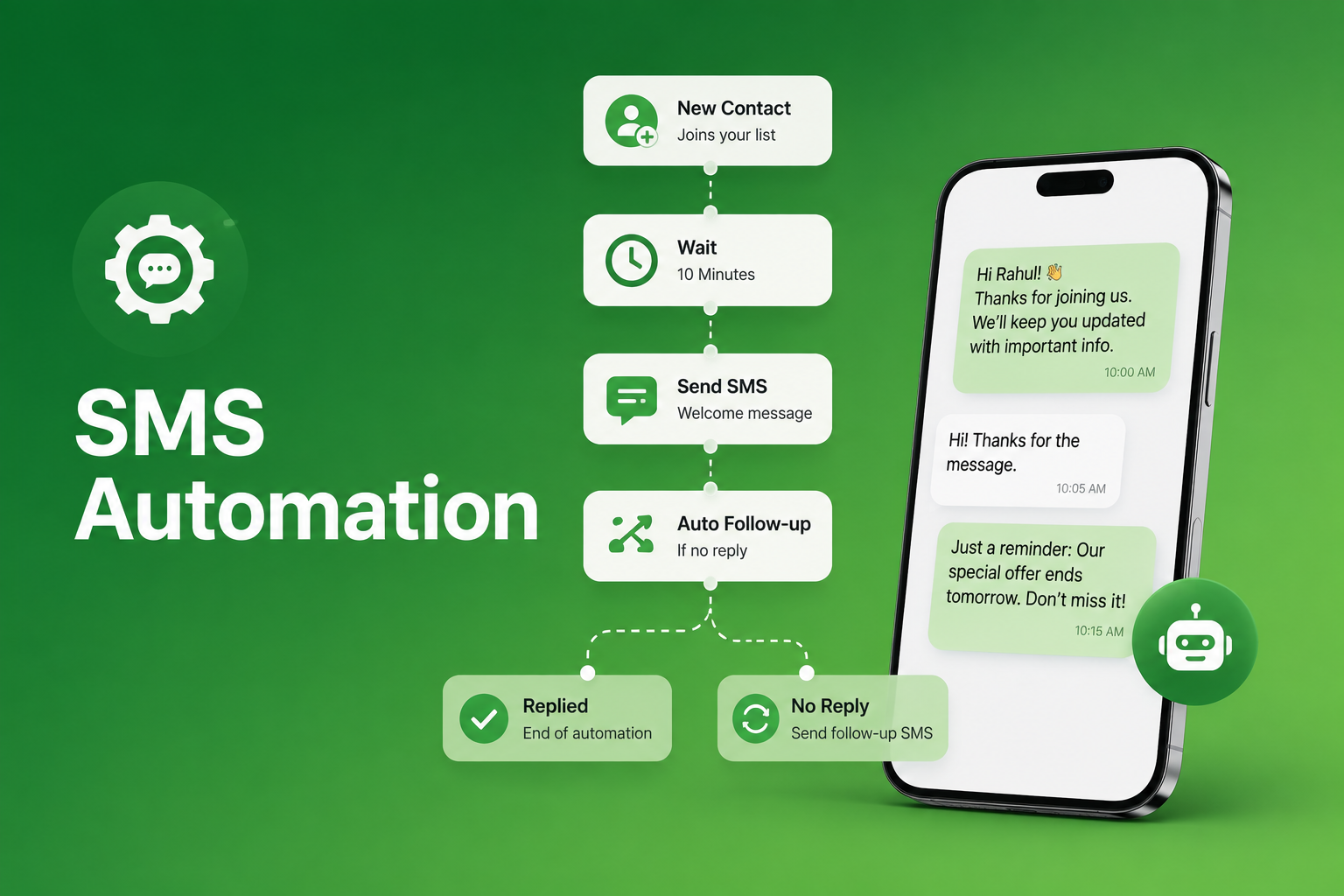
An SMS campaign that generates replies with no system to manage them is a missed opportunity. Two-way SMS routes every campaign reply to a shared inbox where team members can respond personally. Keyword replies such as BOOK, CLAIM, or YES trigger automated confirmation workflows instantly. Open-text replies route to a human team member for a personal response. This two-tier reply handling converts campaign interest into confirmed actions without requiring manual monitoring of every individual send.
Step 6: Measure SMS Campaign Performance
The metrics that matter for SMS campaigns in 2026:
- Delivery rate: the percentage of messages successfully delivered to recipients
- Click-through rate: the percentage of recipients who clicked the campaign link
- Conversion rate: the percentage who completed the desired action
- Opt-out rate: the percentage who replied STOP. A rate above 1% signals message relevance or list quality issues
- Response rate: the percentage who replied to the campaign with any message
SMS marketing software tracks all of these in real time from the moment a campaign sends. Comparing each campaign against previous ones for the same audience segment is the fastest way to improve performance over time.
SMS Campaign Compliance in 2026
Every SMS campaign must comply with the Telephone Consumer Protection Act. Key requirements:
- Express written consent from every recipient before any marketing campaign is sent
- Clear sender identification in every message
- Immediate opt-out processing when a recipient replies STOP
- Message and data rates notice in the campaign or opt-in confirmation
- Stored consent records for every contact on the campaign list
Under 10DLC registered messaging, businesses must register their campaign with The Campaign Registry before sending at scale. Unregistered campaigns face carrier filtering that reduces delivery rates regardless of message quality.
How SendHub Powers SMS Campaigns
- SMS marketing software managing campaigns, audience segments, and performance analytics from one dashboard
- Bulk SMS campaigns reaching large opted-in contact lists with personalised messages in a single send
- SMS and MMS marketing supporting text-only and visual campaign formats from the same platform
- Group messaging creating targeted audience segments for campaign-level personalisation
- Merge fields personalising every campaign message automatically
- Scheduled messaging queueing campaigns for precise delivery at peak engagement windows
- Two-way SMS with shared inbox managing all campaign replies from one team dashboard
- Built-in compliance tools managing opt-in consent, opt-out processing, and TCPA audit logs across all campaigns
Conclusion
In 2026, an SMS campaign is the highest-return marketing activity available to businesses that execute it correctly. A well-planned campaign to a properly segmented, opted-in list with a personalised message and the right timing consistently outperforms email, paid social, and display advertising on click-through rate, conversion rate, and cost per acquisition. The six-step framework in this guide gives every business the structure to plan, send, and measure campaigns that deliver results from the very first send.
Frequently Asked Questions
An SMS campaign is a coordinated text messaging effort sent to an opted-in contact list with a specific business objective, a targeted audience, and measurable outcomes such as purchases, bookings, or re-engagements.
Transactional messages are triggered by customer actions such as order confirmations and appointment reminders. SMS campaigns are initiated by the business to achieve a marketing objective and require express written consent under TCPA.
Through opt-in methods including web forms with consent checkboxes, keyword text-to-join campaigns, checkout page opt-ins, and QR codes. Every contact must explicitly consent to receive marketing messages before being added to a campaign list.
According to Mobile Marketing Watch, SMS campaigns generate average click-through rates of 19% to 45% depending on industry and personalisation level. Compare your campaign CTR against your own previous campaigns for the most accurate performance benchmark.
Tuesday to Thursday, 10am to 12pm for B2B campaigns. Friday afternoon for retail and entertainment campaigns. Morning of the event for same-day promotions. Avoid early mornings, late evenings, and weekends for non-urgent campaigns.
Short enough to read in under 8 seconds. One sentence for the offer, one link or reply instruction, and a STOP instruction. If the message needs more than two sentences of context, the detail belongs in an email or on the landing page.