
Text messaging for nonprofits has become one of the most reliable tools for mission-driven organizations looking to deepen supporter relationships without stretching already-thin budgets. According to Mobile Marketing Watch, 90% of text messages are read within three minutes of delivery. The 2025 Nonprofit Tech for Good report found that 73% of donors now make gifts from mobile devices, making mobile-first communication a direct fundraising lever, not just a convenience. For organizations managing donor appeals, volunteer coordination, and member outreach simultaneously, nonprofit text messaging closes the gap between intent and action in ways email and phone calls cannot match.
Why Text Messaging for Nonprofits Outperforms Traditional Channels
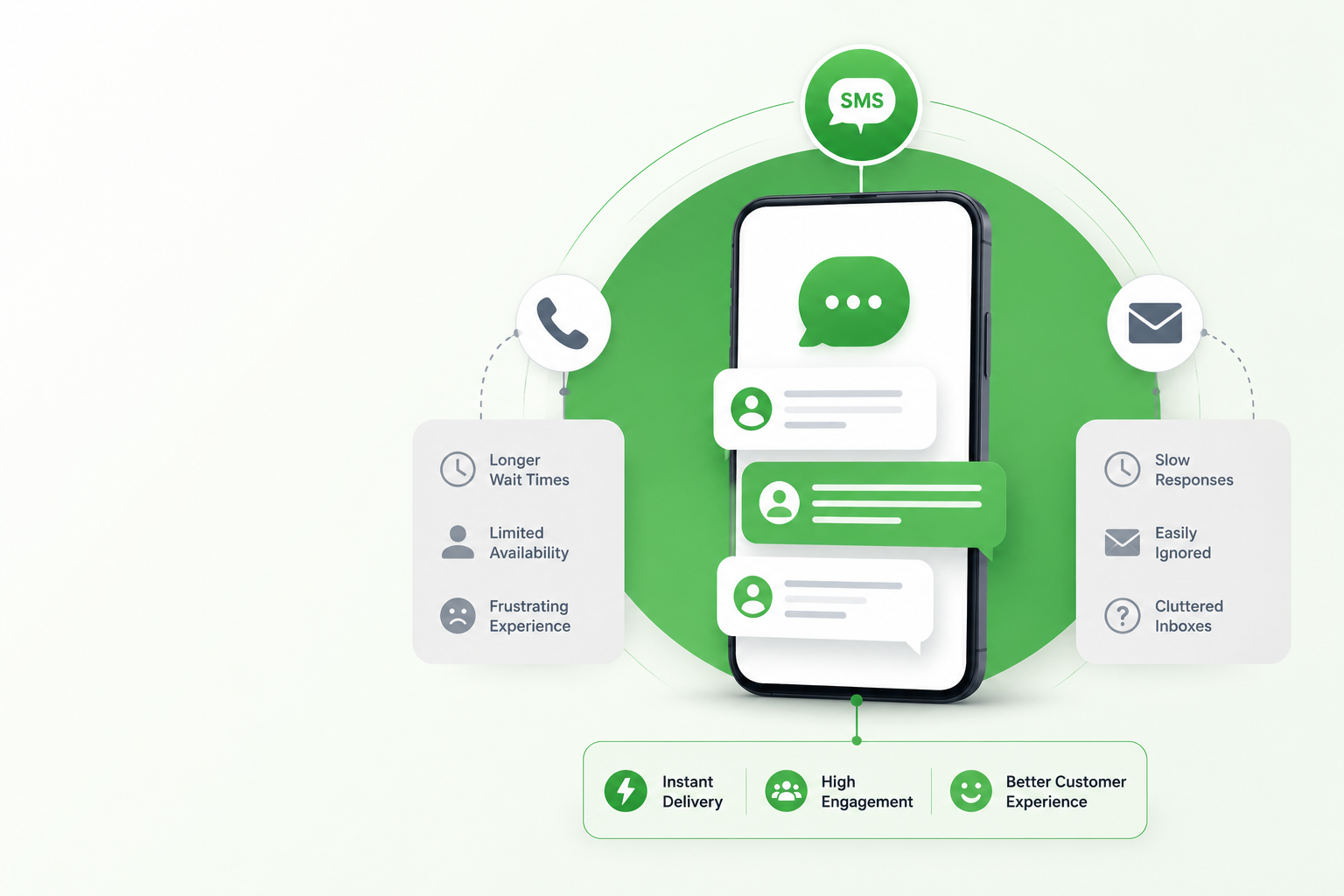
Nonprofits face a consistent challenge: communicating with donors, volunteers, program participants, and board members through a single, budget-conscious channel. Email open rates for the nonprofit sector average around 20%, according to Blackbaud’s Luminate Online Benchmark Report. SMS messages, by contrast, carry a 98% open rate, as confirmed by Forbes. That difference determines whether a last-minute volunteer call-out gets answered or whether a year-end fundraising deadline goes unnoticed.
Beyond open rates, nonprofit texting service capabilities allow organizations to segment contact lists by role, giving history, or engagement level, so the right message reaches the right person at the right time. Volunteers receive shift reminders. Monthly donors receive impact updates. Event registrants receive directions and logistics. This kind of precision, delivered at the speed of SMS, makes nonprofit text messaging a force multiplier for small teams.
Key advantages include:
- Texts reach supporters on the device they check most, bypassing spam filters and inbox competition entirely.
- Segmented group messaging enables tailored outreach without manually drafting individual messages for each audience type.
- Two-way texting builds real supporter relationships rather than one-directional broadcast communication.
- Scheduled delivery ensures campaigns land at optimal times, even when staff are unavailable.
How Text Messaging for Nonprofits Drives Donor Engagement and Fundraising
Donor retention is a persistent pressure point for nonprofits in 2026. The Association of Fundraising Professionals Fundraising Effectiveness Project reported that donor counts fell an estimated 3.6% in 2025, extending a streak of year-over-year declines that began in 2021. That means most organizations are working harder each year just to maintain their existing base, let alone grow it. Mass texting for nonprofits directly addresses this by keeping organizations present in donors’ lives between campaigns, not just at year-end.
A structured nonprofit texting strategy includes at least four message types across the donor journey: acknowledgment texts confirming gifts immediately, impact updates tied to specific giving levels, countdown texts creating urgency during time-sensitive drives, and stewardship texts recognizing donor anniversaries. Each touchpoint reinforces the donor’s decision to give and builds the continuity that converts first-time givers into long-term supporters.
Practical applications for donor engagement via SMS fundraising:
- Send donation confirmation texts within seconds of a gift being processed to reinforce the donor’s decision immediately.
- Use merge fields to personalize each message with the donor’s name and giving history without manual effort per contact.
- Include direct links to campaign landing pages in appeal texts to reduce friction between impulse and action.
- Deploy text alerts for matching gift windows, giving days, or emergency appeals where timing determines whether the goal is reached.
Volunteer and Member Text Messaging for Nonprofits That Scales
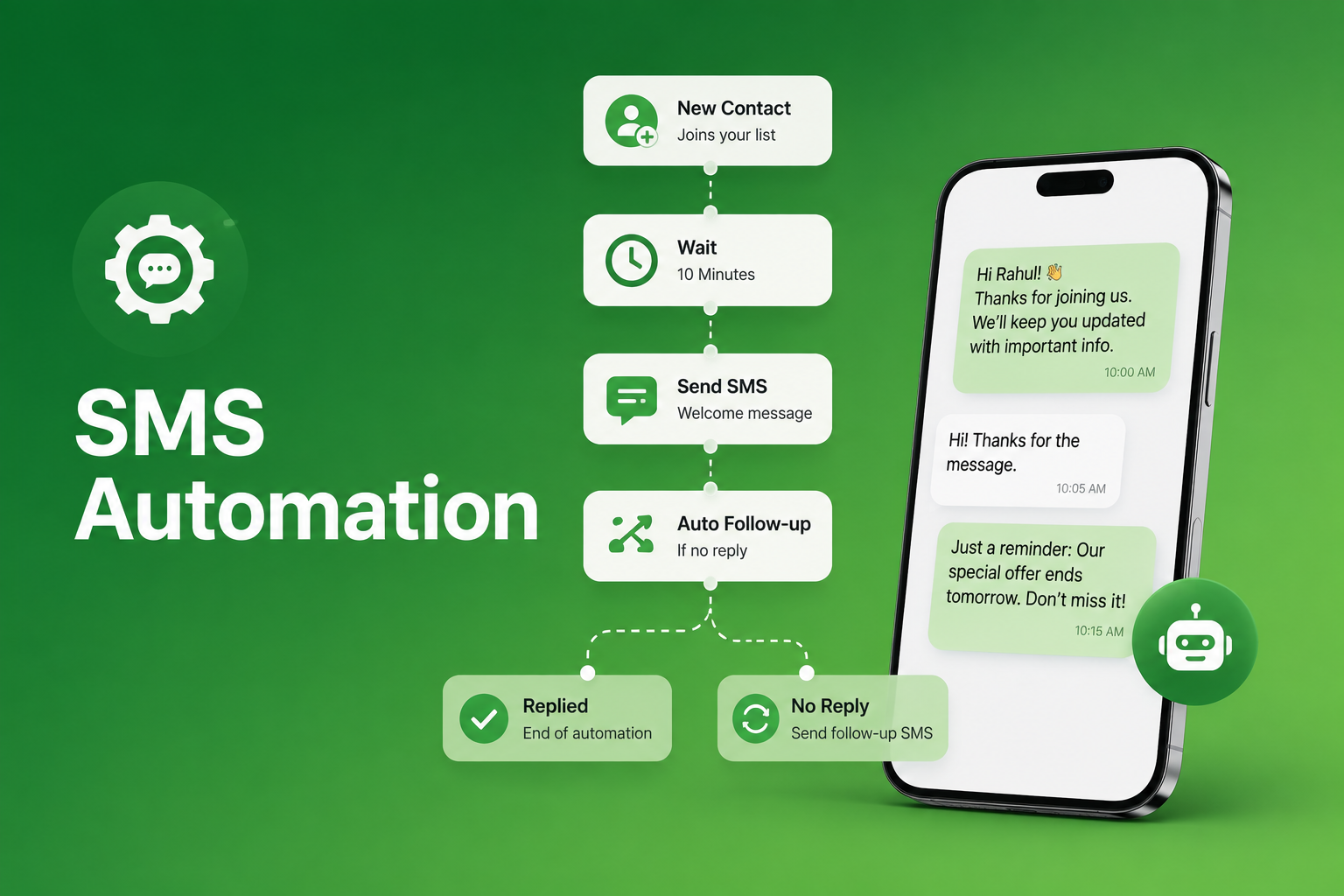
Volunteer coordination is operationally demanding. Schedules change, shifts go unfilled, and last-minute needs arise constantly. A nonprofit texting service built for this reality allows organizations to manage volunteer communication at scale without staff making individual phone calls for every update or reminder.
Text surveys collect post-event feedback or shift availability confirmations within hours rather than waiting for email responses that may never arrive. Automated reminders reduce no-shows. Keyword-based opt-ins allow volunteers to self-segment by availability, location, or skills, making mobilization faster and more accurate. For member communication across a community coalition, social services network, or professional association, bulk SMS service capability is the connective tissue between leadership and the people they serve.
Key texting applications for volunteer and member management:
- Automate scheduled text messages for recurring shift reminders so coordinators are not manually prompting every volunteer before each session.
- Organize volunteers into groups by program, region, or role to eliminate duplicate outreach and reduce coordination overhead.
- Enable two-way conversations so volunteers can confirm attendance or flag issues without calling the main office line.
- Distribute urgent alerts for cancellations, location changes, or safety updates that cannot wait for the next newsletter cycle.
TCPA and 10DLC Compliance for Nonprofit Text Messaging in 2026
Compliance is not optional for nonprofit text messaging, regardless of organization size or mission. The Telephone Consumer Protection Act (TCPA) requires explicit written consent from recipients before sending outreach texts. The FCC’s TCPA guidelines, updated and actively enforced in 2026, apply to nonprofit organizations in the same way they apply to commercial entities, with per-message penalties that can accumulate rapidly at bulk sending volumes.
The A2P 10DLC framework, which governs application-to-person messaging over 10-digit long codes, requires nonprofits to register their messaging campaign with carriers before launching. Registration establishes message legitimacy, reduces carrier filtering, and protects deliverability at scale. Organizations must also provide a clear opt-out mechanism in every message series, typically via a STOP keyword, and must honor opt-out requests immediately. Failure to maintain these practices creates regulatory exposure and damages the trust that supporter relationships depend on.
How SendHub Powers Nonprofit Text Messaging at Scale
For organizations that need donor retention to stop declining, volunteer no-shows to fall, and member communication to reach everyone reliably, SendHub delivers the infrastructure to execute without complexity. Every capability described throughout this guide is built into SendHub’s nonprofit text messaging platform and ready to deploy from day one.
- Bulk SMS service reaches a full contact list or defined segments in a single send, with delivery speed that supports time-sensitive campaigns.
- Two-way business texting enables real conversations with donors, volunteers, and members directly from the SendHub inbox.
- Merge fields personalize every outgoing message at scale with recipient-specific data, including name, giving tier, and event registration status.
- Scheduled text messaging lets teams queue campaigns in advance and deliver them at the moment of greatest impact.
- Text surveys collect volunteer availability, donor feedback, and member input without requiring separate survey platforms or manual follow-up.
- Analytics and reporting track delivery, open, and response rates so every campaign is optimized based on real data, not assumptions.
- Groups and unlimited keywords enable precise audience segmentation by donor type, volunteer role, or program involvement without list management overhead.
- Built-in contact opt-in management keeps every campaign TCPA-compliant with automated consent tracking and opt-out processing built into the platform.
Frequently Asked Questions
Text messaging for nonprofits involves using a business SMS platform to send bulk, scheduled, or two-way messages to donors, volunteers, and members. Specifically, organizations build segmented contact lists and send targeted communications directly to supporters’ mobile phones.
Yes, TCPA regulations apply to nonprofit text messaging under the 2026 FCC enforcement guidelines. Consequently, organizations must obtain explicit written consent before texting contacts and must honor opt-out requests immediately with every campaign series.
10DLC stands for 10-digit long code, the standard phone number format for A2P business texting. Additionally, nonprofits need 10DLC registration to ensure message deliverability, reduce carrier filtering, and comply with current business messaging requirements.
Opt-ins are collected through website forms, event sign-up sheets, keyword opt-ins via text, and at the point of donation. Furthermore, each opt-in must clearly disclose message frequency, message and data rate notices, and STOP opt-out instructions.
Nonprofits commonly send donation appeals, event reminders, volunteer coordination messages, impact updates, thank-you texts, and urgent alerts. Moreover, segmented contact groups ensure each message type reaches only the relevant audience without broad-blasting irrelevant content.
SMS carries a 98% open rate versus approximately 20% for email, according to Forbes. Therefore, time-sensitive fundraising appeals, matching gift windows, and campaign countdown messages consistently perform significantly better through text than through email.