
MMS marketing campaigns generate up to 3x higher engagement than text-only SMS in 2026, making visual messaging one of the highest-return channels available to businesses across every industry. According to CTIA, MMS consistently outperforms SMS on engagement and response rates. According to Salesforce Research, visual content in mobile marketing drives significantly higher click-through rates than text alone. According to GSMA, RCS now has over 1 billion monthly active users globally in 2026, meaning the messaging landscape is evolving rapidly but MMS remains the universal visual standard reaching every mobile device regardless of carrier or OS.
This guide covers the five MMS marketing best practices that separate campaigns that convert from those that simply send, with real industry examples and 2026 context throughout.
What Is MMS Marketing in 2026
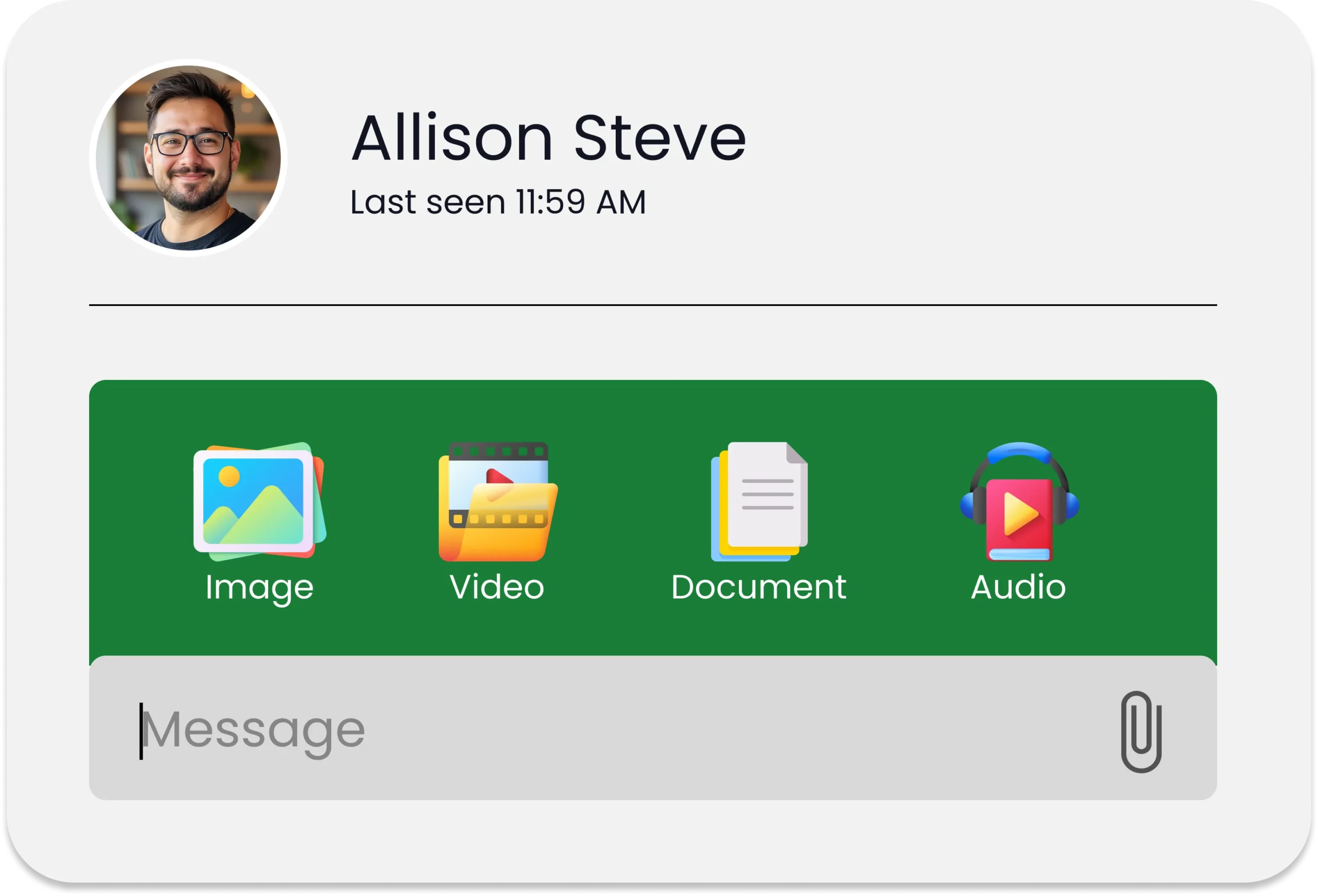
MMS (Multimedia Messaging Service) extends SMS by allowing businesses to send images, GIFs, videos, audio files, PDFs, and up to 1,600 characters of text alongside or instead of plain text.
Key 2026 MMS performance benchmarks:
- Up to 3x higher engagement than text-only SMS. (CTIA)
- 19% to 45% average click-through rates for visual mobile campaigns versus 2% to 5% for email. (Mobile Marketing Watch)
- Universal reach works on every mobile phone globally without internet or an app
The 2026 RCS transition note: RCS now offers richer capabilities than MMS including high-resolution carousels, interactive buttons, and verified sender profiles for Android audiences on supported carriers. However, RCS requires an internet connection and does not yet have universal carrier support. MMS remains the guaranteed visual delivery layer that works when RCS is unavailable, making it the essential fallback for any campaign requiring visual content to reach all recipients reliably. For a full comparison, the SMS vs MMS vs RCS guide covers the practical business decision in detail.
Understanding why SMS outperforms email for business communication sets the foundation. MMS takes that channel advantage and multiplies it with the visual impact that text alone cannot deliver.
MMS Marketing Best Practice 1: Match the Visual to the Action You Want
The most common MMS marketing mistake is attaching a visual that has no connection to the call to action. A beautiful branded image does nothing if it does not support the specific response being requested.
What this looks like across industries in 2026:
- Restaurant promotion: Send an image of the actual dish being promoted, not a generic food photo. Restaurant text message marketing campaigns with dish-specific images consistently outperform stock photography on same-day redemption rates.
- Real estate listing alert: Send the hero exterior photo of the property, not a logo. Real estate texting campaigns with a compelling property image generate significantly higher viewing requests than text-only alerts.
- Retail flash sale: Send a branded graphic showing the specific discount and products it applies to, not a generic promotional banner.
- Auto dealership: Send a photo of the specific vehicle rather than a dealership logo. Auto dealership text messaging campaigns with vehicle-specific images drive higher test drive bookings than text-only reminders.
The rule is simple. If the visual does not make the call to action more compelling, it does not belong in the message.
MMS Marketing Best Practice 2: Keep the Text Tight Even With 1,600 Characters Available
MMS gives you 1,600 characters. Use approximately 100 to 160 of them. Every word in an MMS message should serve one of three purposes:
- Identify who it is from brand name in the first line
- State the offer or action one sentence maximum
- Provide the response mechanism a link, a reply keyword, or a phone number
Over-written MMS example: “Hi [First Name], we are excited to announce our biggest sale of the year is now live. We have reduced prices across all categories and there are hundreds of items to choose from. Visit our website to browse and use your exclusive code at checkout. Offer valid this weekend only.”
Correctly written MMS example: “Hi [First Name], our biggest sale is live. 30% off everything this weekend only: [Link]. Reply STOP to unsubscribe.”
The visual carries the emotional weight. The text closes the conversion.
MMS Marketing Best Practice 3: Optimise Your Visual for Mobile Before Sending
An MMS that takes 8 seconds to load, displays at the wrong aspect ratio, or shows a pixelated image does more damage to your brand than no image at all. In 2026, with mobile screens ranging from compact to foldable, visual optimisation before any campaign send is non-negotiable.
Key technical specifications for MMS in 2026:
- File format: JPEG or PNG for static images, GIF for animated content
- File size: Under 500KB for fast loading across all connections including 3G
- Aspect ratio: 9:16 portrait for single-image messages, 1:1 square for product images
- Resolution: 640 x 1138 pixels minimum for portrait, 640 x 640 for square
- Text overlay: Ensure readability at thumbnail size before sending
For bulk sms and MMS campaigns reaching large contact lists, testing the visual at thumbnail size is essential. Most recipients preview MMS messages before opening and the thumbnail is often the first impression your campaign makes.
MMS Marketing Best Practice 4: Personalise the Visual and Text Together in 2026
Personalisation in MMS marketing goes beyond including the recipient’s first name. In 2026, AI-powered segmentation tools are enabling real-time behavioural personalisation in MMS campaigns, with brands using dynamic product images seeing measurably higher conversion rates than those sending the same image to their entire list.
Practical personalisation approaches:
- Segment by purchase history sends product images matching what the customer has bought before. A customer who bought running shoes does not need hiking boot promotions.
- Segments by location send images and offers relevant to the customer’s nearest store using group messaging to create location-based segments simultaneously.
- Use merge fields in the text even in a visual-led message, a personalised opening line lifts response rates measurably. SMS merge fields pull names and contact data into every MMS automatically.
- Reference recent behaviour “Hi [First Name], you visited us last week here is an exclusive offer” paired with a relevant product image consistently outperforms a generic promotion to the same customer.
MMS Marketing Best Practice 5: Time MMS Campaigns Around Visual Moments
MMS performs best when the visual content is relevant to what the recipient is experiencing or anticipating right now. Timing a campaign around a visual moment, a seasonal change, a product launch, an upcoming event creates relevance that generic broadcast timing cannot manufacture.
Examples of visual moment timing in 2026:
- A restaurant sending a new seasonal dish MMS on the first day of the season rather than mid-season
- A retailer sending a flash sale GIF at 4pm on Friday when weekend shopping intent is highest
- A healthcare provider sending a visual appointment reminder with a map image on the morning of the appointment rather than 48 hours before
- A nonprofit sending an MMS with an impact photo during a matching gift window to maximise emotional urgency of the deadline
Scheduled text messaging queues MMS campaigns in advance and delivers at precisely the right moment without manual sends. For small business texting service operations and non profit text messaging campaigns, automated timing removes operational burden while preserving the conversion advantage of well-timed visual content.
MMS Compliance in 2026: TCPA and Carrier Requirements
MMS marketing campaigns carry the same TCPA compliance requirements as SMS. Under the Telephone Consumer Protection Act, express written consent is required before sending any promotional MMS. Every message must include a STOP instruction, sender identification, and a message and data rates notice.
MMS-specific 2026 compliance note: carriers are applying stricter content filtering to MMS attachments as part of broader anti-spam enforcement. Prohibited content in an attached document can cause campaign-wide delivery failure regardless of the message text. Ensure all attachments comply with carrier content policies before sending.
How SendHub Powers MMS Marketing Campaigns
- SMS and MMS in one platform allowing your team to choose the right format for each campaign from one dashboard
- MMS attachments support for images, GIFs, video, audio, and PDFs up to carrier size limits
- Merge fields personalising both the text and recipient context of every MMS automatically
- Bulk SMS and MMS campaigns reaching large contact lists with visual messages in a single send
- Scheduled messaging timing MMS campaigns to deliver at highest-engagement moments automatically
- Two-way SMS and MMS enabling customers to reply to MMS campaigns in a shared inbox
- Built-in compliance tools managing opt-in consent, opt-out processing, and TCPA audit logs across all campaigns
Conclusion
In 2026, MMS is not simply SMS with a picture attached. It is a distinct communication format that combines the universal reach of SMS with the emotional impact of visual content, sitting alongside RCS as a complementary protocol rather than a competing one. The five best practices in this guide give businesses of every size a practical framework for building MMS campaigns that consistently outperform their text-only equivalents.
Frequently Asked Questions
MMS marketing uses Multimedia Messaging Service to send images, GIFs, video, audio, and PDFs alongside text to opted-in contacts, driving up to 3x higher engagement than text-only SMS campaigns.
RCS offers richer capabilities including high-resolution carousels and interactive buttons for Android audiences on supported carriers. MMS is the universal visual fallback reaching every mobile device globally without an internet connection, making both protocols complementary rather than competitive.
JPEG and PNG for static images, GIF for animations, MP4 for short video, MP3 for audio, and PDF for documents. Keep file size under 500KB for reliable delivery across all mobile connections.
Use MMS when the visual content adds genuine value to the call to action such as product promotions, event invitations, and property listings. Use SMS when the message is text-based and time-sensitive such as reminders and transactional notifications.
Yes. MMS carries a higher cost per message due to the larger data payload. For campaigns where visual content drives measurably higher conversion, the cost difference is consistently justified by the performance uplift.
Under 500KB file size, JPEG or PNG, with a 9:16 portrait aspect ratio for single-image messages and 1:1 square for product images. Minimum resolution of 640 x 1138 pixels for portrait ensures quality display across all mobile screens.
Yes. MMS marketing campaigns require the same express written consent as SMS under TCPA, including a STOP instruction, sender identification, and a message and data rates notice in every message.