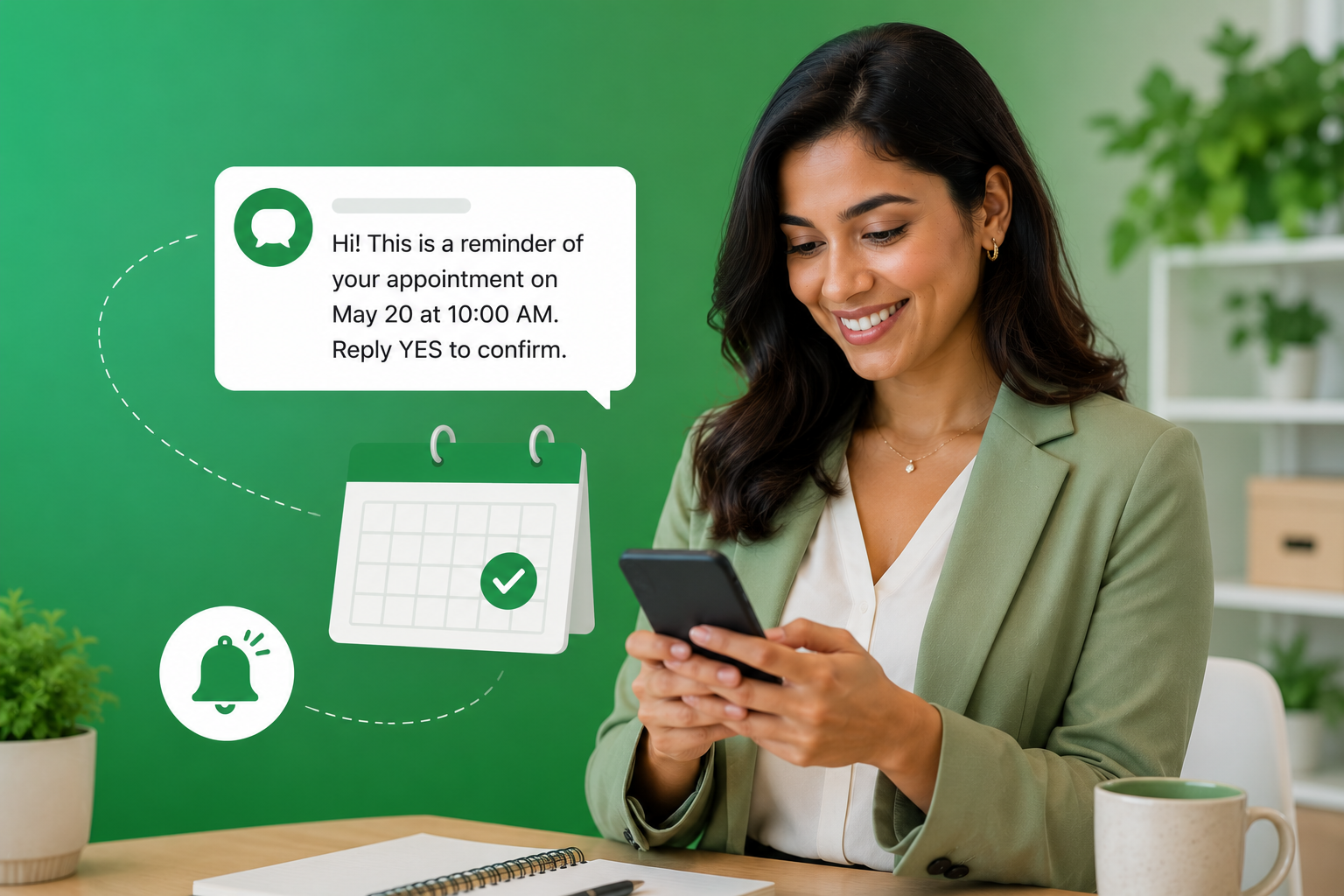

Your SMS response rate is the clearest signal of whether your texts are landing, and it is also the most misreported number in the channel. Texting earns replies because it reaches people where they already are. Americans exchanged nearly 2.2 trillion text and multimedia messages in 2024, according to CTIA’s annual wireless industry survey, and Federal Communications Commission filings note that people open the overwhelming majority of texts they receive, most within minutes. That is why replies arrive fast. The catch is that the per-industry benchmark figures circulating online rarely trace to a verifiable source. This guide shows you how to calculate your rate, what the published numbers actually support, how response tends to vary by industry and use case, and how to raise yours.
How to Calculate Your SMS Response Rate
Before comparing yourself to any benchmark, calculate your own number, because it is the only one grounded in your real audience. The math is simple, and you can build it into how you plan and measure an SMS campaign.
Formula: Divide total replies by total messages delivered, then multiply by 100.
Example: If 1,000 messages are delivered and 150 people reply, your response rate is 15 percent.
Use delivered, not sent: Base the calculation on delivered messages so carrier failures do not deflate your rate.
Measure per campaign: Calculate each send separately, since a reminder and a promotion will never perform alike.
What the Average SMS Response Rate Really Is (and Isn’t)
Search for a benchmark and you will meet one number everywhere, but it deserves a skeptical read before you set goals against it. The reliable takeaway is about engagement speed, not a universal percentage. For a fuller picture of why texting outperforms other channels, compare it with SMS versus email engagement.
The number you will see: A roughly 45 percent average SMS response rate, usually shown against email’s 6 percent.
Why to stay cautious: That figure circulates across vendor reports that trace it to different origins, from one platform’s analysis of its own messages to an unnamed analyst study, so treat it as directional rather than a benchmark you can bank on.
What is actually reliable: Texts are read at very high rates within minutes of delivery, which is the engagement pattern the FCC filings above describe.
The number that matters most: Your own rate, measured on your own list, tracked over time.

SMS Response Rate Benchmarks by Industry and Use Case
Response varies far more by message type than by industry, so treat the ranges below as directional estimates, not figures from a primary source. Transactional, two-way messages reply highest because recipients expect to respond, while one-way promotions reply lower. Use these as rough expectations, then measure your own.
| Use case | Estimated response range | Why |
| Healthcare confirmations and reminders | 30%–50% | Patients often want to confirm or reschedule their appointments. |
| Recruiting and interview scheduling | 30%–40% | Job and interview details are time-sensitive, so candidates reply to confirm their participation. |
| Real estate lead replies | Higher end | Speed to response wins deals, so leads and agents reply fast. |
| Nonprofit pledges and RSVPs | Varies widely | Event RSVPs and pledges reply well, while cold appeals run lower. |
| Broadcast promotions | Lower end | One-way blasts ask for a click, not a reply. |
How to Improve Your SMS Response Rate
If your rate sits below where you want it, the levers are consistent across industries. Work through them one at a time so you can attribute any lift to a specific change.
Ask one clear question: Give a single, reply-driven call to action instead of stacking requests.
Personalize the message: Merge in names and relevant details, since strong SMS personalization tends to lift replies.
Time it well: Send during waking, business-relevant hours so your text is seen while action is easy.
Segment your list: Match the message to the audience, because relevance drives response more than volume.
Clean your contacts: Remove inactive numbers regularly so your rate reflects people who actually want to hear from you.
Test one variable: Compare a question against a statement, or morning against evening, and keep the winner.
SMS Compliance: TCPA and 10DLC Basics
Every benchmark assumes you are texting people who agreed to hear from you, and compliance protects both your response rate and your sender reputation. The following is factual guidance, not legal advice, and you can review the FCC’s TCPA resources directly.
Collect consent: Get clear opt-in before messaging, and keep a record of how and when each contact agreed.
Honor opt-outs: Process STOP requests automatically so anyone can leave instantly.
Register for 10DLC: Standard local numbers need A2P 10DLC registration to send business campaigns at scale without carrier filtering.
Identify your brand in every message: Carrier 10DLC rules and CTIA guidelines expect each message to name the business sending it, so recipients know who is texting. For example: “SendHub: Improve your response rates with business SMS. Start your free trial today: www.sendhub.com. Reply STOP to opt out.”
Respect quiet hours: Message within reasonable local hours, since over-texting raises opt-outs and drags response down.
Measure and Lift Your Response Rate With SendHub
SendHub gives you the tools to capture every reply and see what your sends actually earn, so you can track your real response rate instead of guessing at benchmarks. Here is what powers that.
- Capture and manage every reply with the two-way texting platform that turns sends into conversations.
- See deliverability and activity in real time through the analytics and reporting dashboard, then export it for review.
- Reach your full list fast with mass texting built for scale.
- Send at the right moment using scheduled text messages.
- Personalize at scale with merge fields that insert names and details automatically.
- Run it all in one place with purpose-built SMS marketing software.

Start Measuring What Actually Matters
The most useful SMS response rate is the one you calculate from your own list, not a percentage borrowed from a vendor report. Set your baseline, apply the levers above, and watch how a clearer ask and a cleaner list move the number. Book a demo with SendHub to capture every reply and measure your response rate with confidence.
FAQs
Generally, transactional messages like confirmations reply higher than broadcast promotions. Rather than chasing a universal target, benchmark against your own past sends.
Simply divide replies by messages delivered, then multiply by 100. For example, 150 replies from 1,000 delivered texts is a 15 percent rate.
Treat it as directional, because it circulates across vendor reports without a consistent primary source. Instead, measure your own rate for a number you can trust.
Honestly, no primary source publishes clean per-industry benchmarks. However, two-way and transactional messages consistently reply higher than one-way promotions.
Often the cause is a vague call to action, poor timing, or an outdated list. Additionally, one-way promotional blasts naturally receive lower response rates than conversational texts.
Open rate measures who views a message, while response rate measures who replies. Because SMS is read at high rates, replies are the harder and more telling metric.
First, ask one clear question and personalize the message. Then test timing and segmentation so you can attribute any lift to a specific change.
Yes, because they invite a reply rather than a click. Consequently, confirmations and customer service threads tend to outperform broadcast sends.
Typically within minutes, since texts are read shortly after delivery. As a result, SMS suits time-sensitive prompts far better than email.
Generally yes, because relevant, named messages feel worth answering. Therefore, merge fields and segmentation are among the simplest levers to pull.