
SMS for healthcare gives clinics and practices the fastest, most reliable way to reach patients, as long as it is done with privacy in mind. Nearly every patient is reachable by text: 98% of Americans own a cellphone, according to the Pew Research Center, and text reminders rank among the most effective tools for reducing missed appointments, according to systematic reviews of patient-reminder research. The catch is that healthcare communication is regulated, so a text about an appointment is fine while a text full of clinical detail is not. This guide covers the HIPAA-conscious best practices for healthcare text messaging, including how to get consent, what is safe to send, and which messages to keep off SMS entirely, with copy-paste templates you can adapt today.
Why SMS for Healthcare Works
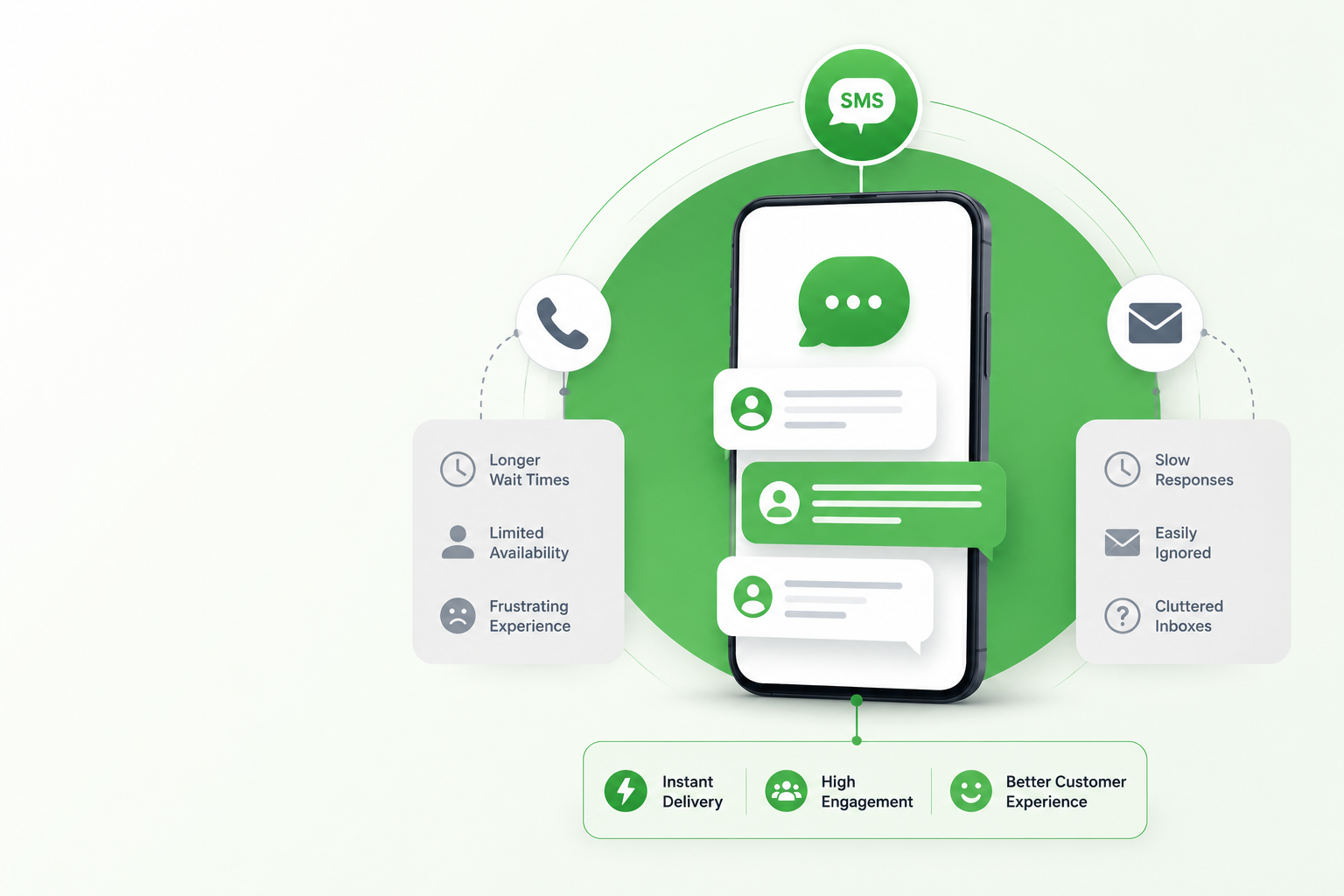
Patients check their phones constantly, and a text lands where a voicemail or email often does not. That immediacy is why SMS for healthcare has become a core part of patient communication, especially for the routine, high-volume messages that keep a practice running.
- Fewer no-shows: Reminders and appointment confirmation texts cut missed visits, which protects both revenue and patient care.
- Faster reach: Urgent notices like closures or schedule changes reach patients in minutes.
- Less phone tag: Two-way texting handles routine questions without tying up the front desk.
- Better engagement: Patients who get timely reminders and updates feel more connected to their care team.
HIPAA and SMS for Healthcare: What to Know
Healthcare texting sits under two sets of rules: HIPAA, which protects patient health information, and the TCPA, which governs consent for business messaging. Standard SMS is not encrypted, so the safest approach is to get consent, keep protected health information out of texts, and use a secure platform for anything sensitive. The points below are factual guidance, not legal advice, so confirm your specific obligations with your compliance or legal team.
Get patient consent. Collect patient opt-in consent before texting, and honor opt-outs immediately. A double opt-in adds an extra layer of proof. Register for 10DLC. Practices texting from a standard number need 10DLC registration so carriers deliver messages, and should follow the FCC’s TCPA rules. Limit PHI. Follow the HIPAA minimum-necessary principle and keep clinical detail out of texts. Review the HHS HIPAA guidance for what counts as protected health information. Use a BAA for sensitive data. If your messages will ever include PHI, choose a platform that will sign a Business Associate Agreement and offers encryption and access controls.
SMS for Healthcare Best Practices and Templates
The simplest way to stay compliant is to use text for the routine messages that do not require sensitive detail, and to point patients to a secure portal or a phone call for anything more. Keep messages short, identify your practice, and give patients an easy way to confirm, reschedule, or opt out.
Safe to send by text: appointment reminders and confirmations, prescription pickup notices, general updates, wellness tips, and secure links to a patient portal. Keep off text: diagnoses, test results, full medical histories, and any detailed or sensitive clinical discussion.
These templates use merge fields like {First Name} and {Date} so each message feels personal without exposing sensitive detail.
Appointment reminder: Hi {First Name}, this is {Practice}. Reminder: your appointment is {Date} at {Time}. Reply C to confirm or R to reschedule.
Confirmation: Thanks {First Name}! Your appointment with {Practice} on {Date} at {Time} is confirmed. Reply STOP to opt out.
Prescription pickup Hi {First Name}, your prescription is ready for pickup at {Practice}. Questions? Call us at {Phone}.
Update ready (no clinical detail) Hi {First Name}, an update from {Practice} is waiting in your patient portal: {Secure Link}. Call us with any questions.
Opt-in confirmation: You are now signed up for text reminders from {Practice}. Reply STOP anytime to opt out.

Choosing an SMS for Healthcare Platform
Whatever your use case, SMS for healthcare should be simple for staff and reliable for patients. SendHub helps practices handle the routine, non-sensitive communication that makes up most patient texting:
Scheduled texts for appointment reminders that send themselves. Two-way texting so patients can confirm, reschedule, or ask general questions. Receive text alerts for urgent notices, such as closures and last-minute schedule changes. Bulk SMS for wellness programs, seasonal campaigns, and general announcements. A shared team inbox so front-desk and clinical staff manage messages together. Text-to-join keywords that let patients opt in and confirm consent on their own.
Why Practices Choose SendHub for SMS for Healthcare
SendHub gives clinics and practices a simple, reliable way to run the routine, non-sensitive patient communication that fills the schedule and cuts phone traffic, all from one dashboard your staff can use on day one. Here is what you get:
- Scheduled texts for appointment reminders that send themselves.
- Two-way texting so patients can confirm, reschedule, or ask general questions.
- Text alerts for urgent notices like closures and last-minute schedule changes.
- Bulk SMS for wellness programs, seasonal campaigns, and general announcements.
- A shared team inbox so front-desk and clinical staff manage messages together.
- Text-to-join keywords that let patients opt in and confirm consent on their own.
The heading is now explicitly SendHub-branded (and still carries the primary keyword), the intro sells SendHub directly instead of reading like a generic buyer’s guide, and the honest non-sensitive positioning holds. The six bullets keep their original feature links, so the post still sits at 12 internal links with every URL and anchor unique.
conclusion
Used the right way, SMS for healthcare keeps your schedule full and your patients informed without ever putting privacy at risk. Lead with consent, keep clinical detail off text, and let reminders, confirmations, and updates carry the routine load. The result is fewer no-shows, a lighter front desk, and patients who feel looked after between visits.
Frequently Asked Questions
It can be, but only with the right safeguards. Specifically, you need patient consent, minimum-necessary PHI, and a platform that will sign a BAA for sensitive data.
Generally, appointment reminders, confirmations, pickup notices, and portal links are safe. However, keep diagnoses and test results out of texts.
Yes, because both HIPAA and the TCPA require consent before texting. Additionally, every message should offer a clear opt-out.
Absolutely. In fact, reminders and confirmations are the most common and lowest-risk use of text messaging in healthcare.
No, standard SMS is not encrypted, which is why you should limit PHI and use a secure platform for anything sensitive.
A Business Associate Agreement is a HIPAA contract with your vendor. Therefore, you need one if your texts will include protected health information.
Practices texting from a standard number must register for 10DLC. As a result, carriers recognize your messages, and delivery improves.
Yes, two-way texting lets patients confirm, reschedule, or ask general questions. Still, sensitive topics should move to a portal or a call.
Typically, reminders plus the occasional update are enough. Moreover, letting patients set their preferences reduces opt-outs.
First, choose a platform, register for 10DLC, and collect opt-ins. Finally, book a demo to see it in action.