Key Takeaways
- SMS reaches patients far more reliably than phone or email, with contact rates as high as 97 to 99 percent.
- The highest-performing setup is a three-message automated sequence: booking confirmation, a 48-hour reminder, and a day-of reminder.
- Staying compliant means TCPA opt-in consent, 10DLC campaign registration, and keeping all PHI (diagnoses, medications) out of the message text.
- Ready-to-use templates for primary care, dental, pediatric, and specialist practices, all deployable without developer resources.
Patient appointment reminders via SMS have become the most reliable tool healthcare teams have for reducing no-shows, and the research is consistent. According to a systematic review published in the National Library of Medicine, SMS reminders achieve reported successful contact rates of 97 to 99 percent, higher than the typical reach of phone or email reminders across a range of healthcare settings. For clinics, practices, and wellness centers that have accepted no-shows as a fixed operational cost, that figure signals a straightforward fix. This guide covers how to build a compliant, automated patient appointment reminder SMS system from scratch in 2026, including ready-to-use templates for primary care, dental, pediatric, and specialist settings. For practices already sending reminders, the SendHub healthcare SMS guide covers deeper engagement strategies beyond the reminder sequence.
Why Patient Appointment Reminder SMS Outperforms Phone and Email in 2026
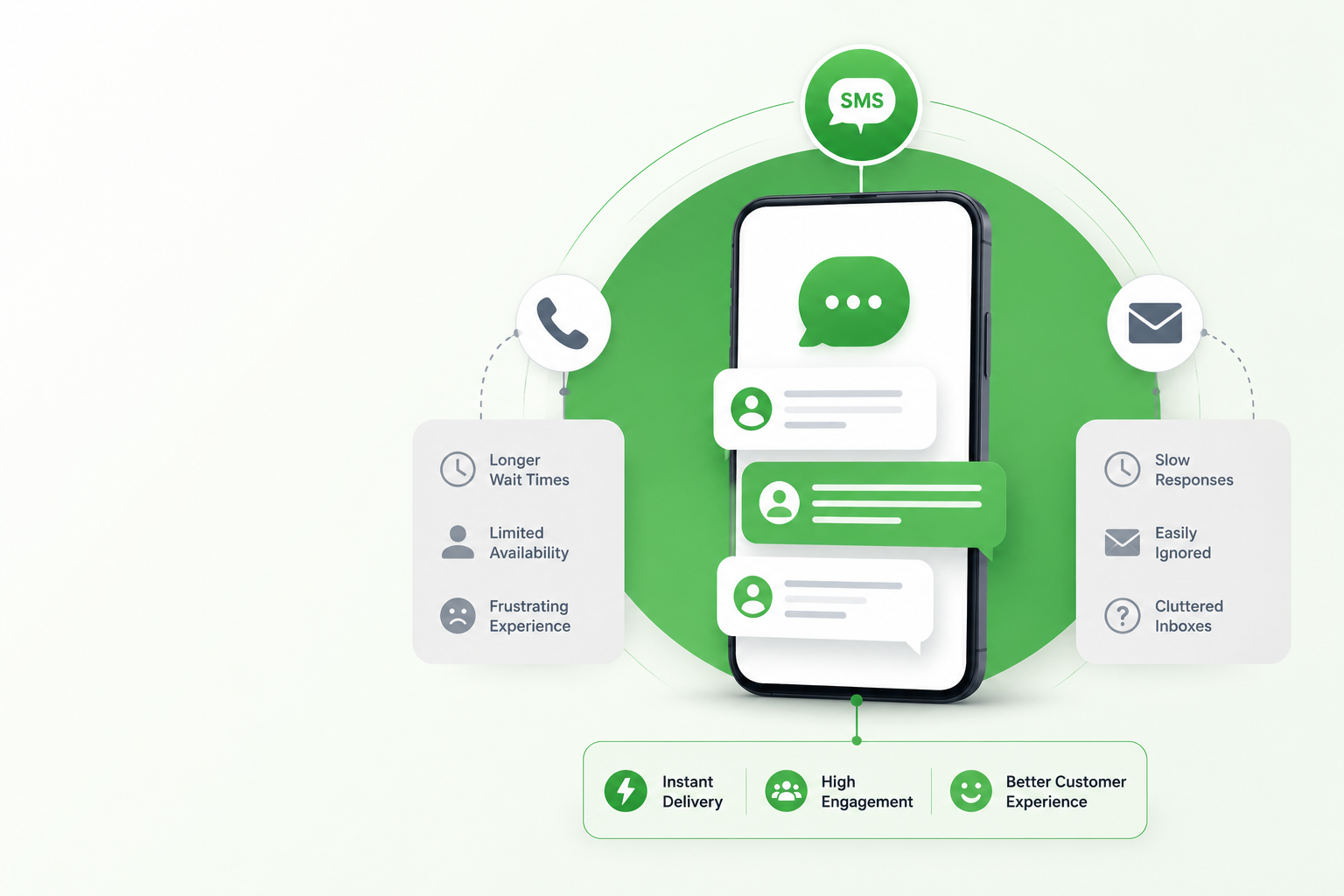
Patient reminders apply the same principles that make SMS reminders effective for any business, adapted to clinical settings. Healthcare teams have relied on phone call reminders for decades, but the channel is losing effectiveness as patients screen calls from unfamiliar numbers. Email reminders face a similar problem: inbox clutter means health-related messages compete with promotions, newsletters, and notifications for attention that rarely arrives in time to act.
Patient appointment reminders via SMS cut through both problems. Messages arrive directly on the device patients carry at all times, and most are read within minutes of delivery. Beyond open rates, SMS creates a response path. A patient who receives a call reminder must call back during business hours. A patient who receives a text can confirm, cancel, or request a reschedule in seconds, at any time. That frictionless path is what drives attendance rates up and administrative call volume down.
The channel gap matters operationally:
- Phone reminders are widely estimated to reach only 40 to 60 percent of patients, largely due to unanswered calls and voicemail non-responses
- Email appointment reminders in healthcare settings typically generate engagement well below the open rates of transactional SMS
- SMS two-way confirmation, handled through SendHub’s two-way texting system, lets patients reply instantly without requiring staff to monitor and respond to each exchange manually

The 3-Message Patient Appointment Reminder SMS Sequence
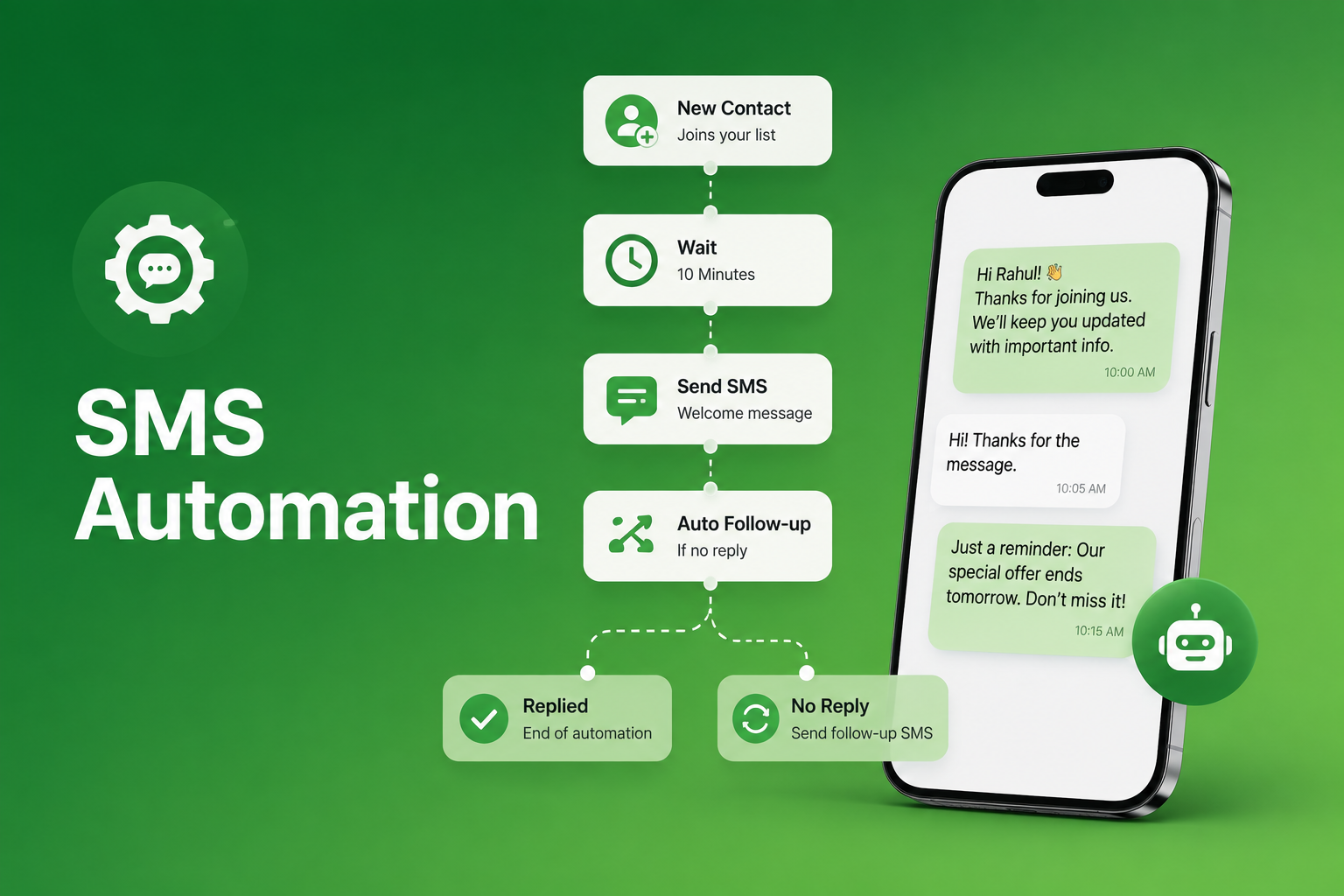
Single-message reminder systems leave too much to chance. Patients who receive one reminder 24 hours before are either confirming late, unable to reschedule in time, or forgetting entirely between receipt and the appointment. The most effective setup in 2026 is a three-message automated sequence triggered from the moment a booking is confirmed.
Message 1: Booking confirmation (sent immediately). Purpose: establish the appointment in the patient’s memory before any time passes. Include date, time, provider name, location, and a simple confirmation action.
Template: “Hi [First Name], your appointment at [Practice Name] with [Provider] is confirmed for [Date] at [Time]. Reply C to confirm or R to reschedule. Questions? Reply here.”
Message 2: 48-hour reminder (sent two days before). Purpose: give patients enough lead time to reschedule if needed. This message has the highest conversion rate in the sequence because options are still available.
Template: “Hi [First Name], a reminder that your appointment at [Practice Name] with [Provider] is on [Date] at [Time]. Reply C to confirm or R to reschedule.”
Message 3: Day-of reminder (sent 2 to 4 hours before). Purpose: reduce last-minute silent no-shows by addressing practical friction. Include parking, check-in instructions, or preparation notes specific to the appointment type.
Template: “Hi [First Name], your appointment at [Practice Name] is today at [Time]. Please arrive 10 minutes early and bring [ID/Insurance card/Document]. Questions? Reply here.”
Scheduled text messaging automates all three messages without any manual sending. Once the sequence is configured, staff intervention is needed only when a patient responds with a rescheduling request.
Patient Appointment Reminder SMS Templates by Practice Type
Competitors in this space offer generic templates that require significant editing before use. The templates below are structured for specific healthcare settings and are ready to deploy through SendHub’s SMS templates library.
Primary care and general practice: “Hi [First Name], this is [Practice Name] confirming your appointment with [Provider] on [Date] at [Time]. Please bring your insurance card and a list of current medications. Reply YES to confirm or RESCHEDULE to change your time.”
Dental reminder: “Hi [First Name], your cleaning and exam with [Provider] at [Practice Name] is on [Date] at [Time]. Please brush beforehand and avoid food or drink 30 minutes before arrival. Reply C to confirm.”
Pediatric appointment: “Hi [Parent Name], this is a reminder that [Child Name] has an appointment with [Provider] at [Practice Name] on [Date] at [Time]. Please bring their immunization record. Reply YES to confirm or call [Number] to reschedule.”
Specialist follow-up: “Hi [First Name], your follow-up with [Provider] at [Practice Name] is scheduled for [Date] at [Time]. If your symptoms have changed or you have new questions, reply here ahead of your visit. Reply C to confirm.”
Procedure preparation reminder: “Hi [First Name], your [Procedure Name] at [Practice Name] is on [Date] at [Time]. Please avoid food and drink after [Time] the night before and arrange a driver. Reply C to confirm or call [Number] with questions.”
Using merge fields to pull patient names, appointment details, and provider names automatically into each template eliminates manual editing and keeps every message accurate without additional staff effort. SMS notifications can trigger each template automatically from your scheduling workflow.
TCPA, 10DLC, and HIPAA Compliance for Patient Appointment Reminders via SMS
Healthcare teams operating in the US must navigate three compliance layers when deploying patient appointment reminders via SMS.
TCPA compliance: The FCC’s Telephone Consumer Protection Act governs all commercial and transactional SMS. For appointment reminders to existing patients, prior express consent is the standard. This means collecting opt-in consent at the point of booking, including your practice name in every message, processing STOP requests immediately, and storing consent records. Any message containing promotional content, such as a service offer embedded in a reminder, requires express written consent.
10DLC registration: All business text messaging sent in the US from standard 10-digit long codes must be registered through 10DLC. For healthcare practices, this means registering your messaging campaign before deploying reminders at scale. Unregistered campaigns face carrier filtering that can prevent messages from reaching patients entirely.
HIPAA considerations: While appointment reminders themselves are generally permitted under HIPAA without written authorization, the content of the message must not include protected health information. This means avoiding diagnosis names, test results, treatment details, or condition references in the body of any reminder text. A message confirming an appointment time and provider name is HIPAA-aligned. A message referencing the patient’s condition or medication is not.
How SendHub Supports Patient Appointment Reminder SMS for Healthcare Teams
Healthcare practices that need a reliable, straightforward platform for managing patient reminder sequences can build the entire workflow within SendHub’s SMS solution for healthcare teams. Here is what the platform provides for this use case:
- Scheduled text messaging to automate the full three-message sequence from booking confirmation through day-of reminder
- Two-way texting with a shared inbox so staff can manage rescheduling requests and patient replies from one centralized dashboard
- SMS templates library for storing specialty-specific reminder templates ready to deploy across your team
- Merge fields that pull patient names, appointment details, and provider information automatically into every outbound message
- Contact database for organizing patient lists by provider, appointment type, or care category
- Analytics and reporting to track confirmation rates, response times, and message delivery across your reminder campaigns
- Google Calendar integration that connects your existing scheduling system directly to automated SMS reminders without manual data entry
- 10DLC registered messaging ensures compliant, carrier-approved delivery for every patient reminder sent

Start Building Your Patient Reminder System Today
Healthcare teams that automate patient appointment reminders via SMS see measurable reductions in no-shows, lower administrative call volumes, and more consistent patient attendance across every care category. SendHub gives practices a straightforward platform to build and manage the full reminder sequence without developer resources or complex configuration. Book a demo with SendHub to see how the setup works for your team.
Frequently Asked Questions
At a minimum, include the patient’s name, provider name, practice name, date, time, and a single confirmation action such as Reply C. Additionally, include preparation instructions specific to the appointment type to reduce last-minute friction.
The most effective approach is a three-message sequence: one booking confirmation sent immediately, a 48-hour reminder, and a same-day reminder 2 to 4 hours before. Furthermore, this sequence consistently outperforms single-message systems for reducing no-shows.
Yes, appointment reminders are permitted under HIPAA without written authorization, provided the message content does not include protected health information. Specifically, avoid referencing diagnoses, conditions, treatments, or medications in the body of any reminder text.
An appointment confirmation text is sent immediately after booking to verify the appointment, covered in our guide to appointment confirmation text best practices. A reminder text is sent closer to the date to prompt attendance. Moreover, using both as part of an automated sequence delivers the greatest reduction in no-shows.
Yes. Specialty-specific templates perform better because they reference appointment-relevant preparation details. For instance, a dental reminder should reference arrival time and pre-appointment instructions, while a pediatric reminder should address the parent and include documentation requirements.
SendHub’s Google Calendar integration connects directly to existing scheduling workflows, triggering automated reminder sequences from the moment an appointment is confirmed. This means no manual sending and no double entry of patient appointment data.