A VoIP number is a telephone number that operates over the internet rather than a traditional copper phone line, giving businesses the flexibility to make and receive calls from any device on any network. The FCC’s Industry Analysis Division June 2024 report confirms 65 million interconnected VoIP subscriptions in the United States, and the National Center for Health Statistics reports that 73% of American adults already live in a household without a traditional landline. The shift away from legacy phone infrastructure is well underway. For businesses that want to add SMS to their existing VoIP or landline number without switching carriers, SendHub’s hosted SMS service and landline texting platform make it possible without changing your voice provider.
What Is a VoIP Number?
A VoIP number, also called a virtual phone number or VoIP phone number, is a telephone number assigned to an internet-based voice service rather than a physical phone line. Understanding what is VoIP number technology means understanding how internet-based calling replaces fixed copper infrastructure entirely. It routes calls through your internet connection using Voice over Internet Protocol, allowing you to call and receive calls from any device, anywhere, without being tied to a specific location or hardware.
How Does a VoIP Number Work?
Think of a VoIP call the way you think of an email. When you send an email, your message is broken into packets of data, sent across the internet, and reassembled in your recipient’s inbox in seconds. A VoIP call works exactly the same way, except the data packets carry voice instead of text. According to Fortune Business Insights, the global VoIP market reached $144.77 billion in 2024 and is forecast to grow to $326.27 billion by 2032, reflecting how rapidly businesses across every sector are making this transition.
Here is what happens step by step when someone dials a VoIP phone number:
- Step 1: The call enters the network The caller dials your VoIP phone number and the call travels through the standard telephone network just like any other call.
- Step 2: The gateway converts the signal The call reaches a VoIP gateway, which converts the analog voice signal into digital data packets ready to travel over the internet.
- Step 3: Data packets travel to the recipient Those packets move across the internet to the recipient’s device in milliseconds, taking the fastest available route to reach their destination.
- Step 4: The audio is reassembled in real time The recipient’s device reassembles the packets and plays them back as clear audio, completing the call in real time with no physical phone line involved.
- Step 5: Any device can receive the call The receiving device can be a desktop computer, a smartphone, a VoIP-enabled desk phone, or any browser-based communication tool, making a business VoIP number fundamentally more flexible than a traditional landline.

What Is the Difference Between a VoIP Number and a Traditional Phone Number?
A traditional phone number is attached to a physical line at a fixed location. Moving offices or adding team members requires new hardware and carrier coordination. A VoIP phone number has no physical location dependency. It moves with the user, scales with the team, and is managed through a web dashboard.
| Feature | VoIP number | Traditional landline | Mobile number |
|---|---|---|---|
| How it connects | Over the internet | Physical copper line | Cellular network |
| Tied to a location | No, works anywhere with internet | Yes, fixed address | No, but tied to a SIM |
| Works on any device | Yes, phone, laptop, or app | No, needs the handset | No, needs the phone and SIM |
| Native SMS | Not always, can be text-enabled | No | Yes |
| Scales with your team | Instantly, via dashboard | Needs new hardware | One number per SIM |
| Typical cost | Lowest, especially long-distance | Highest | Moderate |
Cost is a significant differentiator. Microsoft research shows that 82% of businesses report meaningful cost savings after moving to cloud-based communication, which includes VoIP. For small businesses managing tight operating budgets, that reduction in monthly spend is immediate rather than a long-term projection.
The third key difference is capability. A business VoIP number supports simultaneous calls, call routing, voicemail to email, and SMS messaging, all from the same number, without adding hardware or changing your existing setup.
Types of VoIP Phone Numbers for Business
Not every VoIP number works the same way. Three types are most commonly used in US business communication, and choosing the right one from the start saves you from switching numbers later.
Local VoIP Number Uses a standard 10-digit format with a geographic area code. Ideal for healthcare, real estate, recruiting, and any business serving a specific region where local familiarity drives customer trust.
Toll-Free VoIP Number Begins with 800, 833, 844, 855, 866, 877, or 888 for a national-facing identity. SendHub supports toll-free texting on these numbers so the same number handles both voice and business SMS without managing separate lines.
Virtual Phone Number Assigned independently of any physical infrastructure and routed to any device or team member in real time. The most flexible option for distributed teams and multi-location businesses where communication needs to follow the person, not the desk.
Why Businesses Add SMS to Their VoIP Number
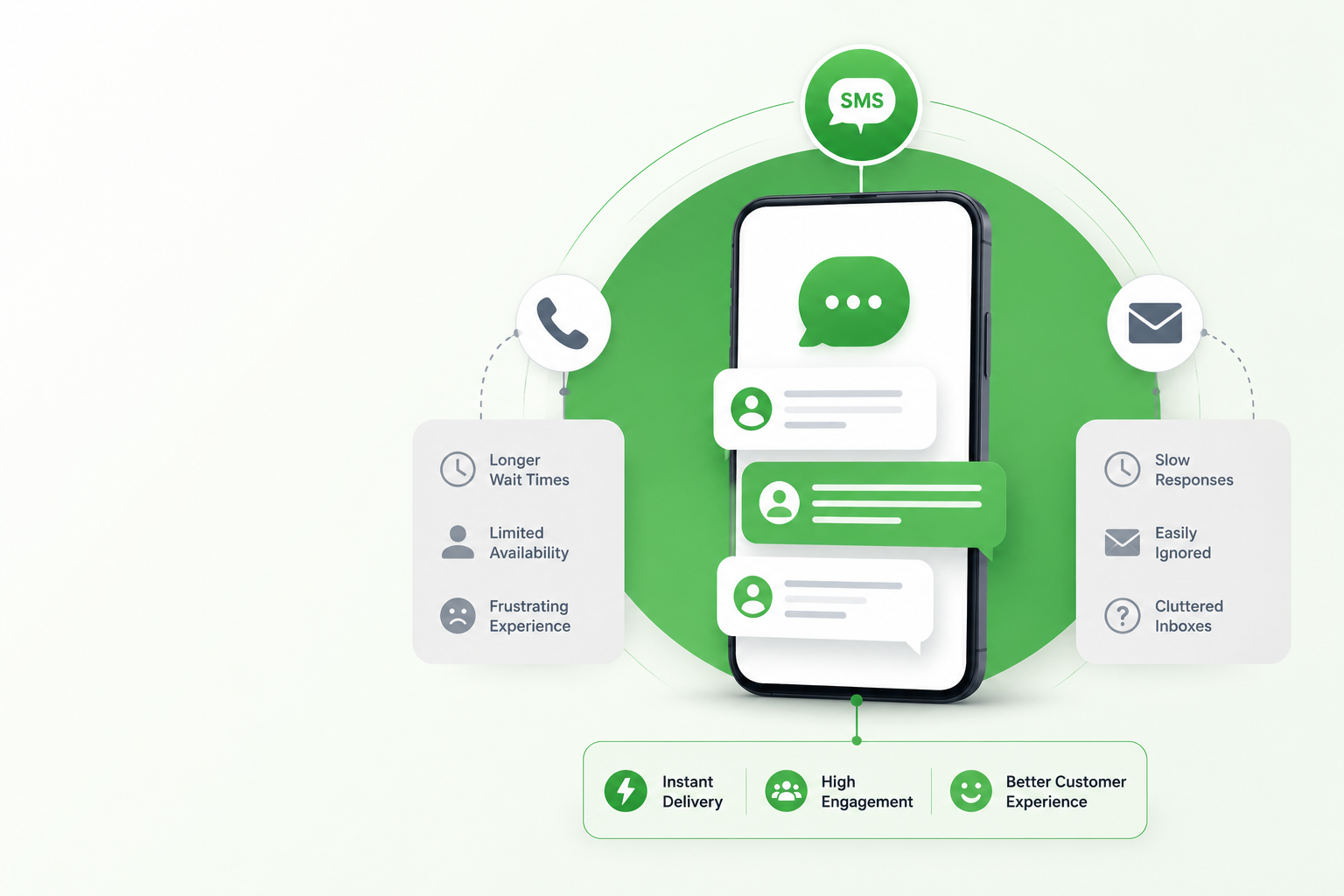
150 million text messages are sent to landline and VoIP numbers every day in the United States, and most of those numbers cannot receive them. Every one of those texts is a missed customer interaction.
Consider a patient who texts a clinic’s VoIP number to confirm an appointment. The number handles calls perfectly but cannot receive texts. The patient hears nothing back, assumes the appointment is unclear, and calls another provider. The clinic never knew the enquiry arrived. That same scenario plays out daily across healthcare, real estate, and small businesses whose VoIP numbers are call-only.
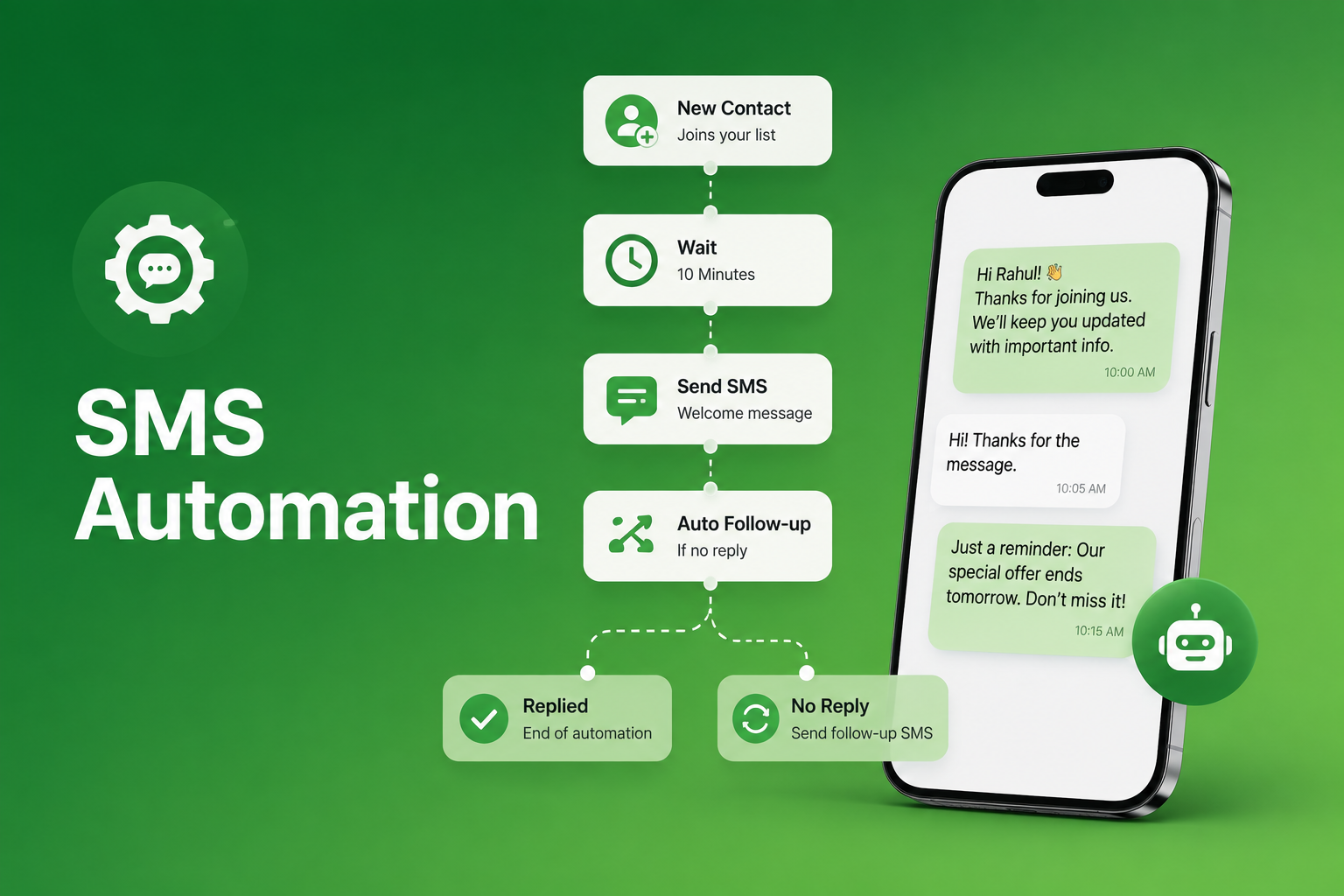
Text-enabling a VoIP or landline number through SendHub’s hosted SMS platform closes that gap without a carrier change or new number. The existing VoIP number keeps handling calls through the current provider while SendHub enables it to send and receive SMS on the same digits. For a broader view of what becomes possible once SMS is active, the SendHub guide to mass text messaging benefits and best practices covers how to structure outreach once a number is text-enabled.
TCPA compliance applies to any SMS sent from a VoIP or landline number. Prior express written consent is required before sending marketing messages, and all STOP requests must be honoured immediately. Full guidance is available from the FCC’s official TCPA resource page.

How SendHub Helps You Get More from Your Business VoIP Number
150 million texts arrive daily at numbers that cannot receive them. SendHub exists to close that gap, giving businesses of every size the tools to send and receive SMS on their existing VoIP or landline number without switching carriers, changing hardware, or setting up a new number from scratch.
- Hosted SMS to text-enable your existing VoIP or landline number on the same digits your customers already know
- Landline texting for businesses that want SMS without changing their voice provider
- Two-way business texting for real-time customer conversations on the same number handling your calls
- Toll-free texting for businesses operating nationally from a single recognisable number
- SMS and MMS marketing campaigns launched from a text-enabled VoIP number your audience already trusts
- SMS notifications for automated alerts and updates sent from your existing business number
Analytics and reporting to track delivery rates, reply volume, and opt-out trends across every SMS campaign
Frequently Asked Questions
A VoIP number is a telephone number that routes calls over the internet rather than a physical phone line. Consequently, it works on any internet-connected device without being tied to a fixed location or hardware.
A regular phone number is attached to a physical line at a specific address, while a VoIP phone number is internet-based and portable across devices. Additionally, cloud-based communication consistently delivers meaningful cost savings compared to traditional landline setups.
The terms are often used interchangeably. However, virtual phone number specifically describes a number with no physical line, while VoIP describes the underlying internet-based call routing technology.
A VoIP number converts voice into digital data packets that travel over your internet connection. Consequently, any internet-connected device including a computer, smartphone, or VoIP desk phone can make and receive calls on that number.
Some providers offer free or low-cost VoIP numbers for personal use, but business VoIP numbers are usually part of a paid plan covering calling, routing, and SMS features. With SendHub, a business number is included when you sign up, with no separate hardware cost.
You can check a number’s type using a carrier or line-type lookup tool, which identifies whether a number is landline, mobile, or VoIP. Businesses often verify this before sending SMS, since some VoIP numbers need to be text-enabled first.